Get Full Government Meeting Transcripts, Videos, & Alerts Forever!
Get email alerts on the Surveillance Cameras topic
No spam. Unsubscribe anytime.
Resident urges Lebanon to reject Flock Safety license‑plate cameras, cites Fourth Amendment and Carpenter ruling
Summary
A resident told the council July 1 that license‑plate reading cameras amount to mass surveillance, citing constitutional protections and Carpenter v. United States, and urged the city to reject the technology rather than adopt a program that would log citizens' movements.
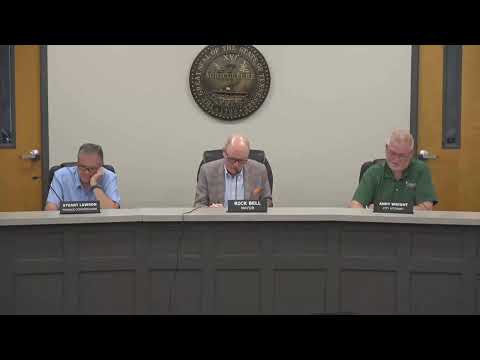
Michael Qualls, a Lebanon resident and U.S. Marine Corps veteran, told the council during the public‑comment period that proposed Flock Safety license‑plate reader cameras present a “direct threat to our constitutional rights” and urged the council to reject their use.
Qualls, who gave his address as 29 Benning Circle, said the Fourth Amendment does not “vanish when we get behind the wheel” and argued continuous logging of license plates constitutes location tracking. He cited the U.S. Supreme Court’s Carpenter v. United States decision and said the cameras “log everywhere a car travels day after day” and therefore “is essentially location tracking by proxy.”
Qualls raised data‑security concerns and asked who would have access to data collected by private camera vendors or third parties. “There is no warrant, no probable cause, and no individualized suspicion,” he said. He warned that collected data can be stored, shared or hacked and called the technology “anti‑American.”
No council vote, motion or staff directive related to Flock Safety cameras was recorded at the July 1 meeting. Qualls’ remarks were made during the allotted three‑minute public‑comment period; the council did not respond with a policy decision at the meeting.
The transcript reflects Qualls’ statements and legal citations as his assertions to the council; the city did not present a legal analysis or staff recommendation on Flock Safety cameras at the July 1 meeting.