Get Full Government Meeting Transcripts, Videos, & Alerts Forever!
Get email alerts on the Traffic Calming topic
No spam. Unsubscribe anytime.
NDOT proposes speed cushions, radar feedback and intersection changes for Cumberland Avenue after residents report speeding and stop‑sign running
Summary
David Greaves, an engineer with the Department of Transportation (NDOT), on July 7 presented a draft traffic‑calming plan for Cumberland Avenue that would add speed cushions, radar feedback signs, pavement‑edge striping and investigate bulb‑outs and other intersection measures after data showed high speeds and resident reports of stop‑sign running.
David Greaves, an engineer with the Department of Transportation (NDOT), on July 7 presented a draft traffic‑calming plan for Cumberland Avenue that would add speed cushions, radar feedback signs, pavement‑edge striping and investigate bulb‑outs and other intersection measures after data showed high speeds and resident reports of stop‑sign running.
Greaves said the neighborhood was selected for traffic calming from more than 600 applications earlier in 2025 and that the 85th‑percentile speed on Cumberland was 39 miles per hour. "Vision 0 is the idea that nobody should have to be killed or seriously injured on Nashville streets," Greaves said, describing the program's safety goal.
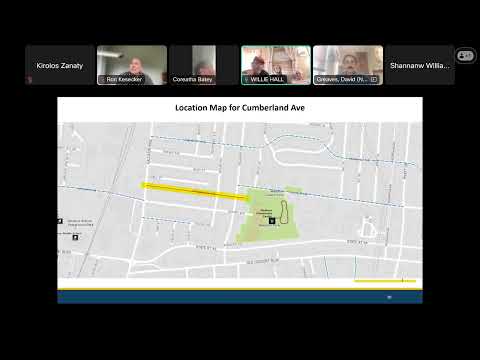
The draft plan covers Cumberland Avenue from Dallas Pike to Madison Park and would place a series of speed cushions between Gallatin Pike and Bixler Drive, with spacing Greaves said is typically about 300–400 feet where feasible. Greaves described the program's preference for speed cushions over full speed tables because cushions are narrower so larger emergency vehicles can straddle them: "we'd like to have a street that sort of enforces itself, generally, is a safe environment just inherently without the need for, a whole lot of signage or enforcement," he said.
Residents told NDOT staff they routinely see speeding, drag racing at night and drivers running the stop sign at the Bixler intersection. "It's mainly the drag racing, speeding at night during morning times," one resident said. Another resident added, "People constantly run that stop sign," and said parked cars on the street reduce sight distance near the hill and make mail collection and walking to the park feel unsafe.
Greaves outlined other tools under consideration, including radar feedback signs that display approaching speeds; painted edge lines to create a narrower feel for drivers; intersection curb extensions (bulb‑outs) to shorten crossings and limit parking near corners; chicanes on wider streets; and, where pavement and grades permit, speed tables. He explained that radar feedback signs typically lower speeds by 6–7 mph on average and that, in past NDOT projects, average speeds dropped from roughly 31 mph to 22 mph after installations. The plan notes Cumberland lacks sidewalks in several places and that street width varies from about 22 to 25 feet.
Residents recommended alternatives or additions. One said a neighboring street’s cushions are often straddled and suggested speed tables similar to those on Anderson Lane; another asked how renters would be informed, noting many properties are managed by outside owners. "What about if that is like a property management company or someone who doesn't live at the address on Cumberland? How do they get word about this?" a resident asked. Greaves said NDOT uses Metro Nashville's register of deeds to mail ballots to property owners and that renters may submit feedback but do not receive the mailed ballots used for the formal vote.
Greaves described the program timeline: staff will conduct a site visit to confirm widths, grades and utility locations; finalize construction plans; and then either hold a second neighborhood meeting to review the detailed plans or post them online. Ballots will be mailed to owners of lots abutting Cumberland Avenue (churches and schools included where present). Greaves said a two‑thirds approval among responding property owners is required for a project to enter the construction queue and estimated that construction would take place roughly eight months after a successful vote.
No formal votes or decisions were taken at the July 7 meeting. Greaves said NDOT will plan a second neighborhood meeting after the site visit and design work; residents who attended indicated a preference for a follow‑up meeting before balloting. Greaves provided email (david.greaves@kimley‑horn.com) and a project survey at engage.nashville.gov/trafficcalming for additional feedback and said the meeting recording will be posted on Metro Nashville's YouTube channel.
The draft plan and next steps leave open several technical and procedural issues residents raised—whether speed cushions will be effective where vehicles can straddle them, whether pavement striping can create a usable walking edge where sidewalks are absent, and how best to tighten the Bixler intersection if space is limited. Staff said they will evaluate those constraints during the site visit and reflect them in the construction plans.