Get Full Government Meeting Transcripts, Videos, & Alerts Forever!
Get email alerts on the School Property Disposition topic
No spam. Unsubscribe anytime.
Subcommittee discusses disposition of Wylie and Stone schools; tables decision pending options
Summary
Staff recommended disposing or repurposing two long-vacant one‑unit school buildings after cost estimates and reuse options were presented; the committee voted to table further action while exploring preservation, adaptive reuse and short-term modular options.
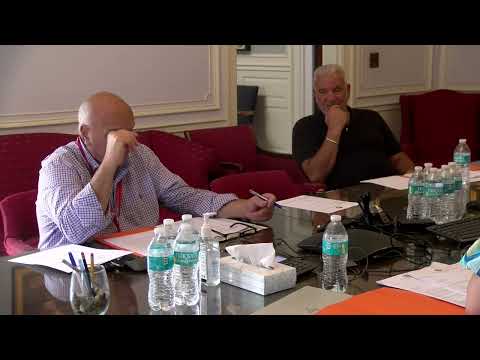
Facilities staff updated the Facilities and Operations Subcommittee on July 14 about two long-vacant properties — the Wylie School and the Stone School — and the committee voted to table formal disposition while staff and committee members explore reuse options and cost implications.
Why this matters: both buildings have been vacant for years and carry ongoing maintenance and security costs. Staff said renovating Wylie into usable space would be expensive relative to the building’s size; Stone School sits on a larger parcel and is on the historic register, which complicates demolition or redevelopment.
What staff said about Wylie and Stone
On the Wylie School, staff told the committee that MSBA (Massachusetts School Building Authority) reviewers declined to engage because the building is shuttered, and that full renovation would be roughly $7.5–8 million for a single‑unit building — a figure staff described as not cost-effective. Staff estimated roughly $10,000 to empty and clear the building prior to turnover.
On the Stone School (1207 Globe Street), staff said the roof is slate and dry but the site would be expensive to develop: staff described prior modular proposals that came in at very high per-square-foot prices and said a full new-build request submitted in the district capital plan this year seeks roughly $85–89 million for a large replacement school on that site (a 600–650-student facility would not be on a pre‑K scale). Stone is listed on the historic register, which staff said would complicate demolition and favors adaptive reuse in some scenarios.
Discussion, options and committee direction
Committee members and staff discussed several pathways: (1) turnover to the city or a preservation group for adaptive reuse (several members referenced past examples where donated buildings were preserved and adapted), (2) demolition and new construction (high capital cost) and (3) temporary modular/trailer units for pre‑K or other uses. Committee members asked whether preservation grants might be available because Stone is on the historic register.
Formal action
A committee member moved to table the disposition item to give staff time to research costs, reuse options and the position of preservation stakeholders; the motion carried on a roll call vote. No property transfer or demolition authorization was approved at this meeting.
Quotes
“I scoped out the Wylie about 10 years ago… It's not a very, useful building,” said Ms. Corey, a committee member who had inspected Wylie in prior site visits. Staff said Wylie could likely be emptied for roughly $10,000.
Ending
The committee tabled further action and asked staff to return with: (1) a clearer cost estimate for demolition, renovation or safe turnover; (2) options for modular classroom placement if short-term space is needed; and (3) information on preservation-grant opportunities given Stone’s historic-register status.