
Committee backs bill limiting sitewide lead bans on federal refuges, prompting science and access debate
Get AI-powered insights, summaries, and transcripts
Subscribe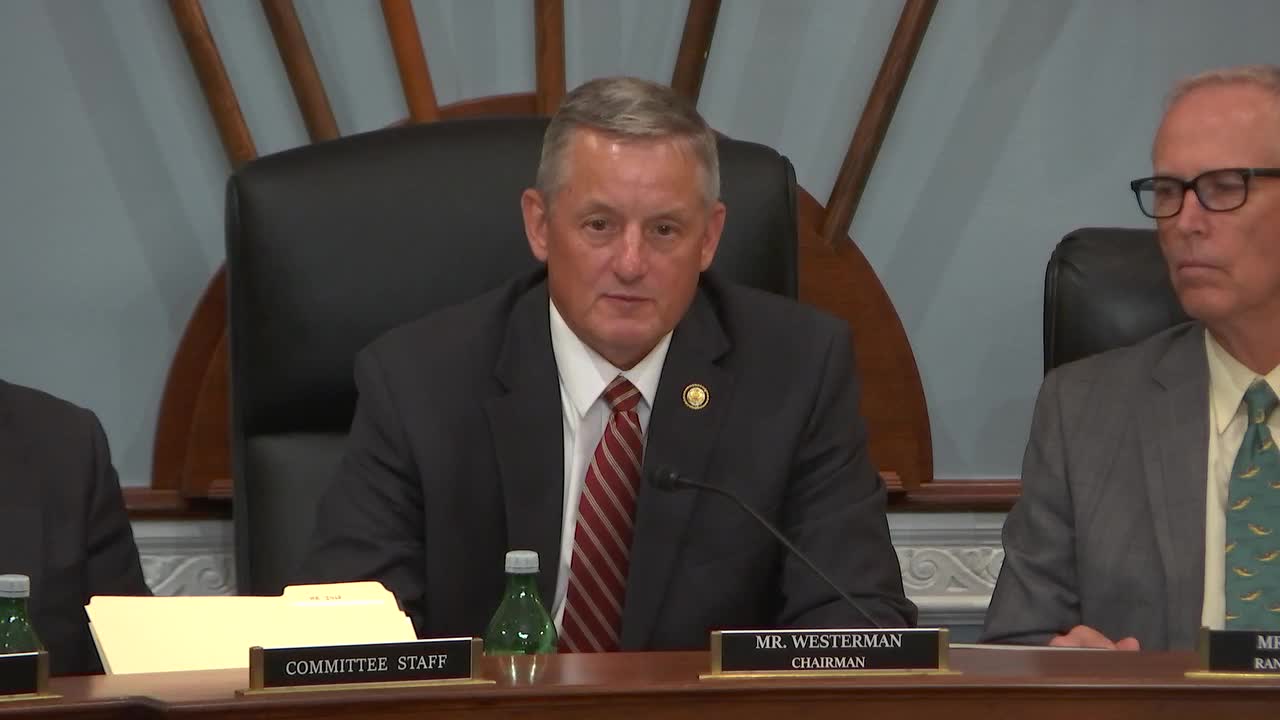
Summary
The House Natural Resources Committee voted to report HR 556, the Protecting Access for Hunters and Anglers Act, after partisan debate over whether federal land managers should be authorized to restrict lead ammunition and tackle without site‑specific scientific findings. Sponsors say the bill protects access; opponents argue lead harms wildlife.
The House Natural Resources Committee voted to report HR 556, the Protecting Access for Hunters and Anglers Act, to the full House after extended debate over whether federal land managers should be able to prohibit lead ammunition and fishing tackle at particular sites based on broader ecological concerns. Representative Whitman, sponsor of the bill, said it preserves access to hunting and fishing unless unit‑specific science shows lead is “primarily causing” wildlife population declines.
Supporters said the bill protects sportsmen’s access to federal lands and promotes site‑specific, science‑based decision making before broad prohibitions are imposed. Representative Whitman noted federal and state conservation funding tied to hunting and fishing, telling the committee that fish and wildlife excise receipts in fiscal 2025 totaled nearly $1 billion, with roughly $750 million designated for wildlife restoration and about $416 million for fish conservation. He framed the bill as requiring measurement and localized analysis rather than refuge‑wide or nationwide actions taken without data.
Opponents said the science on lead is well established and that lead ammunition and tackle poison many wildlife species. Ranking Member Huffman called the bill “a gift wrapped present for the gun industry,” said it would “handcuff federal land managers,” and argued that the existing refuge managers’ use of restrictions is science‑based and intended to sustain hunting and fishing. Several members and witnesses said state programs and voluntary exchanges have reduced use of lead in many places, and members representing states with existing lead‑reduction programs described those programs as successful.
The committee debated and rejected an amendment by Representative Dingell that would have reinstated a “best available science” standard and preserved managers’ ability to act when lead is a contributing factor rather than the sole, primary cause; the amendment failed (ayes 17, nays 23). The sponsor’s amendment in the nature of a substitute (Whitman ANS) was adopted, and the committee ordered the bill reported to the House. The final recorded committee vote reported in the transcript was yeas 23, nays 17.
Members cited field examples. Opponents pointed to documented lead poisoning in species such as bald eagles and California condors and argued non‑lead alternatives are available or increasingly affordable. Supporters countered that not all sites have the same exposure pathways and that decisions should be based on local monitoring showing lead from ammunition or tackle is present in forms that wildlife ingest at biologically meaningful levels.
The debate also included questions about administrative practice and precedent: proponents referenced the need for unit‑level studies before restrictions, while opponents said forced procedural hurdles could make it easier in some cases for land managers to close units entirely rather than undertake the costly site‑by‑site studies the bill requires. The committee action sends the bill to the House; members called for more data collection and for federal and state coordination on alternatives and outreach to hunters and anglers.