
Committee approves Black Vulture Relief Act to expand livestock protections; opponents say permits already exist
Get AI-powered insights, summaries, and transcripts
Subscribe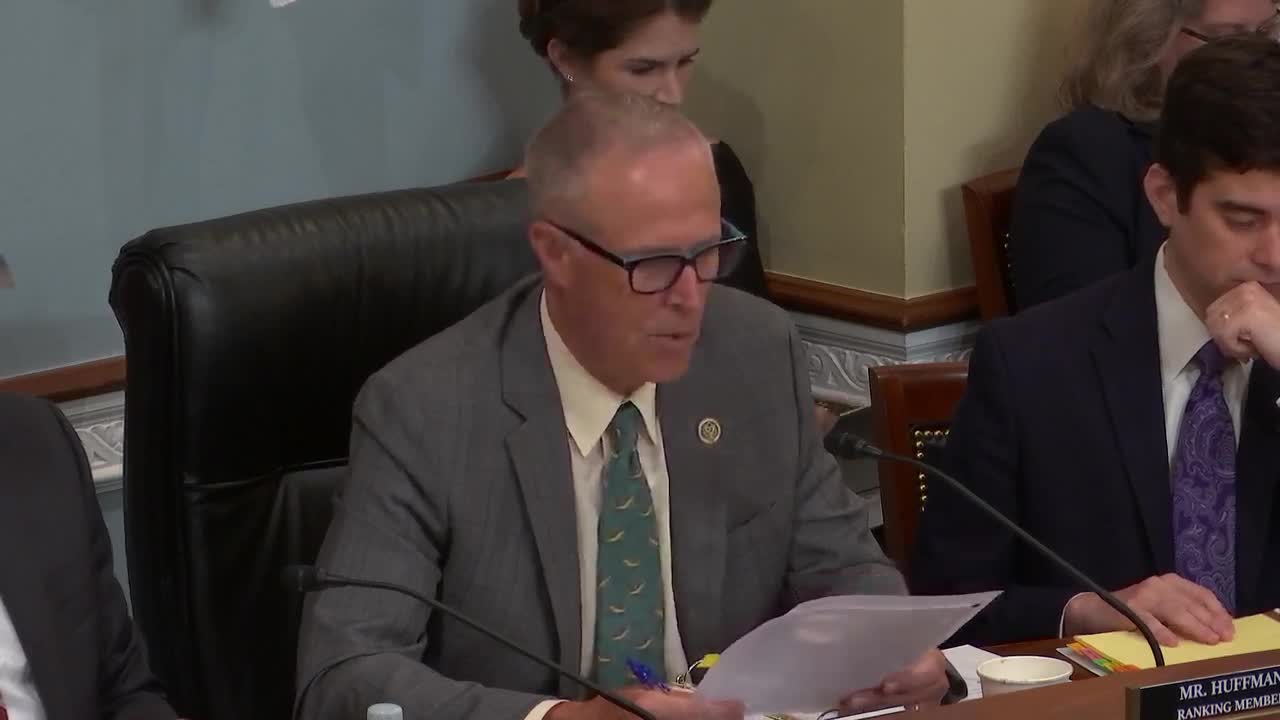
Summary
The House Natural Resources Committee voted to report HR 2462, the Black Vulture Relief Act, after debate about whether existing Fish and Wildlife Service permit programs already accommodate livestock depredation. Supporters said the bill gives producers immediate tools; opponents said a codified permit pilot already provides relief.
The House Natural Resources Committee voted to report HR 2462, the Black Vulture Relief Act, to the House after debating whether new statutory changes are necessary to address black vulture depredation on livestock. Supporters said the bill gives farmers and ranchers more timely tools to defend livestock; opponents said the Fish and Wildlife Service’s existing permit program, now codified in the America’s Conservation Enhancement (ACE) Act, already provides needed authority.
Representative Rob Whitman and the bill sponsors, Representatives John Rose and Darren So, framed the measure as relief for livestock producers. Committee proponents said black vultures increasingly attack newborn calves in flocks and that federal permit limits—commonly a 10‑bird cap per permit in some states—do not match field realities. Representative Westerman argued the bill “ensures that livestock producers are given the tools they need to fully address black vulture depredation and protect their livestock and livelihoods.”
Ranking Member Huffman said the bill is unnecessary because the Fish and Wildlife Service established a pilot program and later expanded it to cover the species’ full range; his statement noted that statewide depredation permits could authorize many takes but were not being fully used. He said the 2021 pilot allowed states and farm bureaus to centralize permitting, and that in sponsor states a statewide permit authorized 1,000 takes while producers used only 97 in 2022 and 64 in 2023.
Committee witnesses and members cited data on the species and depredation: supporters cited a figure that black vultures now number in the millions and asserted substantial livestock losses in some regions, while USDA Wildlife Services data were referenced by members who said that in 2024 the agency “dispersed almost 100,000 black vultures and euthanized over 13,000 across 22 states.” The committee also discussed humane and reporting requirements; the bill requires producers to report takes annually to the Fish and Wildlife Service.
Members debated an amendment offered by Ranking Member Huffman requiring demonstration of a sustained need before the bill’s provisions would take effect; that amendment (Huffman No. 1) failed (ayes 17, nays 23). The chair’s amendment in the nature of a substitute (Westerman ANS) was adopted, and the committee ordered HR 2462 reported favorably to the House. The final recorded committee vote reported in the transcript was ayes 22, nays 18.
Supporters framed the measure as responding to on‑the‑ground livestock losses: Representative Westerman referenced testimony from a Missouri rancher who said vultures may descend in flocks of 40–50 and that a 10‑vulture per‑year limit does not deter depredation. Opponents and some witnesses said the existing permit framework is flexible, widely available, and underused, and that the ACE Act codified a livestock permit program for black vultures last year.
The committee’s action will send the bill to the House with the committee’s favorable recommendation. Members warned that state-by-state differences in depredation patterns, reporting requirements, and the Migratory Bird Treaty Act’s protections for species would shape implementation if HR 2462 becomes law.