
Committee advances bill to delist Greater Yellowstone grizzly, return management to states
Get AI-powered insights, summaries, and transcripts
Subscribe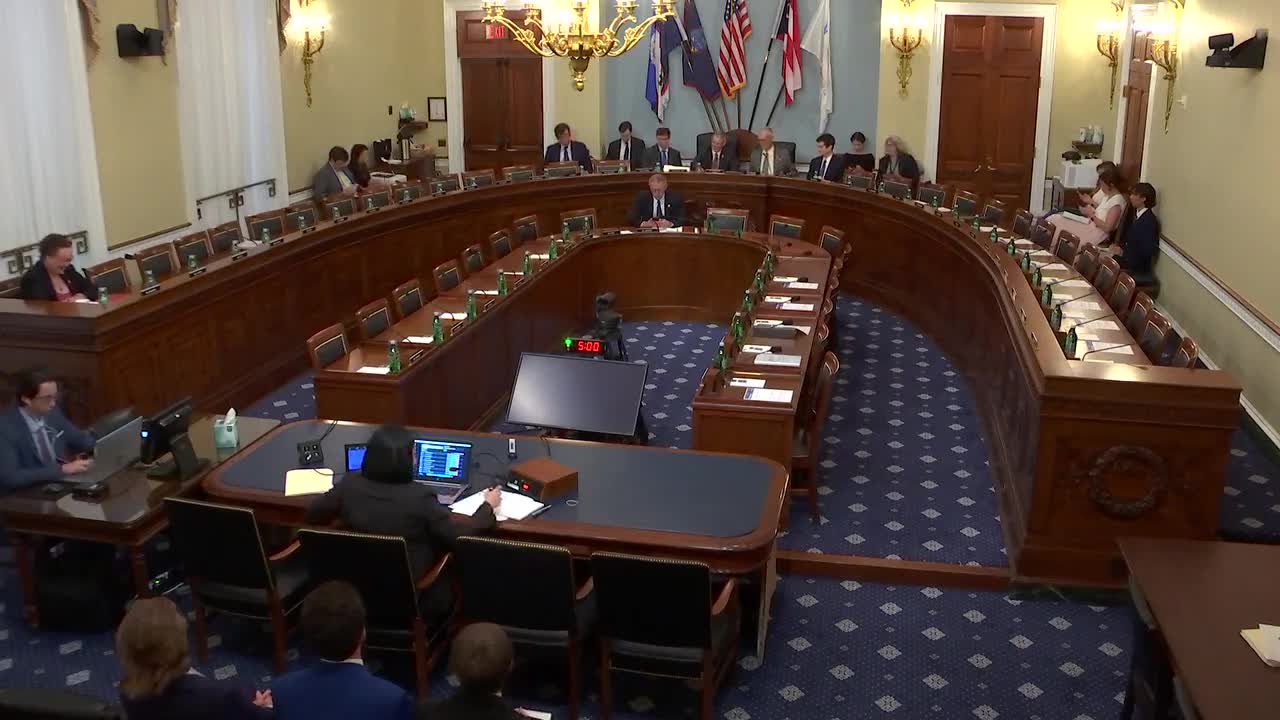
Summary
The House Natural Resources Committee voted to report HR 281, the Grizzly Bear State Management Act, advancing legislation that would reinstate a 2017 Fish and Wildlife Service rule to remove the Greater Yellowstone Ecosystem grizzly population from the Endangered Species Act and return primary management to state agencies.
The House Natural Resources Committee voted to report HR 281, the Grizzly Bear State Management Act, favorably to the full House after a day of debate over whether the Greater Yellowstone Ecosystem grizzly has met federal recovery goals and whether delisting should be decided by statute or further administrative review. Representative Harriet Hageman, sponsor of the bill, urged colleagues to reinstate the 2017 Fish and Wildlife Service rule removing the GYE grizzly from the federal list and return management to the states.
The bill matters because it would direct the Department of the Interior to reissue the 2017 final rule entitled “Endangered and Threatened Wildlife and Plants, Removing the Greater Yellowstone Ecosystem Population of Grizzly Bears from the Federal List of Endangered and Threatened Wildlife.” Proponents said the population has exceeded recovery goals and that state plans can manage conflicts. Opponents said recent administrative science updates and the lack of consensus with tribal nations counsel against a piecemeal congressional delisting.
Supporters argued the Greater Yellowstone grizzly is a recovery success story. Representative Harriet Hageman, the bill sponsor, said the GYE population has “crossed the 500 bear threshold” and “is now over 1,100 bears,” and that the population “has exceeded the US Fish and Wildlife Service’s recovery goals for over two decades.” Representative Stauber and others said state management plans—particularly Wyoming’s—provide adequate regulatory tools and that delisting would free federal resources for species still needing recovery funding.
Opponents pressed scientific and governance concerns. Ranking Member Huffman said the bill would “force the premature delisting of grizzly bears… ignoring years of best available science,” warned it would “silence public input,” and said some states have not shown a credible commitment to continued conservation. Representative Huffman and others also raised concern about tribal consultation and the broader genetic and range-based species assessments the Fish and Wildlife Service has updated since 2017.
Members debated several amendments. Ranking Member Huffman’s amendment (Huffman No. 1) that would have required the Department of the Interior to consider updated species status assessments and any new characterizations of population segments was defeated (ayes 18, nays 20). Representative Hoyle’s amendment to condition reissuance on a formal determination that delisting would not infringe tribal sovereignty or treaty rights was also defeated (ayes 18, nays 20). An amendment that would have removed language blocking judicial review (Dingle No. 3) was defeated (ayes 18, nays 20). The amendment in the nature of a substitute offered by Representative Hageman was adopted, and the committee ordered the bill reported favorably to the House. The committee recorded the final report vote: ayes 20, nays 19.
Tribal consultation and range-scale science were persistent themes. Representative Hoyle described the cultural significance of grizzly bears to tribal nations and cited a multitribal treaty and calls for meaningful government‑to‑government consultation; she offered an amendment to ensure consultation before any delisting took effect. Supporters of the bill said the Wyoming Grizzly Bear Management Plan includes coordination with the Eastern Shoshone and Northern Arapaho tribes and the Yellowstone Grizzly Coordinating Committee, and they argued that plan and state staffing provide sufficient local expertise.
The transcript reflected multiple factual points offered by members: the Fish and Wildlife Service’s historical recovery goals for the GYE grizzly (a threshold of 500 and an average target cited as 674), an estimated current population “over 1,100 bears,” an annual average of roughly 200 grizzlies born in the GYE, an average of 231 verified conflicts per year in Wyoming (members cited the figure as an example of increasing human–bear interactions), an annual occupied‑range expansion rate of 3.65% with a high of 27,208 square miles, and that Wyoming reported nine full‑time Game and Fish staff assigned to grizzly work and more than 50 scientific publications produced by state staff in the last 15 years.
What the committee did not do was adopt an amendment requiring additional federal scientific review beyond the reissuance of the 2017 rule; the committee voted to send the Hageman substitute to the House. Members on both sides said they want recovery and sustainable management but disagreed about process and the scope of review. Several members said the question now moves to the floor if the House takes up the measure.
The committee’s action sets up further consideration in the full House; the committee record shows multiple postponed recorded votes on amendments during markup and formal notice that minority members intend to file supplemental and minority views in the committee record.