Get Full Government Meeting Transcripts, Videos, & Alerts Forever!
Get email alerts on the Physician Recruitment And Pipeline topic
No spam. Unsubscribe anytime.
Work group hears state-level ideas to boost physician recruitment, retain graduates
Summary
Presenters outlined recruitment best practices, national benchmarks and state pipeline models; members discussed a Connecticut job board, loan-forgiveness options and which state agency would carry recommendations forward.
The work group on July 1 heard two focused presentations on physician recruitment and on building a pipeline of clinicians to keep graduates practicing in Connecticut.
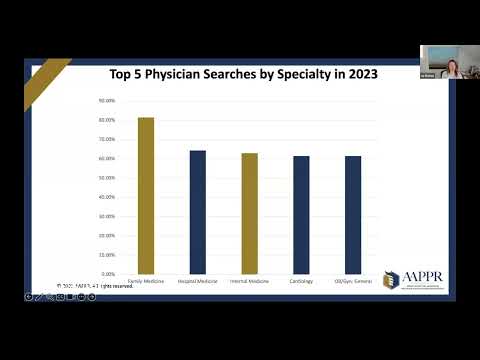
Liz Mahan, representing the Association for Advancing Physician and Provider Recruitment (AAPPR), told the group the physician recruitment process must be strategic rather than a reaction to open positions. “The physician recruitment process is not about filling vacancies. It has to be strategic,” Mahan said, and she described the “provider life cycle” from attraction and hiring through onboarding, alignment, development and retention.
Mahan emphasized alignment among stakeholders, clear job descriptions, diverse sourcing channels and a high-touch onboarding process that she distinguished from orientation: “Onboarding is not orientation,” she said, adding that effective onboarding can last a year or more and is aimed at integrating new clinicians into both the practice and the community.
Mahan summarized AAPPR benchmarking data showing national patterns: about 71% of physician offers are accepted and about 83% for advanced practice providers (APPs); median time-to-offer-signing for primary care searches was 125 days with an average of about 189 days to fill a vacancy, and credentialing/licensure can add another three to four months. Median annual turnover was roughly 7% for physicians and 9% for APPs.
Tracy Marquis Edmond presented a “pipeline” approach aimed at improving in-state retention of trainees. She cited national findings that a substantial share of residents remain in the state where they train (about two-thirds for family medicine and psychiatry, roughly 60% for internal medicine in national data cited) and reviewed several state models: Delaware’s statewide branding campaign and job board, Idaho’s expansion of medical school and GME positions, Maine’s Tufts–Maine program with state scholarship support, and Vermont’s state-funded residency placements in rural clinics.
Discussion among work group members focused on what the state can and should do. Members raised several ideas that could appear in recommendations: a Connecticut job board or centralized listing for primary care openings; meaningful, multi-year loan-forgiveness or debt-forgiveness tied to in-state service; targeted state funding to support residency training and rural placements; and a statewide branding campaign to highlight Connecticut practice opportunities. One member framed the current market bluntly: “It is everywhere,” noting long appointment wait times for primary care and behavioral health.
Participants also debated where responsibility would sit inside state government. Department of Public Health staff present said there is not an obvious single state agency currently charged with physician workforce development, and members discussed whether the legislature or governor’s office would be the right vehicle to assign responsibility and funding.
Work group members flagged retention and practice environment as central issues: several speakers said Connecticut’s challenges may be less about the number of GME slots — which some states have trouble filling — and more about keeping clinicians practicing in-state after training. Panelists and members identified pay, administrative burdens, narrow scope of practice in some practices, and family or lifestyle factors as important drivers of retention and turnover.
The meeting closed with plans to fold these ideas into the group’s recommendations. Members asked staff to return with options that distinguish (a) actions local organizations can take (employer branding, onboarding best practices, third-party recruitment support), (b) state-level investments the group can recommend (scholarships/loan forgiveness, job board, targeted GME funding or incentives), and (c) an implementation path that identifies which state entity would be responsible for carrying the proposals forward.
Ending: The group scheduled its next meeting for Aug. 19 on behavioral health and requested staff include the recruitment and pipeline discussion in the minutes and in the near-term recommendations packet.