Get Full Government Meeting Transcripts, Videos, & Alerts Forever!
Get email alerts on the Immigration Enforcement Local Limits topic
No spam. Unsubscribe anytime.
Commissioners weigh 'sanctuary' resolutions; sheriff outlines limits on local cooperation with federal immigration enforcement
Summary
Following a recent Lewis County resolution, Cowlitz County commissioners said they would monitor but not adopt a similar resolution; Sheriff Thurman described legal limits on local cooperation with federal immigration enforcement and said the county has had few ICE interactions.
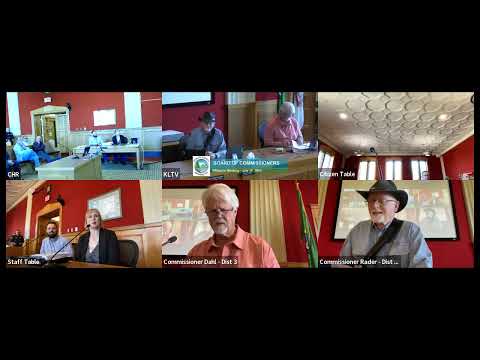
Cowlitz County commissioners discussed a news report about neighboring Lewis County's resolution stating it is not a sanctuary jurisdiction and whether the county should take action. Commissioners said the Lewis County resolution did not change state or federal law and that they would monitor developments but saw no immediate benefit in adopting a local resolution.
At the same meeting, community members asked the sheriff to explain how state and federal laws interact on immigration enforcement. Sheriff Thurman said local law enforcement has had "very, very little interaction with, immigration enforcement issues," and explained how local practice changed after court rulings about detainers and warrants.
Sheriff Thurman told the board that immigration officers previously used handwritten detainers in some jails and that later court rulings required a judicial warrant or judge-signed paperwork before local jails would hold someone for federal authorities. “If there’s a federal warrant of arrest, that means a warrant signed by a federal magistrate, then we can, arrest them on that,” Thurman said. He added that “ICE operates on their own” and that local agencies would check credentials and consult prosecutors when outside authorities seek assistance.
Commissioners also flagged a separate, related reporting item: a state office estimate that Cowlitz County’s population density may exceed 100 residents per square mile, which would remove the county’s rural designation. Commissioners said the county currently receives roughly $2.8 million to $3 million a year tied to that rural designation and uses those funds for infrastructure projects such as bridges, culvert work and water-line extensions. Staff said they were verifying the estimate and whether the county would continue to qualify through 2054 under current rules.
The board did not adopt any new policy on immigration enforcement at the meeting. Commissioners said they would ask the sheriff to consider a public session outlining how the sheriff’s office handles federal requests and the limits of local authority.