Get Full Government Meeting Transcripts, Videos, & Alerts Forever!
Get email alerts on the Pavement Maintenance topic
No spam. Unsubscribe anytime.
Staff: chip seal provides most cost-effective pavement life extension for Region 4 roads
Summary
Unnamed staff members told the meeting that chip seal, applied by two specialized crews in Region 4, is the most cost-effective surface treatment to prolong pavement life; they described equipment, crew duties and limits of full reconstruction.
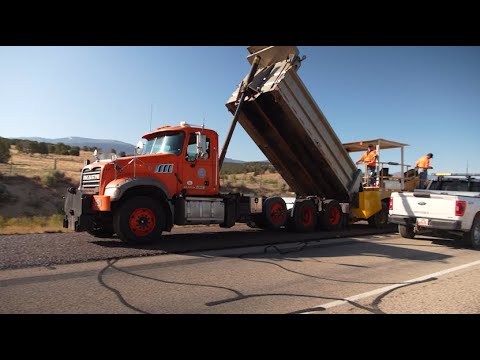
Staff members said chip seal is the most cost-effective way to extend pavement life on roads in Region 4. Staff member 1, a staff member, said, "Chip seal is probably the best bang for the buck that we can give our customers." Staff member 2, a staff member, described the equipment and labor involved: "And the guys come in with the distributor trucks, and they lay a multiplied asphalt. And then you have the the chipper here, which falls behind that that's hooked to a truck, and they lay down chips just following down the road."
Why it matters: staff described chip seal as a lower-cost surface treatment that prolongs pavement life and improves safety for the traveling public compared with full reconstruction. "By putting a surface like this on, it prolongs the road," Staff member 1 said, adding that chip seal "builds a better structure."
Details from the discussion: staff said the agency has two specialized crews in Region 4 that perform chip sealing. Those crews handle hauling chips to the chip box, setting up signing, brooming and operating rollers, while distributor trucks apply asphalt and a chipper follows to place aggregate. Staff member 2 said the crews "take pride in what they do," and emphasized the labor and coordination required. One speaker noted full reconstruction on a 10-year cycle is desirable but unrealistic: "I mean, it'd be great if we could redo a whole new road every 10 years or whatever," Staff member 2 said, and Staff member 1 replied that chip sealing offers the best cost-to-life tradeoff.
Discussion vs. action: the remarks were descriptive and advisory; no formal motion or vote on pavement policy or funding was recorded in the transcript.
Clarifying details drawn from the discussion include that two specialized chip-sealing crews operate in Region 4; crews perform hauling, signing, brooming and rolling; distributor trucks and a trailing chipper are used; and staff view chip seal as a cost-effective surface treatment rather than a substitute for full pavement reconstruction.
No formal actions or directives were recorded in the provided transcript segment.