Get Full Government Meeting Transcripts, Videos, & Alerts Forever!
Get email alerts on the Animal Control topic
No spam. Unsubscribe anytime.
Benton County holds hearing on proposed Ordinance 80; public raises vaccinations, private-property and enforcement concerns
Summary
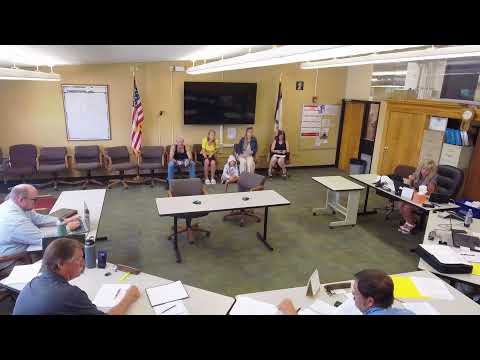
The Benton County Board of Supervisors held a public hearing on proposed Ordinance 80 (to replace Ordinance 37), drawing extended public comment on definitions of "dangerous" animals, the role of private property, rabies vaccination requirements, quarantine procedures and enforcement capacity.
The Benton County Board of Supervisors opened a public hearing on proposed Ordinance 80, intended to replace Ordinance 37 and revise the county's rules on dangerous and vicious animals. The board heard about 90 minutes of public comment and staff explanation that focused on which species would be listed, how “at-large” is defined, vaccination and quarantine procedures, and who would enforce the ordinance.
Why it matters: The draft ordinance changes definitions and procedural provisions that determine when law enforcement or a contracted animal-control provider can remove or confine an animal; the questions raised affect residents’ property rights, public-safety responses to dog bites and the county’s ability to enforce the law.
The hearing brought repeated concerns about the ordinance’s definitions. One speaker noted the draft lists many species among “dangerous animals” and asked how the rules would affect people who keep nontraditional domestic animals ("How does this work for the people that raise it?"), a point that drew follow-up questions from Supervisors and staff. County staff said the draft borrows language used elsewhere and that the list is intended to identify animals that are “dangerous per se,” but agreed to clarify items and exceptions for licensed breeders or state-licensed wild-game operations.
Another major topic was the difference between animals found "at large" on public property and animals on private property. Several residents asked whether a homeowner who posts warnings or uses fencing would be subject to penalty; one speaker said, "Don't tell me what to do on my own private property," arguing the county should not regulate animals that do not leave a property. County staff and supervisors replied the draft aims to address animals off the owner’s premises and noted language will be clarified to reduce conflicts over property rights.
Health and rabies control drew sustained comment. The draft follows Iowa statutes on rabies vaccination; staff pointed to Iowa Code chapter 351.33, which requires dogs and cats older than six months to be vaccinated against rabies but contains a carve-out for animals “kept in kennels and not allowed to run at large.” Several speakers urged stronger language so victims of unvaccinated animal bites are advised to seek immediate medical care and so county officials can act quickly instead of waiting the ordinance’s existing quarantine period.
The hearing included a reading of the ordinance’s variance language; as read aloud, the draft states in part: “Under no circumstances shall a variance be granted after a dangerous or vicious animal has killed a domestic animal or attacked a person resulting in injury.” Speakers asked whether that sentence allows any discretion in cases of accidental or one-time livestock predation, and asked for additional discretion for businesses or licensed operations.
Law enforcement capacity and enforcement mechanisms were also discussed. Sheriff’s office representatives and others said the county does not currently employ a dedicated animal-control officer and that the sheriff’s office would prefer a contract with an outside provider rather than having deputies perform sustained animal-control duties. County staff said they will explore contracting with a humane-society or private animal-control service and will draft clearer enforcement procedures, including where a confined animal should be held during quarantine.
Board process: Supervisors did not vote on the ordinance at this hearing. Staff said they will revise the draft to address the questions raised—definitions of “at large,” the kennel exception, quarantine and variance procedures, and enforcement mechanisms—and return with a revised draft. The board agreed to keep the matter on next week’s agenda for further review; staff suggested posting a redlined draft that highlights proposed changes before the next public meeting.
The next scheduled reading was not finalized during the hearing; staff said they would publish revised language and consider extending the reading schedule to allow time for additional stakeholder input.
Ending note: County staff asked members of the public and interested organizations to submit written comments and requested that the board’s legal staff provide a redline of recommended edits before the next hearing so supervisors and the public can compare versions.