Get Full Government Meeting Transcripts, Videos, & Alerts Forever!
Get email alerts on the Transportation Impact Fees topic
No spam. Unsubscribe anytime.
Panama City workshop reviews proposed transportation impact fees; commission leans to adopt study but delay charging fees
Summary
City Manager Jonathan Hayes opened a workshop on a proposed transportation impact‑fee ordinance for the City of Panama City and introduced the Kimley‑Horn consultants who authored a draft study and fee schedule.
City Manager Jonathan Hayes opened a workshop on a proposed transportation impact-fee ordinance for the City of Panama City, calling it a chance to refresh elected officials and the public on a study completed last winter and revised as recently as May. "This is a workshop on the transportation impact fees ordinance for the city of Panama City," Hayes said, introducing Kimley‑Horn consultant Vincent Spar and city staff.
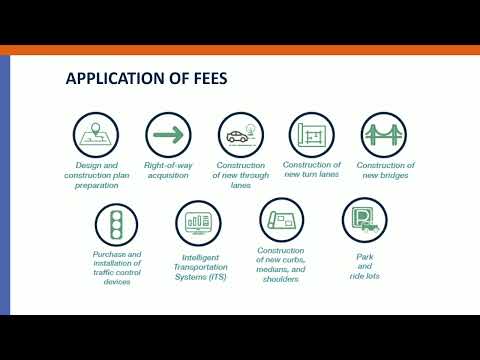
Consultants from Kimley‑Horn presented the study's methodology and legal constraints under Florida law, saying impact fees must be proportional to new travel demand and used for capacity improvements rather than operations or previously funded projects. "Impact fees do address a growing community in a more targeted way in terms of asking for the the funding for those capacity improvements from new developments," Vincent Spar said.
The draft ordinance and fee schedule presented by staff and Kimley‑Horn would split the city into service areas (Panama City proper and Panama City North), apply trip‑generation rates from ITE standards (with pass‑by trip adjustments), and allow credits for gas‑tax and ad‑valorem contributions and for developer‑built improvements. Fuller, the city's director of development services, highlighted several changes made after public workshops: exemptions for single‑family homes on existing lots of record under 2,400 square feet; exemption for accessory dwelling units under 1,200 square feet; an affordable‑housing exemption tied to the state statute; credits for prior nonresidential uses, public facilities and certain development‑order situations; and an appeal route to circuit court. Fuller also said collection would not begin earlier than Oct. 1 of this year.
Commissioners pressed on several topics. Commissioner Hughes questioned how change‑of‑use calculations would affect conversions (for example, a school to apartments or a house to a coffee shop) and whether credits for existing uses would soften large bills for reuses. Staff replied that the ordinance calculates the difference between the prior use and new use and issues credits for prior activity, similar in concept to water/sewer impact‑fee practice. Commissioners expressed particular concern about the scale of fees proposed for commercial projects and for new multifamily housing, and about certainty for small builders and first‑time entrepreneurs.
A central tension in the discussion was competition and timing: several commissioners said Panama City competes with neighboring jurisdictions and Bay County for development and jobs, and that unusually high fees could push projects outside city limits. Commissioner Street summarized that a clear, predictable fee (or the absence of one) is more valuable to builders than a complicated set of exemptions that is difficult for a small applicant to navigate.
Members of the development community and business groups spoke during audience participation. Patrick Chapin, president and CEO of the Bay County Chamber of Commerce, and several local builders and brokers said the draft fees would be disproportionate to market conditions. Jim Everett, a commercial real‑estate broker, provided conversions of the fee schedule into dollar examples and said a 50,000‑square‑foot grocery would carry a multimillion‑dollar impact as drafted. Jeff Marzello, division president for D.R. Horton, and other residential builders warned higher fees would be passed to buyers and could make many projects infeasible given current construction costs and interest rates.
Developers and builders urged the commission to either lower the proposed rates or to adopt the study without beginning collection immediately. Several speakers and commissioners advocated adopting the study as a legal and technical finding of need while setting the collection date or the initial charged rate to zero to preserve the city's future options and avoid restarting the study process. "You can adopt the study and set the fees such that you do not collect them for a defined period," a staff member advised during the public comment period, noting Bay County maintains a study while keeping its fee at zero.
Commissioners and staff also discussed coordination with other jurisdictions and agencies. Consultants noted that capacity improvements on county or state roads (FDOT) are typically required by those agencies but that the city may still collect impact fees for network capacity and provide credits where developers build required off‑site improvements. Staff recommended a focused effort to reconcile the new city study with Bay County's practice and to discuss Panama City North specifically with the county because many roads and planned growth there are outside city ownership.
The workshop did not include a formal vote. Commissioners signaled a preference for adopting the study as the official analysis of need while delaying collection or initially setting the charged fee at zero so the commission could refine exemptions, consider a work program identifying priority projects, and coordinate with the county and FDOT. Staff was asked to return with options — including a work program / 10‑year capital plan, clarified exemptions, and recommended collection timing — ahead of the ordinance's second reading tentatively scheduled for July 22, 2025, at 5:30 p.m.
The commission closed the workshop and moved to a scheduled public comment period; the meeting ended after audience participation.