
County discusses random drug testing, background checks and safety-sensitive positions
Get AI-powered insights, summaries, and transcripts
Subscribe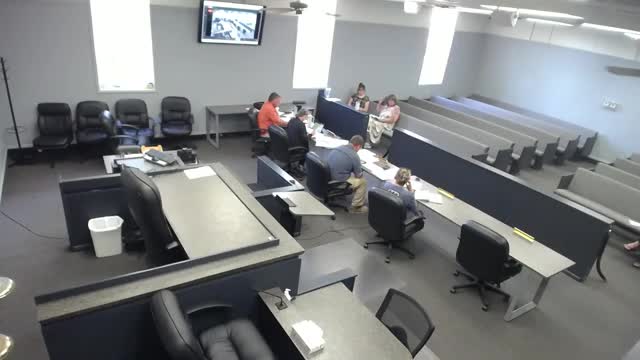
Summary
Marion County officials reviewed background-investigation and drug-testing language in the draft personnel manual, debated which roles should be designated safety-sensitive, and discussed medical-marijuana rules and post-offer testing. Staff were asked to tighten language and confirm legal limits.
During the June 26 Marion County personnel meeting, officials reviewed sections of the draft manual that cover background checks, random drug testing and the designation of "safety-sensitive" positions.
A staff participant noted that certain units—road shop, transfer station and maintenance—already use random, quarterly testing selected via a computerized program. "Employees in a safety sensitive position will be subject to random unannounced testing and computerized programs to determine the individual safety sensitive employees to be randomly tested," a staff member said. Attendees discussed whether random testing language in the manual should apply to every county employee or only to designated safety-sensitive positions; several participants recommended making the designation the responsibility of individual elected officials or department heads.
The group discussed limits on requiring background checks in some offices. One participant said the library and other offices have constraints on pre-employment background screening and that some offices only see records after hiring and during onboarding. Participants also addressed medical-marijuana use and impairment: the draft manual states safety-sensitive employees are not permitted to use medical marijuana while in a safety-sensitive role and that a positive test may result in removal from that position.
Attendees asked staff to clarify legal constraints and to make the safety-sensitive definition and selection process explicit in the manual. The transcript records participants agreeing to refine the language and to confirm that the policy aligns with state law and nondiscrimination rules. No formal vote or discipline was recorded; staff were asked to update the draft manual language to be more explicit about who can define safety-sensitive roles and how random-testing pools will be selected and implemented.
The transcript also contains examples and practice-level notes: road and maintenance employees have been randomly selected quarterly; some departments perform records checks rather than full background investigations before hire; and the policy includes post-offer or pre-employment testing in certain circumstances.