Get Full Government Meeting Transcripts, Videos, & Alerts Forever!
Get email alerts on the Public Comment topic
No spam. Unsubscribe anytime.
Residents urge Renton council to address historical discrimination and livestream meeting visibility
Summary
Two Renton residents urged the city council to address historical discrimination and to improve meeting transparency during the public‑comment period.
Two residents used the council’s public comment period to raise concerns about past and present discrimination and about meeting transparency and decorum.
Alice Lockridge, identifying herself as a Renton resident, said July 14 marked the 102nd anniversary of a large Ku Klux Klan rally held on city property in 1923 and urged the council to reckon with that history. She said the 1923 events included a members‑only gathering at People’s Park and a well‑publicized public event that she said drew 50,000 attendees; she also cited that the city’s high school at the time was named after Henry Ford. Lockridge also referenced what she described as a Washington Administrative Code provision, which she cited as “Washington Administrative Code 160 two‑sixteen 2 60,” and urged the council to use gender‑neutral job titles in official language.
Lockridge said, “This law states that it is discriminatory to gender a job title with nouns or suffixes in official government language, documents, job advertisements, or verbalizations.” Her remarks were delivered during the public comment period and did not lead to immediate council action.
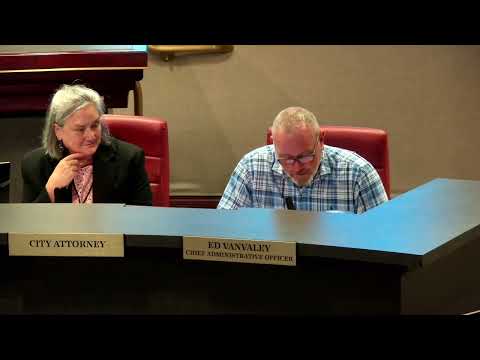
Sharon Bolstad, also a Renton resident, praised city staff interactions she had observed and urged council members to avoid negative nonverbal cues—crossed arms, smirks, whispering—and suggested that the Zoom and YouTube audience be able to see council members during meetings to improve transparency.
Neither comment produced an immediate policy change; both speakers addressed the council as members of the public. Council staff thanked speakers for their remarks and noted the city’s appreciation of staff service in separate agenda items earlier in the meeting.