Get Full Government Meeting Transcripts, Videos, & Alerts Forever!
Get email alerts on the Dangerous Dog Euthanasia topic
No spam. Unsubscribe anytime.
Fairbanks animal-control panel upholds euthanasia order for dog after April attack that broke woman’s arm
Summary
The Fairbanks North Star Borough Animal Control Commission voted 4-3 on May 19, 2025 to uphold an order to euthanize a dog named Bruce after an April 21 attack that hospital records and staff said caused multiple puncture wounds and fractures to a victim’s forearm.
The Fairbanks North Star Borough Animal Control Commission voted 4-3 on May 19, 2025 to uphold a staff determination that a 74-pound pit-bull–type dog named Bruce is dangerous and to sustain an order for euthanasia following an April 21 bite that left a woman with multiple puncture wounds and fractures requiring surgery.
The commission’s decision came after a contested appeal hearing in borough chambers in which animal-control officers described two recent serious incidents involving Bruce and shelter staff and a contract veterinarian said Bruce remained highly reactive while kenneled. Owner Jeremy Harshfield and several friends and neighbors urged the commission to allow rehabilitation, training and strict confinement instead of euthanasia.
Why it matters: Borough staff and medical records presented at the hearing described extensive injuries and a long, difficult attack; animal-control officers and the commission majority framed the decision as a public-safety measure. The owner may appeal the commission’s ruling to Superior Court; borough staff also warned that local enforcement tools are limited if the animal is released under conditions.
Animal-control testimony and medical evidence Officer Ross, an animal-control officer, summarized the agency’s file and its recommendation to the commission. Ross said the agency first received a report involving Bruce on April 19, 2024, later handled a bite report on March 14, 2025, and received a new report on April 21, 2025. Ross said the April 21 incident involved the victim, Charlotte Johnson, and that officers impounded Bruce at the scene for quarantine. Ross told the commission that the agency viewed the April 21 event as more than “a simple dog bite incident.”
Ross and other staff pointed commissioners to the medical documentation in the case. The hearing record includes an operative report and hospital supplemental admission information from Fairbanks Memorial Hospital that, according to staff, documented “approximately 12 penetrating injuries to the forearm” and a repair of a fracture to the victim’s ulnar shaft, plus a fracture to the distal radial metaphysis with two puncture wounds through bone. Ross said a shelter review using a standard dog-bite scale placed the April attack at a level (staff called it a level 5) for which the recommended outcome is euthanasia.
The borough’s contract veterinarian, Dr. Mercedes Pinto, told the commission that she examined Bruce through kennel bars while he was in quarantine and saw “very stiff body language” despite anti-anxiety medication. Pinto said she was “very worried that Bruce does present a danger to anyone who may encounter him” and, speaking to the commission, said she “agree[d] that euthanasia is the correct answer.”
Owner, witnesses and alternatives presented Jeremy Harshfield, the dog’s owner and the appellant, told the commission that Bruce has been his companion since puppyhood and argued the dog’s aggression surfaced while Harshfield was in treatment and away from the animal. Harshfield and several witnesses — including Devin Mathis, Michelle Johnson (the caretaker who was present during the April incident and mother of the victim), Tara Hoffman and others — offered testimony describing Bruce as loyal to a small number of people and said stress, confinement and inconsistent caregiving while the owner was in treatment may have contributed to the incidents.
Witnesses and the owner urged alternatives including neutering, ongoing training and strict, physical confinement at the owner’s property. Several supporters said they would assist Harshfield with training or supervision if the commission allowed another chance.
Legal limits and enforcement concerns raised by staff During deliberations borough legal counsel and animal-control staff explained limits on the agency’s authority. Counsel said the borough generally cannot withhold an impounded animal from redemption if the owner meets the statutory requirements in Title 22, and the shelter cannot itself provide spay/neuter services for privately owned animals. Animal-control staff told commissioners that violations of post-release conditions are enforced by citation (the code sets a starting fine such as $200), not by immediate seizure of the animal, and that the agency’s practical ability to prevent a future incident is limited if the owner declines to comply or the agency must wait for court processes.
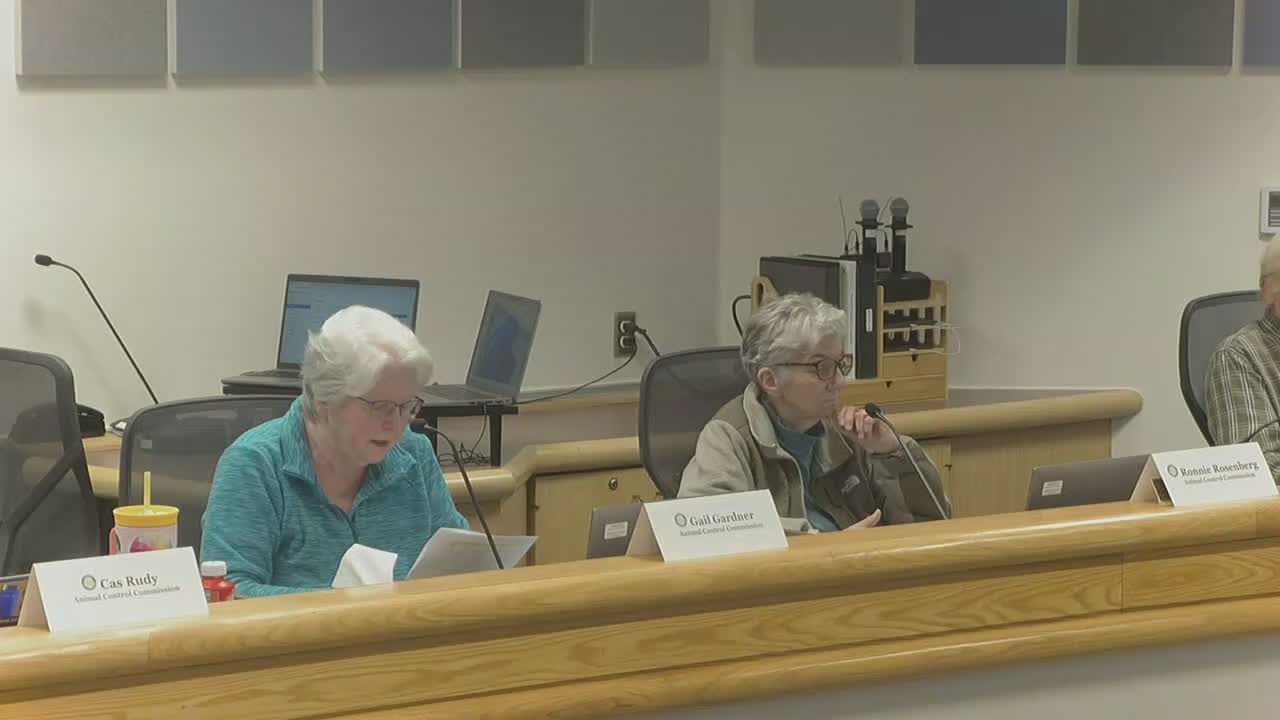
Motion, vote and appeal rights Commissioner Swan moved to uphold the dangerous determination, the euthanasia order and the staff’s proposed findings of fact; Commissioner Rosenberg seconded for purposes of discussion. After discussion the commission voted: Bethune yes; Swan yes; Rosenberg yes; Sherman no; Olness yes; Rudy no; Gardiner no. The motion passed 4-3. The commission’s clerk read appeal information: an owner aggrieved by the commission’s decision may appeal to Superior Court within 30 days; a notice of intent to appeal must be given to the animal-control officer within 72 hours and, if the animal remains impounded, the owner must prepay one month of room-and-board expenses.
Procedure and upcoming steps Commissioners and staff also discussed whether an owner could be present if the borough carries out euthanasia; staff said the agency’s current policy generally does not permit owner-present euthanasia of animals the borough owns, though management-level approval could be requested and the owner was told to contact the director’s office if he wished to seek an exception. Animal-control staff reiterated the operational point that if conditions are imposed but the owner redeems the animal without meeting them, the borough’s primary remedy is citation and later court enforcement, which may not prevent a future bite.
The commission adjourned after completing the vote. The owner was advised of appeal rights and administrative steps to notify the animal-control office.