Get Full Government Meeting Transcripts, Videos, & Alerts Forever!
Get email alerts on the Trails topic
No spam. Unsubscribe anytime.
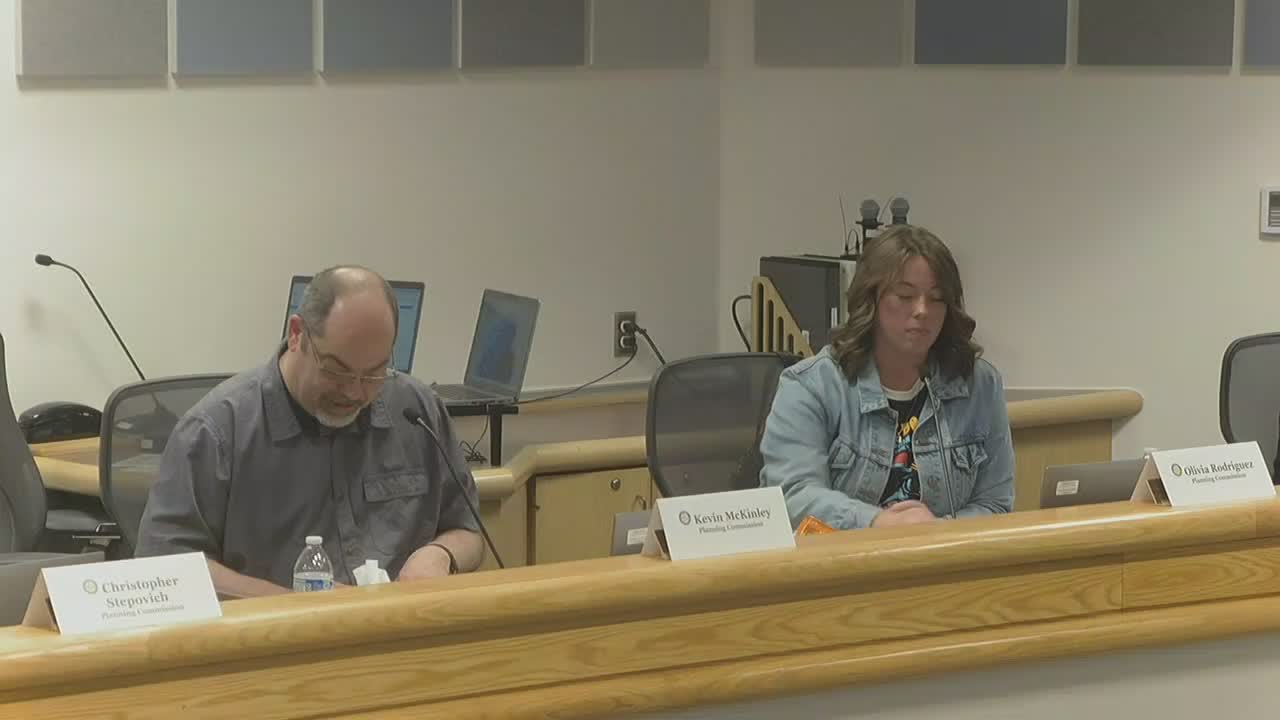
Planning commission recommends ordinance to ease trailhead permitting across borough zones, rejects adding OSB in initial motion
Summary
The commission unanimously recommended an ordinance to define and allow organized trail facilities more broadly under conditional use review in several zones; an attempted motion to add Outdoor Space Buffer (OSB) as a covered zone failed for lack of a second before the commission passed the ordinance as drafted, 7–0.
Mayor Grier Hopkins and Assemblymember Kelly jointly sponsored an ordinance the planning commission recommended on May 27 to make it easier to establish developed trailheads — called “organized trail facilities” in the draft — across more borough zoning districts through the conditional-use process.
Staff planner Katie Whiteside told commissioners the ordinance creates a definition for “organized trail facility,” clarifies that these facilities are distinct from trails and trail access points, and expands where a conditional-use permit can be used to authorize developed trailheads that provide parking, kiosks, signage and similar infrastructure. Whiteside said the change is intended to reduce unsafe roadside parking, provide addressable locations for emergency response and support improved trail stewardship and public awareness consistent with the 2023 Comprehensive Recreational Trails Plan.
“Organized trail facilities are typically a parking area and other developed aspects that help service that area,” Whiteside said. She emphasized the ordinance does not itself construct trails and that the change primarily reduces the permitting burden where trails are recommended by the Trails Plan but existing zoning did not clearly allow a developed trailhead.
Public testimony supported the ordinance’s goals but raised implementation questions. Max Plichta, chair of the Trails Advisory Commission, told the commission the TAC recommended the change and noted trailheads improve accessibility for newcomers, people with disabilities and families and reduce unsafe parking and trespass. Caller William Witte, who volunteers with EMS, said an addressable trailhead location is important for emergency response but urged explicit arrangements for long-term stewardship and maintenance (for example, plowing) so trailheads do not increase roadside parking during winter.
Stan Justice, president of Fairbanks Trails Inc., urged the commission to add the Outdoor Space Buffer (OSB) zone to the list of zones where trailheads would be a conditional use; another commissioner moved that amendment during deliberations, but the motion to add OSB did not receive a second and therefore was not adopted. A subsequent motion to recommend the ordinance as drafted passed on a 7–0 roll call vote.
Staff and commissioners discussed how the conditional-use process can address concerns about commercial operators. Whiteside and staff noted that principal-use analysis and existing code paths for commercial outdoor recreation distinguish a commercial tour operator from a public trailhead, and the conditional-use process permits site-specific conditions to restrict noisy or intensive commercial activities.
The commission’s recommendation will be forwarded to the borough assembly for consideration; staff said the ordinance implements goals from the trails plan and the comprehensive plan by improving access points and safety for the borough’s trail network.