
Fairbanks North Star Borough Assembly approves trailhead, downtown and short-term rental measures and backs FEDC ARDO bid
Get AI-powered insights, summaries, and transcripts
Subscribe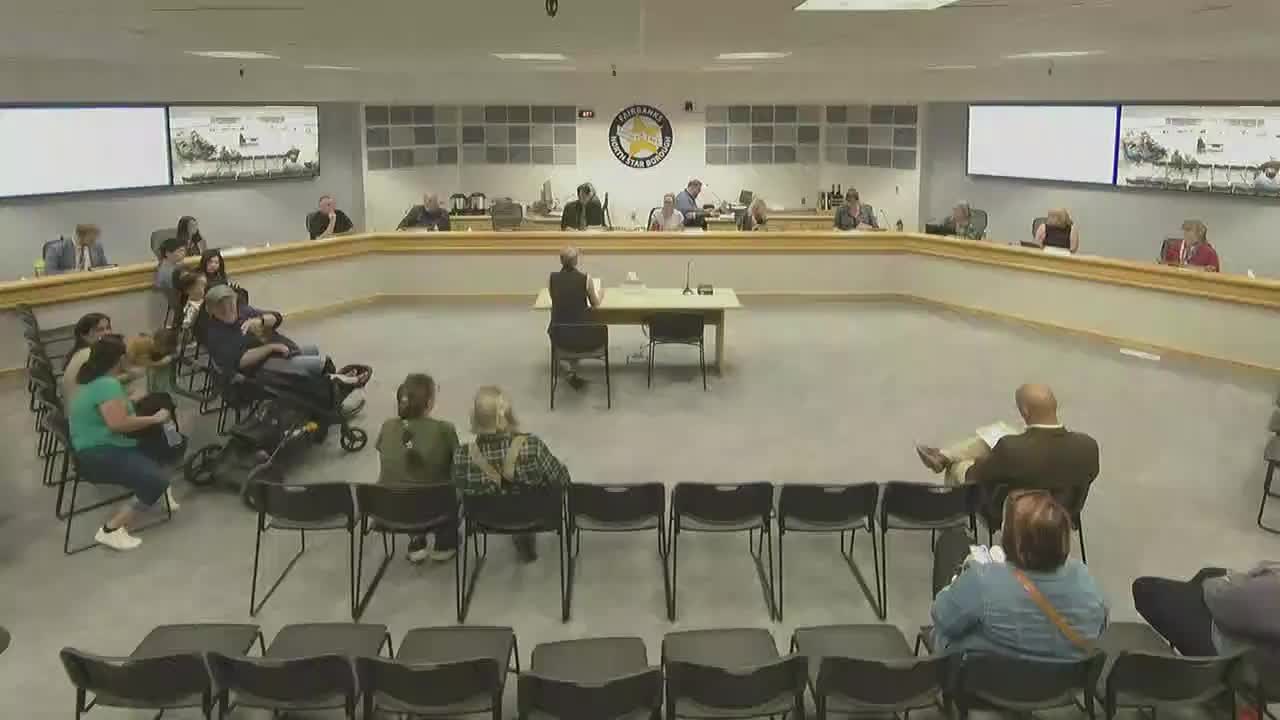
Summary
The Fairbanks North Star Borough Assembly on June 26 approved a package of land‑use and administrative measures — including funding for a short‑term rental tracking RFP, a zoning change allowing residential ground‑floor uses in the downtown central business district and a code update to formalize trailhead facilities — and voted to support the Fairbanks Economic Development Corporation’s bid to become an Alaska Regional Development Organization (ARDOR).
The Fairbanks North Star Borough Assembly on June 26 approved a package of measures aimed at land-use flexibility, public-safety access to trails, better data on short-term rentals and the sale of tax-foreclosed properties, and it voted to support the Fairbanks Economic Development Corporation’s application to be designated an Alaska Regional Development Organization (ARDOR).
The measures most likely to affect residents and property owners included an appropriation to buy software and services to identify and track short-term rentals, a zoning change that allows residential uses on downtown ground floors under a conditional-use permit, and a zoning code update to recognize organized trail facilities and trailhead parking as an allowed use in more zones.
Why it matters: the short-term rental item is intended to give borough officials data about how many units are listed and how often they are booked — information officials say is needed to study housing supply and enforcement gaps. The zoning changes aim to make it simpler to develop downtown housing and to provide addressable trailheads for emergency response and safer parking at trail access points. The assembly also cleared a long list of tax-foreclosed properties for disposition and accepted a $60,000 Kiwanis Club sponsorship for the Veterans Park renovation.
Short-term rental tracking: $40,000 to issue RFP
The assembly approved an ordinance to place $40,000 into a multi-year project fund to issue a request for proposals to buy software that can identify short-term rental listings, confirm addresses and report occupancy/booked nights. The appropriation moves $30,000 from Community Planning and $10,000 from the mayor’s office into the fund.
Kellen Spellman, director of community planning, described the item as an effort "to purchase software to be able to better track short‑term rentals," saying the borough lacks a full picture of how many units are being used as short-term rentals and how that use affects housing availability.
Public testimony was mixed. Amelia McCarthy, a Farmers Loop resident who called in, said more data would help craft policy. Rita Traumeter of North Pole, who operates short-term rentals, urged caution. "$40,000 could be much needed in other areas," she testified, and suggested the borough instead publish a listing page or use existing registration forms to promote paid, registered rentals.
Assembly debate focused on data and next steps. Supporters said the RFP and software are a first step to understand the scale and distribution of short-term rentals before adopting enforcement or incentive policies; critics said the purchase alone could signal a heavier enforcement approach and asked whether platforms such as Airbnb could instead be contracted to collect taxes.
Vote: 6–3 in favor (the roll call showed three 'no' votes). The ordinance will fund an RFP; any policy or enforcement changes would require separate actions.
Downtown ground-floor residential: conditional use permitted in CBD (9–0)
The assembly voted unanimously to amend the Central Business District (CBD) zoning to allow residential uses on the ground floor as a conditional use. Assemblymember Mindy O'Neil sponsored the ordinance, which the Planning Commission recommended unanimously.
Kevin McKinley, chair of the Planning Commission, said the commission heard testimony and voted to support the change. Supporters — including Downtown Association executive director David Vandenberg and caller Amelia McCarthy — said the change will make reuse of older buildings and new housing projects easier to finance and construct.
Organized trail facilities: zoning change to ease trailhead permitting (9–0)
The assembly unanimously adopted a code amendment creating the definition of "organized trail facility" and allowing that use administratively or by conditional use in more zoning districts. Community planning staff said the change is intended to provide addressable trailhead locations, reduce unsafe roadside parking and make emergency response easier.
Stan Justice, president of Fairbanks Trails Inc., told the assembly he began work to change the code after a project that required rezoning and layered conditions. He urged adoption. The Planning Commission and the Trails Advisory Commission recommended approval.
Disposition and sale of tax-foreclosed properties
The assembly adopted an ordinance listing tax-foreclosed parcels for disposition and potential sale. Staff said 108 properties were included but five parcels were removed from the ordinance because their owners paid before the meeting (IDs listed in staff notes). The final vote was 8–1 in favor. Staff reminded property owners that paying outstanding taxes by September 10 removes a parcel from the sale list.
Marijuana license transfer: no protest filed (9–0)
A transfer of controlling interest for a standard marijuana cultivation license was the subject of a staff review. Administration staff reported taxes were current, zoning was appropriate and no protest was recommended. The assembly voted 9–0 to file no protest and allow the ownership transfer to proceed.
Housing incentive ordinance technical correction
The assembly adopted a technical amendment to a previously authorized multi‑housing tax incentive project plan to correct a name duplication and authorize a property ownership transfer required to keep the project in compliance with its earlier approval. The applicant, Jared Paulin, testified that construction is underway and thanked the assembly. Motion and an administration-supplied amendment were adopted; the ordinance passed unanimously.
Veterans Park sponsorship accepted (9–0)
Parks and Recreation staff presented a $60,000 sponsorship from the Kiwanis Club of Fairbanks, intended to underwrite the new stage at Veterans Park and reduce the use of borough capital funds for that scope. The assembly voted 9–0 to accept the sponsorship and add the funds to the capital project.
Resolution supporting FedCo ARDOR designation (7–2)
The assembly adopted a resolution supporting the Fairbanks Economic Development Corporation’s application to be designated an Alaska Regional Development Organization (ARDOR). The assembly also added an amendment — passed unanimously in committee and the floor — that "strongly urges" FEDC to amend its bylaws to include the borough mayor and an assembly member as voting members of the board. Supporters said ARDOR status will let FEDC seek funding and lead regional economic projects; some members urged continued municipal engagement with the organization.
What the assembly did not decide
The meeting included public comment and discussion on an Assembly Code of Ethics ordinance (Ordinance 2025‑17), but that measure was referred for committee review and public hearing at a later date. Several public commenters urged a stronger ethics code; others asked that enforcement and anti-retaliation language be clarified.
Next steps and context
Most ordinances approving budget appropriations or zoning changes take effect after any required waiting periods and regulatory processing. The short‑term rental RFP appropriation funds the procurement process; any follow-on policy, registration or enforcement actions will require additional formal steps.
The assembly also reminded the public about wildfire information channels and ongoing community meetings related to wildfire response and evacuation, reflecting the borough’s active wildfire season.
Ending note
Assembly members said they planned follow-up work on short-term rentals, downtown housing incentives and how municipal governments should engage with FEDC as it pursues ARDOR status. The assembly adjourned after the evening’s business.