
Assembly attorneys brief members on First Amendment limits, decorum and points-of-order procedures
Get AI-powered insights, summaries, and transcripts
Subscribe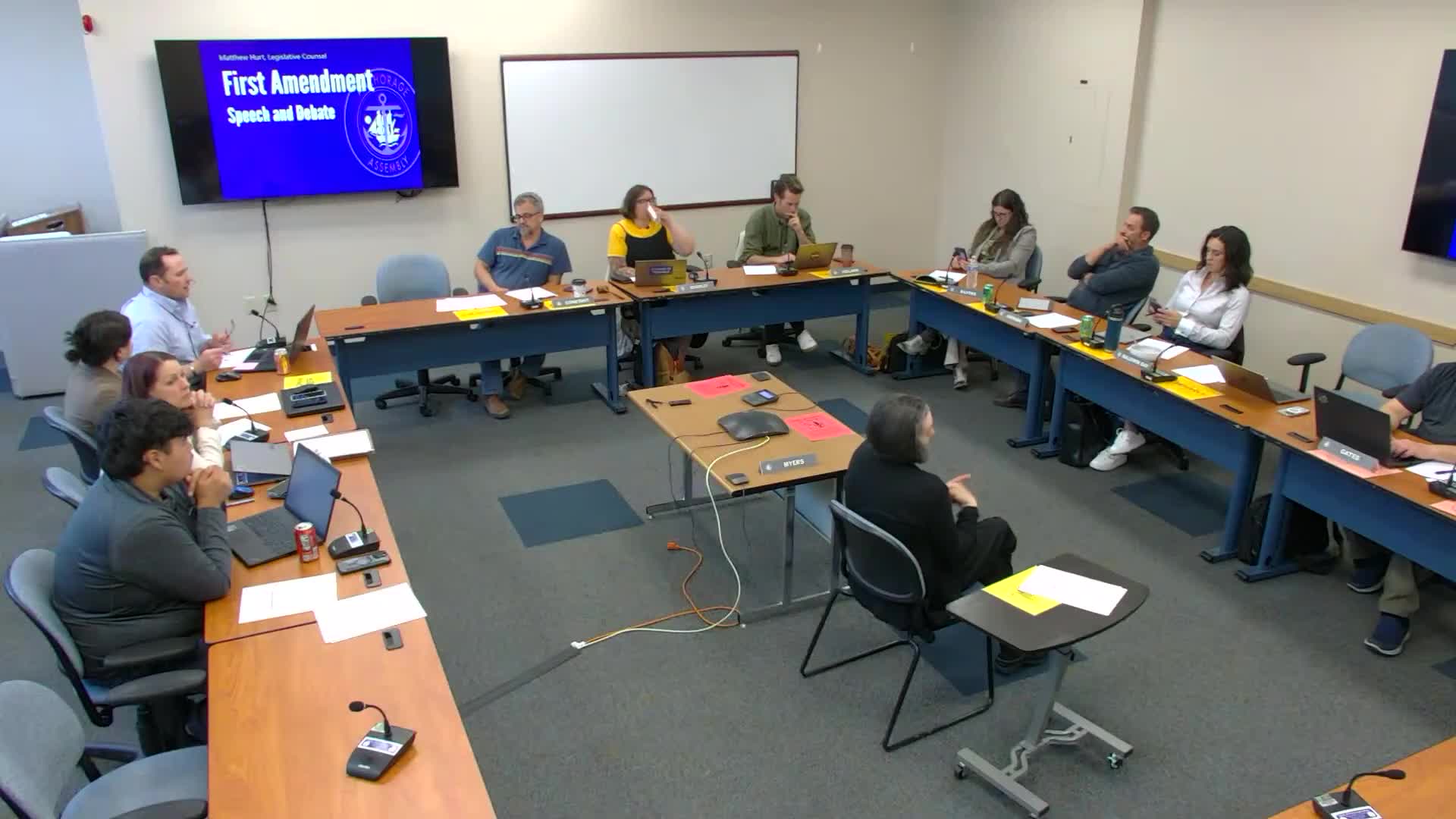
Summary
Assembly attorneys led a training explaining how First Amendment protections apply to public testimony at limited public fora, the distinction between protected speech and unprotected categories (e.g., incitement, fighting words), and how chairs and members may use points of order and appeals to manage decorum.
Assembly counsel and the city attorney’s office gave a rules-of-decorum briefing and First Amendment overview during the Rules Committee meeting on July 10 to explain how municipal meeting rules interact with constitutional protections for public testimony.
The attorney explained that the First Amendment protects political speech and that municipal bodies regulate forum use through narrowly tailored, viewpoint-neutral rules. He noted that Alaska’s constitution contains analogous speech protections (Article I, Section 5) and observed that not all speech is unconditionally protected — categories such as defamation, true threats, incitement to imminent lawless action and fighting words can be regulated.
Counsel said members of the assembly are government actors while seated on the dias and therefore operate under different restrictions than members of the public; the assembly can adopt and apply procedural rules to regulate the dais and the meeting process. For members of the public speaking at public hearings, counsel described the council chamber as a “limited public forum” where testimony must be germane to the topic and may be subject to reasonable time, place and manner restrictions. Counsel said silent protest can be a recognized form of protected expression under local practice but emphasized that “actual disruption” — repeated rambling that impedes the meeting, refusal to yield the podium, or physical obstruction — is an enforcement standard that can justify removal or other action.
Committee members practiced points-of-order scenarios with the clerk and counsel. Staff stressed that points of order are an ordinary, legitimate parliamentary tool and that a member who believes rules have been broken should raise the point promptly; if a chair rules, members can appeal the chair’s ruling and the body may vote to sustain or overturn it.
The session was instructional; it did not produce or change formal municipal policy but committee leadership said it would help members apply the rules more confidently in future meetings.