
Manhattan staff recommend 3% annual increases to water and wastewater rates to shore up reserves
Get AI-powered insights, summaries, and transcripts
Subscribe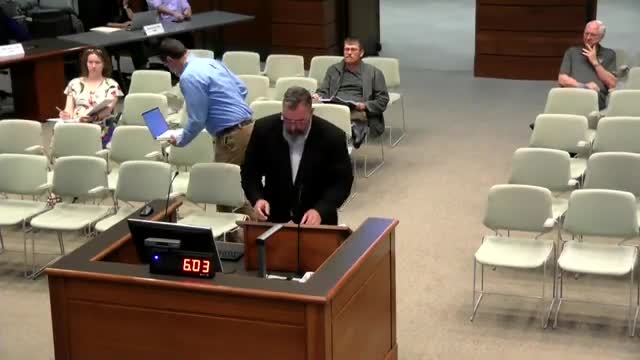
Summary
City utility staff told commissioners during a June 24 budget workshop that a 3% annual rate increase for water and wastewater is recommended to maintain reserve targets, fund capital projects and meet regulatory obligations; commissioners said they were comfortable with the incremental approach and asked staff to return with annual requests.
City utility officials told the Manhattan City Commission on June 24 that they recommend a 3% annual increase in water and wastewater rates as part of the 2026 budget-development process to preserve fund reserves and support a multiyear capital-improvement program.
Kevin Niles, Director of Public Utilities, said the increases are intended to “maintain adequate reserve recommendations for financial stability,” help fund operations and capital projects, and ensure the city meets federal and state regulatory standards. He told commissioners Manhattan began 2025 with stronger-than-budgeted fund balances — about $12.6 million in the water fund and $12.5 million in the wastewater fund — but said those balances are projected to decline without steady rate adjustments.
Niles presented a forecast that shows a possible year-end water shortfall between $500,000 and $1.5 million depending on summer consumption, and projections that the water fund balance could fall from roughly $12 million in 2026 to about $10 million by 2030 under current assumptions. He said similar long-term pressure appears on the wastewater side and recommended the 3% increase now to avoid larger, more disruptive hikes later.
The presentation detailed why consumption and weather matter: “If we get more rain, you’re gonna have less water usage,” Niles said, describing how irrigation demand and seasonal variability affect revenues. Niles also proposed a shared management-assistant position split 50/50 between water and wastewater to help manage projects and easement acquisitions; staff described the utility departments as short-staffed for planned projects.
Niles described major capital needs the funds must support, including filter rehabilitation at the water treatment plant, the Crosstown transmission main, Anderson Avenue replacement (under construction), wellfield upgrades and numerous water-main replacements. On wastewater, staff listed a solids-treatment upgrade, trunk-main replacements, capacity improvements and SCADA and HVAC work. He said State Revolving Fund loan availability is declining, increasing reliance on rates to pay for projects.
Commissioners and members of the public asked about growth, outside-city customers and rate equity. Andrew Von Lintel, a resident, urged staff to quantify population-growth assumptions; staff responded they anticipate modest growth and that plants currently have spare capacity (water plant capacity up to about 30 million gallons per day; peak use near 9–10 million gallons). Amber Starling, a resident, asked whether commercial high-volume users get discounts; staff said outside-city and wholesale customers pay surcharges (wholesale customers pay a surcharge and single outside customers pay 50–100% surcharge).
Commissioners signaled support for the incremental approach. Commissioner [not specified in transcript] summarized the commission’s preference for evaluating rate adjustments year by year; Niles said staff expects to return annually to request rate changes and to adjust as circumstances require.
Ending: Commissioners did not take a formal vote on rate ordinances at the June 24 work session. The city manager is scheduled to present a recommended budget on July 8; any ordinance raising rates would return later in the formal budget and ordinance schedule.