Get Full Government Meeting Transcripts, Videos, & Alerts Forever!
Get email alerts on the Capital Improvement Plan topic
No spam. Unsubscribe anytime.
Commission reviews 2026–30 capital improvement plan; public raises debt, bike‑lane and fire‑station concerns
Summary
City staff presented the proposed 2026–2030 Capital Improvement Plan June 17 and asked the commission for direction on capital‑sales‑tax priorities and fire‑department expansion; the meeting included more than an hour of public comment on debt, transparency, bike safety and Station 6.
City staff presented the proposed 2026–2030 Capital Improvement Plan (CIP) at the June 17 Lawrence City Commission meeting, describing the project‑scoring process, financing assumptions and a lengthy list of partially or fully unfunded needs. Staff sought commission guidance on funding priorities for the capital sales tax fund and feedback on fire‑department expansion needs.
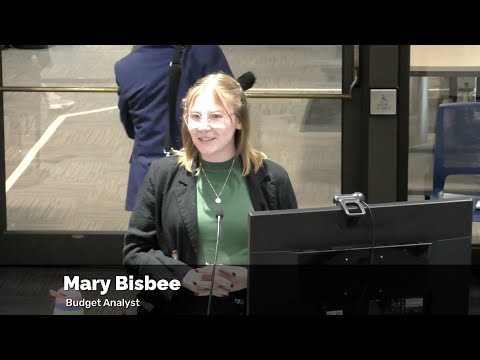
Budget analyst Mary Bisbee said the CIP scores each project using a 10‑category matrix that weighs regulatory compliance and strategic‑plan alignment most heavily, and that the plan reflects multi‑department review. Staff said revenue assumptions include 2% annual sales‑tax growth and a flat mill levy for debt service but assume 4% annual property‑valuation growth for the forecast. Bisbee told commissioners the proposal intentionally reduced the number of revenue‑bond water/wastewater projects in order to limit projected utility rate increases.
Two capital‑funding choices were highlighted for the commission’s attention: (1) prioritize street maintenance in the capital sales tax program, or (2) allocate some capital‑sales‑tax funds to initial design and small construction portions for three Lawrence Loop projects while shifting other capital sales‑tax funding and leaving larger Loop construction costs to general obligation bond financing. Staff noted capital sales tax is a dedicated 0.3% tax that expires in March 2029 and said the Loop design dollars would cover mostly design and limited construction; construction would remain unfunded in the general obligation bonds fund.
On the general‑obligation bond‑fund side, staff showed changes from the 2025 CIP: Station 6 (fire) is funded; Station 7 and some apparatus items were moved to unfunded; the West Lawrence spray park was recommended for unfunding because Parks and Recreation recommended against adding an operating asset given current operational cuts. Staff said the CIP shows roughly 101 partially or fully unfunded projects totaling about $470,000,000 across the five‑year window.
Staff flagged several long‑standing needs: a goal pavement condition index (PCI) of 70 while the city’s current PCI is about 63.17; an off‑cycle fire‑apparatus replacement schedule; and aging parks assets. The fire‑department expansion analysis presented staffing assumptions and estimated capital and operating costs tied to proposed new stations; staff also noted an existing 64/36 city/county cost split for certain operating components in joint fire/EMS services.
Finance director Rochelle Matthews told the commission the state statutory debt limit is 30% of assessed valuation and that, on a practical basis, market appetite and bond ratings also constrain borrowing. Matthews said the city’s outstanding debt is roughly in the mid‑20 percent range of the statutory limit (about a quarter of the state maximum), and staff emphasized the CIP was adjusted to avoid unsustainable pressure on individual funds.
Public comment: dozens of community members spoke in person and online. The Coalition for Collaborative Governance’s Holly Krebs and Christina McKenna told the commission the coalition’s research shows the city’s total debt has grown substantially and asked for clearer, consolidated disclosure of total indebtedness. Coalition testimony claimed the city’s current debt is about $463,000,000 and that the proposed CIP would add roughly $126,000,000 more in 2026; the coalition urged staff to show long‑term plans for paying down new debt and to improve budget transparency. John Imbs and others reiterated concerns about household impacts from rising property taxes and utility rates.
Several speakers urged the city to fund pedestrian and bicycle safety improvements. Michael Hallman of Sustainability Action Network and Samuel Carter and others urged redesign and restriping of Tennessee and Kentucky streets (buffered bike lanes / lane reductions) during the planned 2027 reconstruction window to prevent serious injuries. Hallman said the restriping would be a small share of the CIP cost but could yield substantial safety gains.
Fire‑department members and supporters asked the commission to prioritize Station 6. Engineer‑paramedic Simon Stevenson and local 1596 vice president Jack Dolan said Station 6 is the most urgent of the proposed expansions and reiterated earlier third‑party recommendations for added stations and staffing; they said response‑time standards and rising call volumes support the need. Multiple speakers from LDC FM and retirees reiterated that Station 6 has been recommended for years and urged commissioners to keep it funded and to accelerate staffing plans.
Other commenters asked the city to set aside CIP funding or matching funds for local priorities: Emily Lysonbee of the Lawrence Farmers Market asked that the market’s proposed permanent site and pavilion feasibility study and future construction be included in CIP funding plans; Rebecca Buford (Tenants to Homeowners) urged continued work on affordable‑housing funding and flexibility if state/federal subsidies decline.
Commissioner discussion and staff follow‑up: commissioners said they backed keeping Station 6 in the proposed CIP and discussed options for the capital sales tax fund. Several commissioners voiced interest in the second capital‑sales‑tax option that preserves street maintenance while also allocating design funds to the Lawrence Loop projects; others said street maintenance funding remains a high priority because insufficient funding lowers the PCI and raises long‑term costs. Commissioners also asked staff to continue improving public financial transparency and to post timely answers to public questions; staff said updated audits and transparency portals are available and team members will post a Q&A on the budget website.
No formal CIP vote was taken at the June 17 meeting; staff asked for policy direction and will return with the city manager’s proposed budget and a revised CIP on July 8. Commissioners asked staff to provide additional detail on farmers‑market funding options, the capital sales tax renewal timeline and an updated PCI model.