Superintendent outlines HB2 and HB6 impacts: modest basic allotment increase, certification deadline and classroom-discipline changes; district to adapt cell‑ph
Loading...
Summary
Superintendent Donny Lee summarized legislative changes in HB2 and HB6 relevant to Wichita Falls ISD, including a $55 basic allotment increase, teacher certification deadlines, increased safety allotments, and a new statewide ban on cell-phone use during instruction that will require district policy systems to enforce.
Superintendent Dr. Donny Lee briefed the board on statewide legislative changes he said will affect district finances, staffing and classroom operations, including House Bill 2 and House Bill 6.
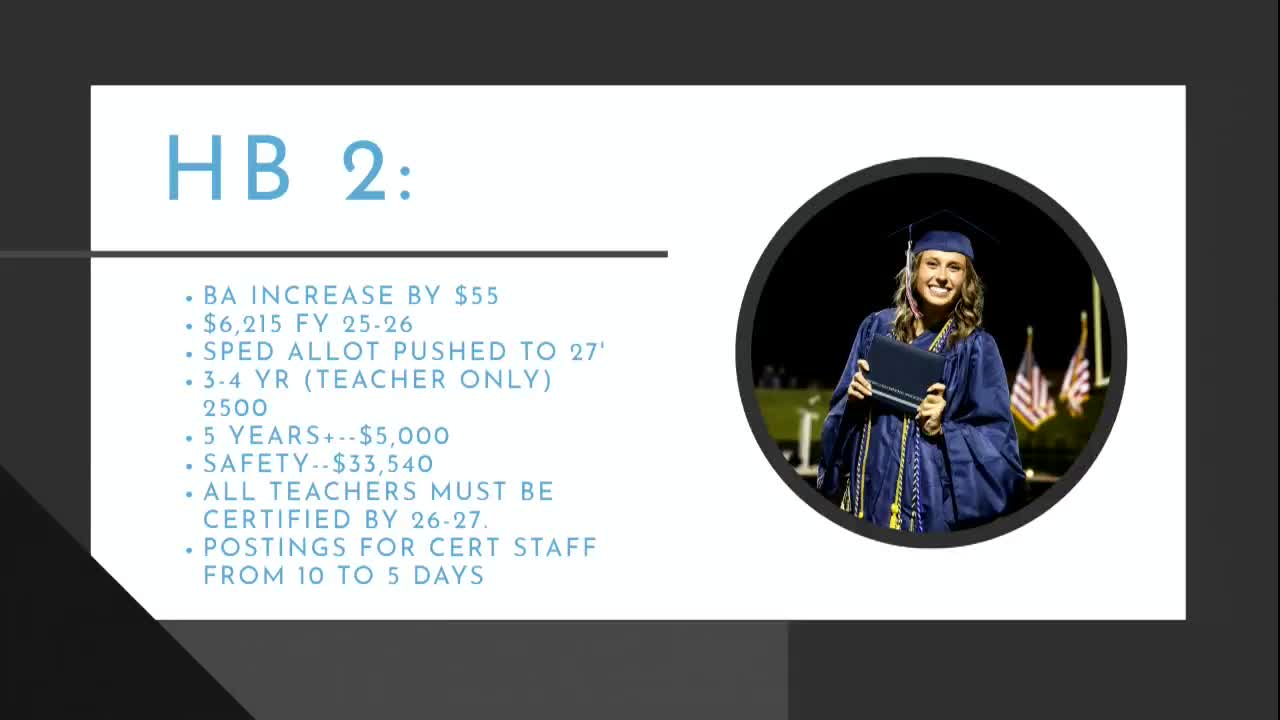
Lee told trustees HB2 includes a modest increase in the basic allotment of $55, bringing the allotment to $6,215 for the 2025-26 fiscal year as presented, and that some funding elements (for example special-education allotments) were deferred until 2027. He said the legislature increased the safety allotment per campus from $15,000 to $33,540 and that HB2 includes raise provisions intended for teachers (with staged increases for 3-4 year teachers and larger increases for staff with five or more years). Lee stated a new certification requirement will be in place by the 2026-27 school year and districts will need commissioner-approved plans for uncertified teachers should exemptions be requested: "all teachers must be certified by 26, 27... If they're not certified, you have to have a plan submitted to the commissioner himself, and he approves it. Otherwise, they cannot be in the classroom anymore."
On classroom discipline, Lee summarized House Bill 6 as changing limits on in-school suspension and providing classroom-management authority to educators; he said HB6 removes the previous 10-day limit on in-school suspension while retaining limits on out-of-school suspension, giving teachers additional options to remove disruptive students from instruction. On student devices, Lee said the legislature enacted a ban on cell-phone use during the instructional day and that the law places responsibility on schools to design and implement an accountability system: "It says specifically that it's up to the schools to hold those accountable. So they're not gonna get involved in the the hand slapping... Now y'all figure out how y'all are gonna hold those accountable if they do it." He cautioned trustees that enforcement raises practical issues (confiscation, storage, discipline) and may create classroom-management challenges.
Why it matters: Certification deadlines, targeted pay increases, and safety allotment changes affect staffing, budget planning and compliance obligations. The cell-phone ban is a new statewide requirement that will require the district to align local policy and operational procedures to enforce the law.
District response and next steps: Lee said staff are analyzing budgetary impacts and personnel implications, and will return with more information. He said the district will need to develop local procedures that fit the new cell-phone prohibition and noted that some policy and practical questions remain about enforcement and staff expectations.
Ending: Trustees asked follow-up questions about teacher supply and certification capacity; Lee said the state and higher-education pipeline may not produce enough certified teachers by the deadline and that the district will prepare commissioner-submitted plans if necessary.