
Consultants TPMA lay out Eastpointe master plan, economic-development focus and community engagement schedule
Get AI-powered insights, summaries, and transcripts
Subscribe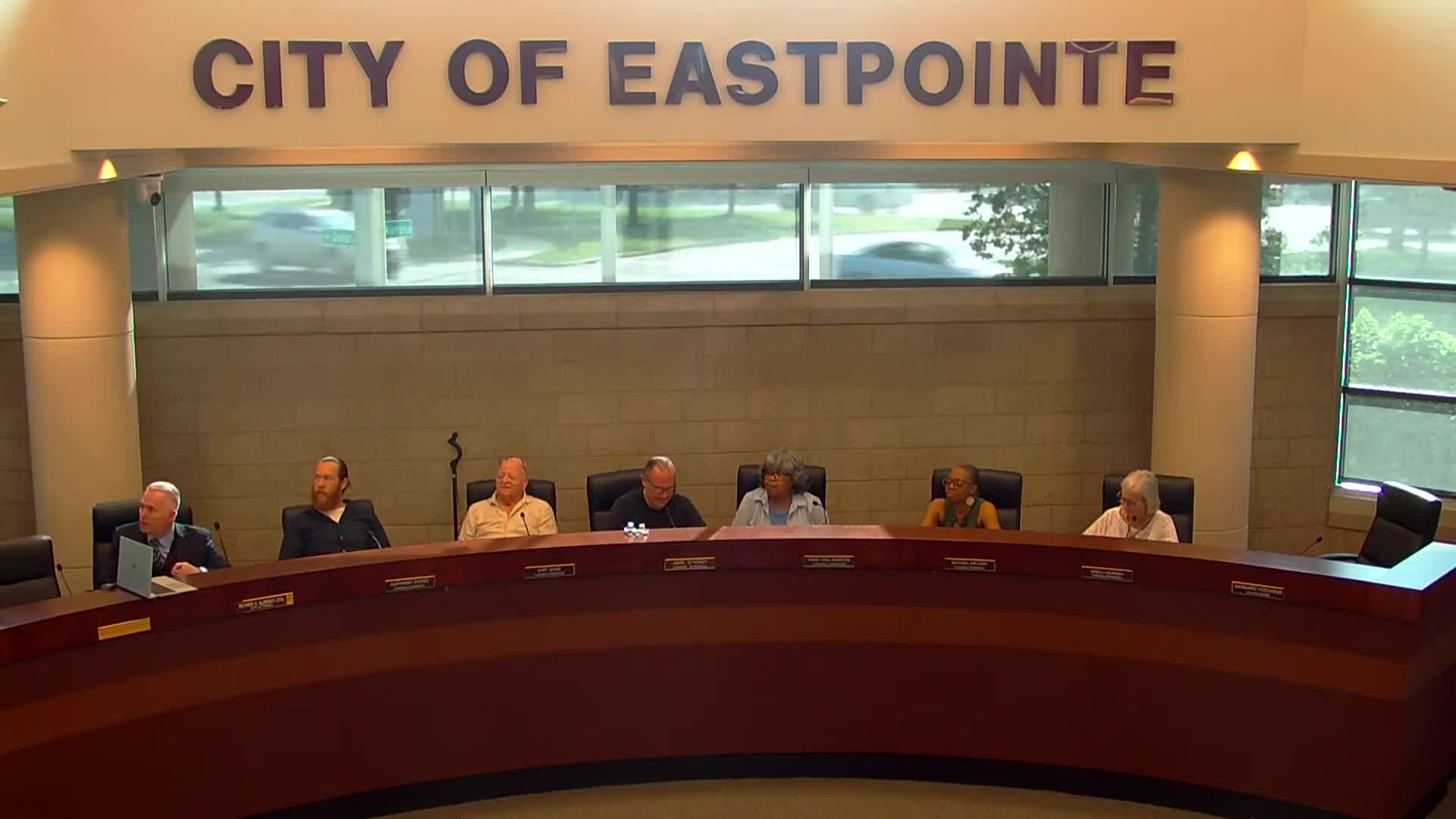
Summary
At a June 10 special meeting, consultants TPMA introduced their master-plan and economic development/place-making work for Eastpointe, described data sources and a community engagement plan that includes a late-August/September survey, in-person open houses and focus groups, and monthly check-ins with the planning commission.
At a June 10 special meeting of the Eastpointe Planning Commission, consulting firm TPMA presented the scope and schedule for a combined master plan and economic development/place-making strategy, saying the work will pair quantitative benchmarking with targeted community engagement and implementation strategies. TPMA said it will return in person in September and launch a public survey in late August or early September.
TPMA project lead Aaron Finley said the team will use federal and regional data sources and local stakeholder input to identify retail market gaps, industry mix and housing-land-use considerations. “We are a 35 year old consulting firm…we are going to introduce the 3 of us,” Finley said as he described the firm’s roles and the team’s plan to share the slide deck after the meeting.
TPMA’s economic-development director, Teresa Nortillo, told commissioners the firm will analyze “quantitative benchmarking data,” including Bureau of Labor Statistics and U.S. Census figures, and combine that with engagement findings to identify retail voids, mixed-use opportunities and strategies to attract businesses. Nortillo said the team will produce implementation steps intended to produce actionable results rather than a report that “just sits.”
Engagement lead Mariah Taft outlined outreach: a citywide community survey to be launched before the in-person September visit, two public open houses, targeted focus groups on housing/land use and economic development, site visits and one-on-one interviews with subject-matter stakeholders. Taft said the team plans another on-the-ground check-in in early 2026.
TPMA shared several baseline data points from publicly available sources: a recent U.S. Census/American Community Survey median gross rent of about $1,335 (2023), a median renter household income of $43,520 (2023), and statements that population growth has returned after past declines. The consultants noted differences in data vintage across sources and said they will continue to refine numbers as more recent estimates become available.
Commissioners and staff asked for plain-language materials and broader outreach beyond social media; TPMA said it would provide slide materials to the commission and coordinate outreach with local groups. The commission agreed to monthly check-ins with the consulting team and discussed a possible 6 p.m. premeeting work session before regular 7 p.m. agendas to support ongoing collaboration.
No formal policy decisions were taken; the presentation was informational and the commission established a schedule of ongoing meetings and follow-up materials. TPMA said it will circulate a worksheet to commissioners and send contact information and the slide deck to the commission by email.
The consultants said their final master-plan deliverables will cover public facilities, transportation, economic development, infrastructure, natural resources and land use, with an emphasis on housing ecosystem analysis and implementable strategies.