
Children’s Advocacy Center for North Texas briefs council, requests roughly $101,000 toward services
Get AI-powered insights, summaries, and transcripts
Subscribe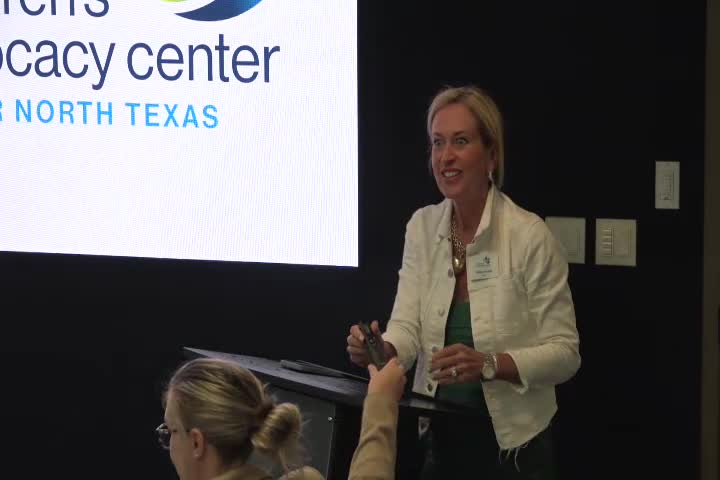
Summary
Kristen Howell, CEO of the Children's Advocacy Center for North Texas, described the organization's role in forensic interviews, medical exams and trauma therapy for abused children and asked Carrollton for a contribution of about $101,000 to help cover operating costs tied to services in the region.
Kristen Howell, CEO of the Children's Advocacy Center for North Texas, told the Carrollton City Council on June 17 that the center provides trauma‑informed forensic interviews, medical exams and mental-health services for children who are victims of serious crimes and that the center requests city support of $101,000 for the current fiscal period.
Howell described the center’s multi‑county coverage, saying it serves Denton, Jack and Wise counties and that the center is one of several in the region; she noted that when a crime is reported investigators bring a child to a Children’s Advocacy Center because Texas family code and local protocols call for a neutral, child‑friendly place for interviews and examinations.
"There are 9 new children a day walking through our doors," Howell said during her briefing, and she told council that the center served nearly 5,000 children in the past year. Howell also gave a cost figure for services: "It costs about $2,400 per child who walks through our door," she said, and added that the center asked municipalities to share a portion of the operating cost.
Howell said the center’s budget is about $8 million and that roughly half of its funding comes from federal and state sources; she requested a contribution of roughly $101,000 from the council using a three‑year rolling average for local cost allocation. She also said recent legislative changes altered local referral patterns and temporarily reduced the number of local cases in the most recent fiscal year; she urged councils to view those numbers in historical context rather than assuming a durable decline.
Council members thanked Howell and affirmed the value of the center’s training and investigative support to local law enforcement. Mayor Steve Babcock invited council members to tour the center; Howell said Erin Reinhart from the center’s board could help schedule visits.
No formal vote on funding for the Children's Advocacy Center was recorded in the meeting transcript. The center's request was presented during the work session as part of the council’s community nonprofit briefings.
Why it matters: Children's Advocacy Centers centralize forensic interviews, medical exams and trauma therapy to limit re‑traumatization and to support criminal investigations; local funding supplements state and federal sources and helps sustain on‑site services for children and investigative training for dozens of police departments.
What’s next: Howell asked the council to consider the center’s request; staff or the council would need to place a funding proposal on a future agenda for formal consideration and vote.