
District reports DIBELS gains but flags small group of third graders for possible retention
Get AI-powered insights, summaries, and transcripts
Subscribe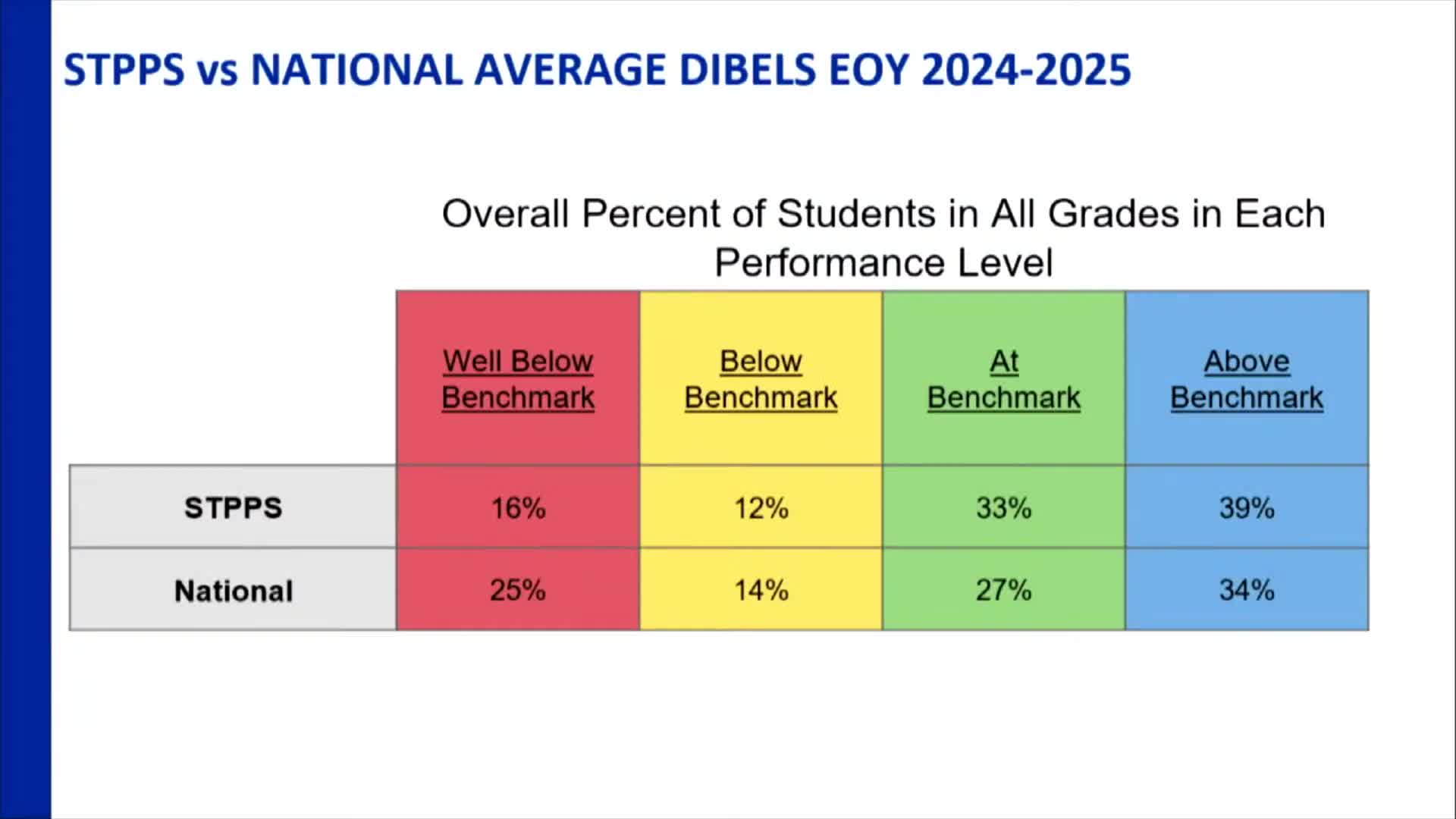
Summary
St. Tammany reported end‑of‑year DIBELS growth across K–3 and said 3.8% of third graders scored well below benchmark; about 1.8% (roughly 53 students) remain candidates for retention solely on the screener.
District curriculum staff told the St. Tammany Parish School Board committee on July 10 that kindergarten through third graders showed year‑over‑year gains on the end‑of‑year DIBELS literacy screener and that St. Tammany students outperformed state and national averages on the measure this year.
Staff reported growth from fall to spring in the percentage of students meeting benchmark in every grade: kindergarten (+34 percentage points), first (+23), second (+13) and third (+6). Overall, the district reached 72 percent at or above benchmark across measured grades — a 9 percentage‑point gain from the prior year, staff said.
District staff flagged Legislative Act “4 22” (as referenced in the presentation) and explained that state law requires third‑grade literacy proficiency for promotion and allows specified “good cause” exemptions. The presenter said the state provided a template for pupil‑progression plans this year that the district updated and posted on Board Docs.
At end‑of‑year DIBELS screening, 16 percent of third graders scored “well below.” Of that group, staff said 54 percent qualified and were approved for a good‑cause exemption; another 47 percent of the remaining students improved on retesting in May or after summer learning in June. As of the July 10 presentation, 3.8 percent of third graders — roughly 105 students — remained well below and had not yet qualified for an exemption; district staff said about 1.8 percent of third graders (approximately 53 students) may be retained based solely on DIBELS results after accounting for other factors such as LEAP scores, attendance and SBLC (School Building Level Committee) decisions.
Board members asked how many students the percentages represent and whether DIBELS functions as a reading assessment for promotion. Staff said the district would continue collecting good‑cause exemption documentation through the start of school and noted the 53‑student figure was the best available estimate at the time; staff also said some students who failed DIBELS had mastery or basic levels on LEAP and that retention decisions can involve multiple measures and SBLC deliberations.
Committee members requested continued reporting and expressed concern about students who might meet state assessments but not the screener; staff said they use multiple measures when possible and would provide further data.