
North Dakota Supreme Court hears appeal over testimony that defendant 'pulled down my pants' in child-abuse trial
Get AI-powered insights, summaries, and transcripts
Subscribe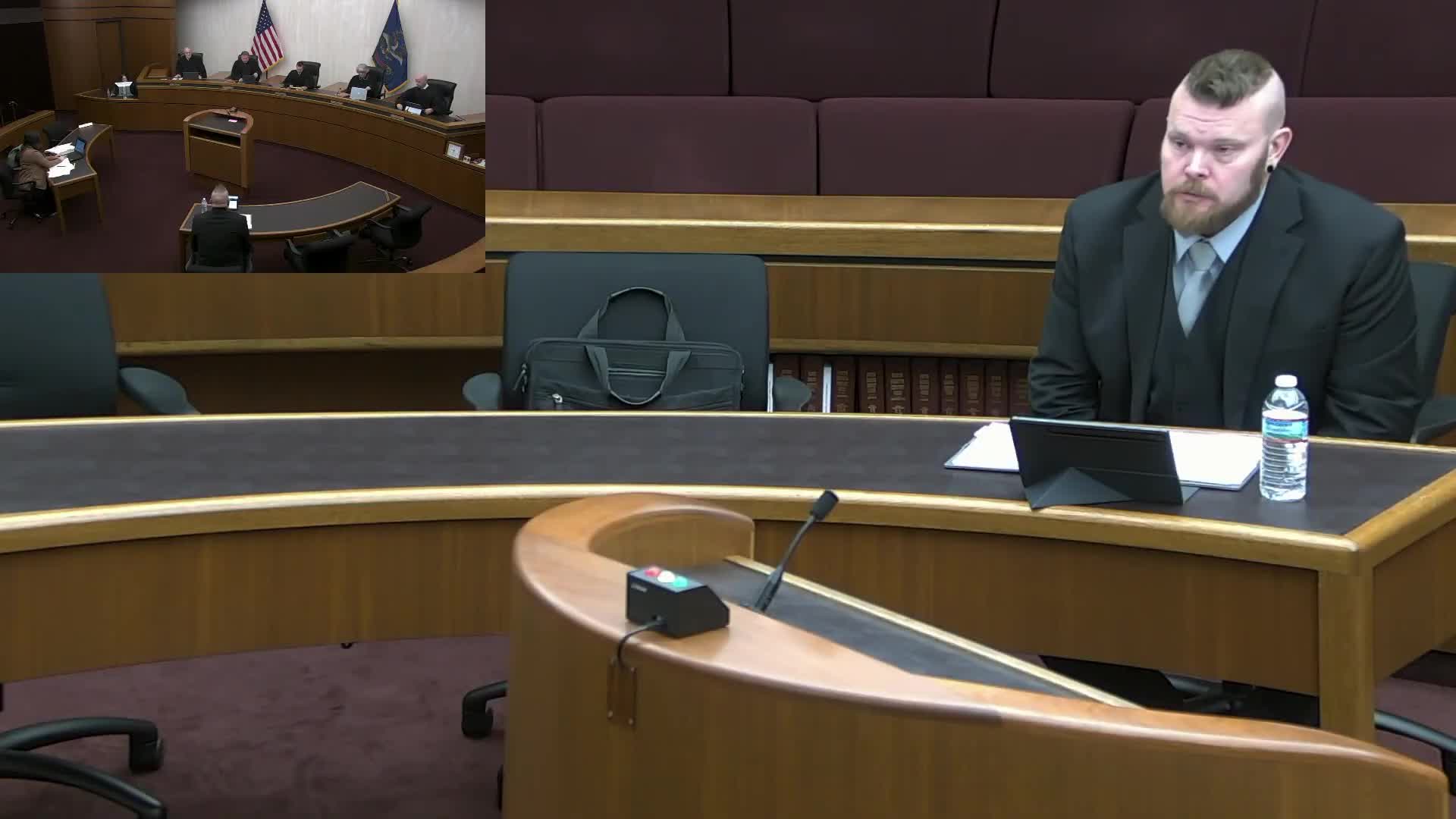
Summary
The state and defense urged the court over whether testimony that the defendant removed the victim’s pants was admissible and whether the defense preserved the objection for appeal. The state said the testimony was corroborative and necessary for context; the defense said the detail was unfairly prejudicial and sought a new trial.
The Supreme Court of North Dakota heard oral argument on an appeal in State of North Dakota v. Marco Ruach over whether testimony that the defendant removed a victim’s pants during an alleged assault was improperly admitted at trial and whether that admission prejudiced the defendant’s conviction.
At issue is the scope of a pretrial motion in limine that asked the trial court to exclude any reference to “the removal of the pants.” Defense counsel Samuel Juracic told the justices the district court heard argument on the motion and then “essentially ruled…that he’s gonna permit it,” and the defense later objected when testimony went beyond the pretrial ruling. Juracic said the reference to the pants “was extremely prejudicial to the defendant.”
The state, represented by Rachel Eggstead, said the victim’s testimony that “He pulled down my pants, and that's when I started fighting” provided context for why the victim began to resist and was therefore probative. Eggstead told the court the record included a 911 call and testimony from siblings and medical personnel that corroborated the victim’s account; she also said a nursing exam was performed but that the examiner was not qualified as a SANE expert and “it was determined to be not a crime.”
The parties disputed two procedural lines: (1) whether the defense preserved the objection for appeal under the timely-objection rule (Rule 103) or instead waived it by failing to renew the objection at trial, and (2) whether portions of later testimony (an officer’s repeating of statements in a 911 call) were hearsay that had been properly struck. Juracic argued the motion in limine was “very, very specific to the removal of the pants” and that the district court made a definitive ruling at the pretrial conference; he argued the later testimony opened the door to an inference beyond the charged offense and that the prejudicial effect “far exceeds any probative value whatsoever.”
Eggstead said much of the same content had already been heard by the jury in the 911 call and that the officer’s contested testimony was essentially reiteration of that call; she told the court the state’s position was the testimony would be harmless even if error occurred. She framed the pants detail as corroborative of the victim’s credibility and as providing the “why” for the physical assault the jury was asked to evaluate.
The justices questioned whether the defense had to renew objections at trial to preserve appellate review and whether the difference in grounds between the pretrial motion (relevance/prejudice) and the trial objection (hearsay) mattered for preservation. The bench also queried whether, as a practical matter, prosecutors would feel compelled to charge additional offenses (for example, an attempted sexual-assault charge) in order to introduce context that would otherwise be excluded when only a physical-assault count is charged.
Juracic asked the court to vacate the judgment and order a new trial without any reference to the pants; Eggstead urged affirmation of the conviction, saying the jury had other corroborative evidence on which to base its verdict. The justices took the case under advisement following argument.
The record reflects layered factual and procedural disputes: the content of the victim’s testimony, the sibling testimony about clothing before and after the incident, the 911 call in evidence, the officer’s testimony that recited statements beyond the victim’s direct testimony, and the trial judge’s pretrial ruling on the motion in limine. The appeal asks this court to resolve whether the challenged testimony was preserved for review and, if so, whether admission of the pants-related testimony required reversal or was harmless error.