
North Dakota Supreme Court hears dispute over discovery, privileges in Anne Carlson Center case
Get AI-powered insights, summaries, and transcripts
Subscribe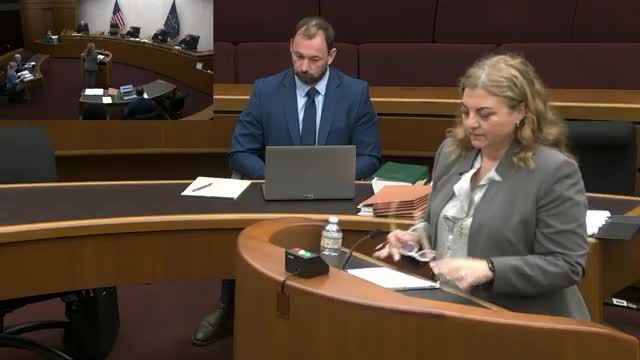
Summary
The North Dakota Supreme Court heard arguments in a petition by the Anne Carlson Center seeking a supervisory writ to prevent disclosure of documents the district court ordered produced in a negligence suit alleging an assault at a center.
The North Dakota Supreme Court heard arguments in a petition by the Anne Carlson Center seeking a supervisory writ to prevent disclosure of documents the district court ordered produced in a negligence suit alleging an assault at a center.
The petition, represented by Angela Lord of Vogel Law Firm, asked the high court to preserve documents submitted under seal as Exhibit 15 and other items on the privilege log, arguing they fall under multiple confidentiality rules and privileges. Respondent counsel Jenny Olson, representing Lisa Whipstad on behalf of the plaintiff identified as AK, countered that the district court properly ordered disclosure and that the parties had agreed or were prepared to agree on redactions for sensitive material.
Angela Lord told the justices that the district court's April 22 order "is an abuse of discretion" and that the records include categories protected by statutory confidentiality, the attorney-client privilege and work-product doctrine, and HIPAA. She told the court the privilege log entries at issue include handwritten notes and documents prepared in November 2019 and August 2020 and that some entries concern other clients who receive services from Anne Carlson. "By pursuing a supervisory writ, Anne Carlson seeks to maintain the documents that have been submitted as exhibit 15 as privileged and not subject to disclosure," Lord said.
Olson said the respondent had asked only for redacted documents in briefing and that the district court, having reviewed the materials in camera, granted an order she understood as accommodating redaction and limits on attorney communications. Olson argued Anne Carlson had asserted privileges too broadly and that many records reflect ordinary business or regulatory investigations that should be discoverable: "These privileges are not meant to become a shield so that everything that a business does in conducting an investigation ' becomes covered by privilege because an attorney was somehow involved," she said.
Both sides disputed how the court should treat handwritten notes whose dates or pagination are unclear and whether the nonproducing party had met its burden in the district court to justify privilege claims. Lord said some handwritten notes show contemporaneous steps referencing MMIC (the insurer) and Vogel Law Firm and thus implicate anticipation of litigation. Olson maintained that many of the notes were ordinary investigation material created in the days after the incident and therefore fall outside privilege.
Counsel debated statutory and procedural sources invoked in briefing and argument. Counsel referenced the state's child-abuse reporting confidentiality provision (as cited in briefing), protection-and-advocacy provisions relied on by Anne Carlson, the peer-review/quality-assurance privilege the petitioner invoked, Rule 5.02 (attorney-client privilege) and Rule 26 (work product) of the rules of civil procedure/evidence as cited to the court, and HIPAA protections for protected health information. Olson cited cases she said limit blanket privilege assertions and argued parties can and should work on redactions and protective orders if disclosure is required.
Justices questioned counsel about chronology, whether privilege attached at particular dates (November 2019 and August 2020 were discussed), and whether the district court or the parties should handle redaction. The court was told the district court conducted an in-camera review after a February hearing; the order that followed changed the sealed designations to confidential and a motion to stay was promptly filed to allow a supervisory writ.
At the close of argument the court said it would take the matter under advisement. "This case will be taken under advisement as all cases are," the bench stated.
The dispute centers on whether the district court properly balanced discoverability against statutory and common-law privileges and whether redaction or other protective measures would address the parties' concerns. The Supreme Court's forthcoming memorandum will resolve whether those documents must be produced, may be redacted, or remain protected in whole or in part.