
Legislative Management folds special‑education teacher‑shortage study into Special Education Funding Committee
Get AI-powered insights, summaries, and transcripts
Subscribe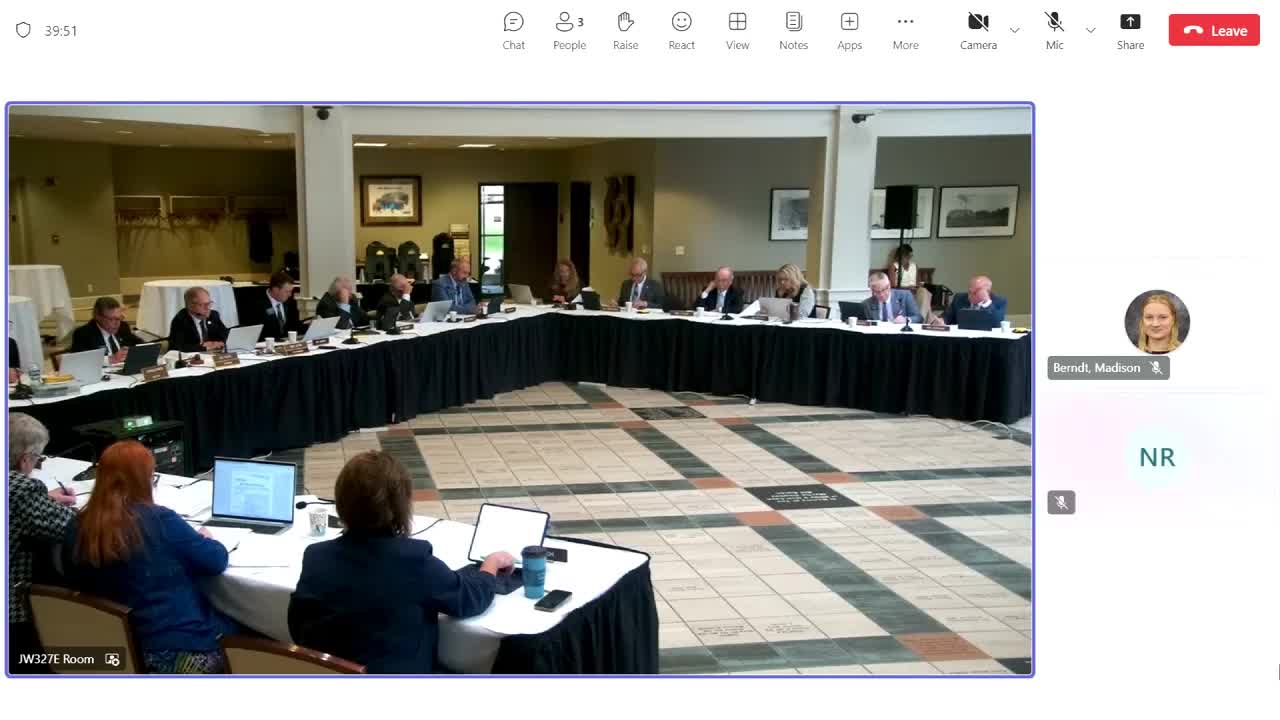
Summary
The Legislative Management voted to incorporate a proposed discretionary study on special‑education teacher shortages (House Bill 15‑30) into a required Special Education Funding Committee (House Bill 15‑47), and to route related proposals on math and reading proficiency for students with disabilities into that same committee.
Legislative Management on May 20 authorized a single study structure for several proposals on special‑education staffing and student proficiency, voting to fold the discretionary study on special‑education teacher shortages (House Bill 15‑30, section 1) into the Special Education Funding Committee authorized under House Bill 15‑47.
The move combines an existing discretionary study of teacher shortages with a required committee and directs that related proposals — including a study of mathematics and reading proficiency among students with disabilities (Resolution 4019) — be handled under that body. Chairman Hogue said the special committee would report through legislative management and that committee chairs would have discretion to set scope.
Committee members debated scope and overlap. Senator Davison, who moved the original motion to study HB 15‑30, said legislators needed a venue to review workforce and training for special‑education teachers. "Teacher shortages are a concern for us as a legislative body," Davison said during discussion. Senator Beckendahl and others argued the required Special Education Funding Committee already had broad membership and existing work on funding and could absorb the teacher‑shortage topic without adding a separate interim study.
Representative Bosch and Senator Davidson noted overlap between several proposed studies and said consolidating them would reduce duplication. Senator Hogan emphasized coordination with the children’s cabinet and urged the committee to avoid overlapping work: "We should be sensitive to who else is studying this issue," he said, referencing the Cabinet's targeted needs lists. After back‑and‑forth about whether the motion maker and seconder agreed on the final path, the meeting amended the motion so the teacher‑shortage study would be incorporated into the Special Education Funding Committee; the amendment passed by voice vote.
The committee also discussed what the combined body should examine if it took on multiple subtopics: training pipelines, rural access, whether formula dollars reach students, injury rates and de‑escalation practices, and how to link workforce and student proficiency work. Lawmakers agreed the interim committee chair would have discretion to set final scope and that the special committee should report to legislative management at its regular November meeting.
The consolidation effectively preserves legislative review of special‑education workforce and student‑proficiency issues while aiming to reduce duplicated interim studies.
The action is procedural and does not in itself change statute or funding; it directs where study and reporting will take place.