Get Full Government Meeting Transcripts, Videos, & Alerts Forever!
Get email alerts on the Veto And Separation Of Powers topic
No spam. Unsubscribe anytime.
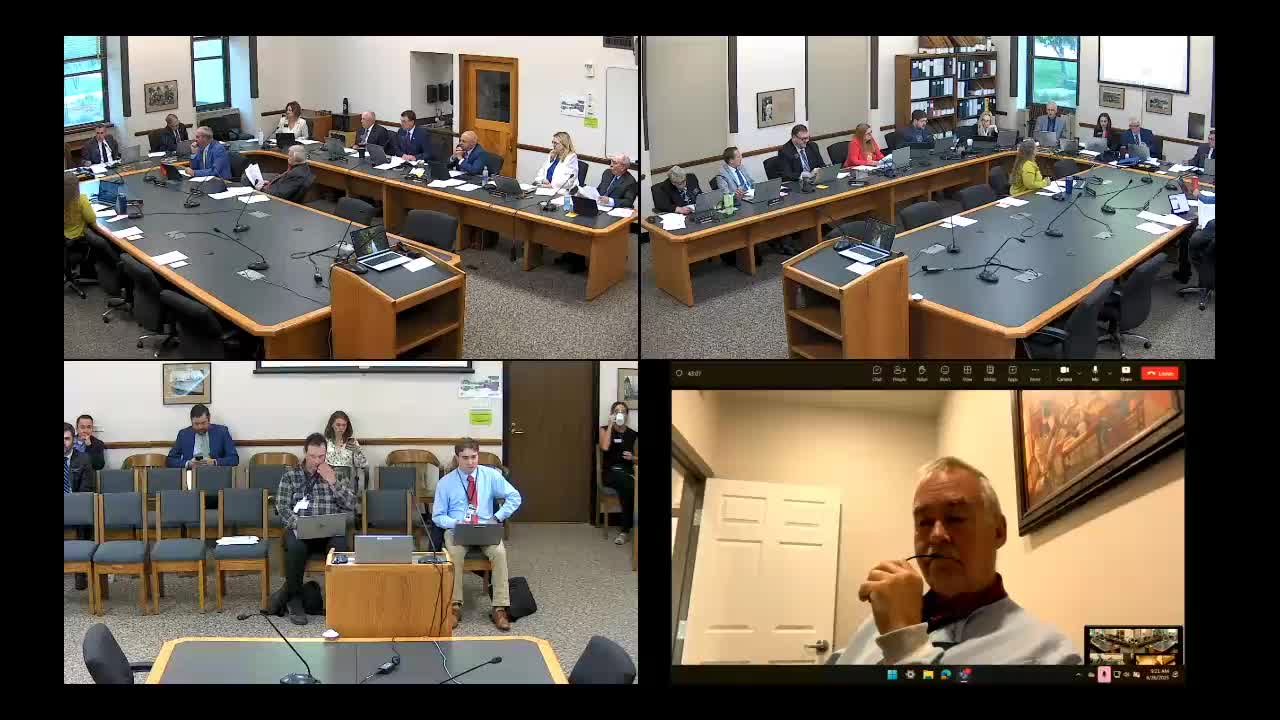
Legislative Management asks staff for options after Attorney General opinion on governors veto of $35 million
Summary
Legislative Management asked Legislative Council on June 26 to prepare options after an Attorney General opinion concluded the governors veto letter, not the markups on the returned bill, is the legally operative document for an item veto.
Legislative Management asked Legislative Council on June 26 to prepare options after an Attorney General opinion concluded the governors veto letter, not the markups on the returned bill, is the legally operative document for an item veto.
The move followed a presentation by Legislative Council attorney Emily Thompson summarizing a June 10 Attorney General opinion about the governors veto of parts of Senate Bill 2014. Thompson told the committee that "in the opinion issued June 10, the AG concluded that the Governor's veto letter was the legally operative document." Committee members expressed concern that the opinion did not address controlling North Dakota Supreme Court precedent and that the ruling could let future governors effectively rewrite appropriations.
Why it matters: the dispute centers on a $35 million appropriation in Section 7 of Senate Bill 2014. The governors marked-up bill crossed out the entire section but in his veto letter said he intended to veto a single $150,000 pass-through allotment. The Attorney Generals opinion supports the governors described intent, which Legislative Management members said could allow a future executive to strike language by letter without pen marks on the bill.
Committee members and staff described the practical and constitutional risks. Thompson noted the opinion does not reference Legislative Assembly v. Burgum (2018), a North Dakota Supreme Court decision the committee members cited as requiring that struck items be deducted from appropriations and warning that a governor cannot "withdraw a veto." Several members said the omission raised new separation-of-powers questions and could leave the Legislature without a clear record of what it must vote to override.
Legislative Management raised immediate procedural options: ask the governor to call a special session to allow legislative override; reconvene the Legislature on its own to consider an override or pass clarifying legislation; or seek judicial relief from the North Dakota Supreme Court via original action and injunctive relief to block disbursement. Staff warned that litigation could take months, and that judicial relief would be most effective before funds pass beyond state custody to third parties.
After discussion, a motion to "direct Legislative Council to provide a list of options for Legislative Management to consider at a future meeting" passed. Committee members asked that the options memo include legal and practical pros and cons, estimated timelines and likely costs, and whether immediate injunctive relief could stop any July 1 transfers.
Members also asked staff to analyze interim statutory fixes the Legislature could adopt in 2027 to clarify how vetoed items must be returned and recorded. Several members said a statutory requirement that item vetoes be shown on the face of the bill (pen-on-paper markings) would reduce future ambiguity.
The committee did not take an override vote at the meeting. Instead it asked Legislative Council to return with a short options memorandum within five to seven business days so members could decide next steps.
Looking ahead: committee staff will prepare the options memorandum and the committee will reconvene to decide whether to seek judicial relief, call a special session, attempt a short reconvening to override, or pursue statutory clarification in a future session.