
La Crosse committee rejects proposed stormwater rate increase after public opposition and staff warnings
Get AI-powered insights, summaries, and transcripts
Subscribe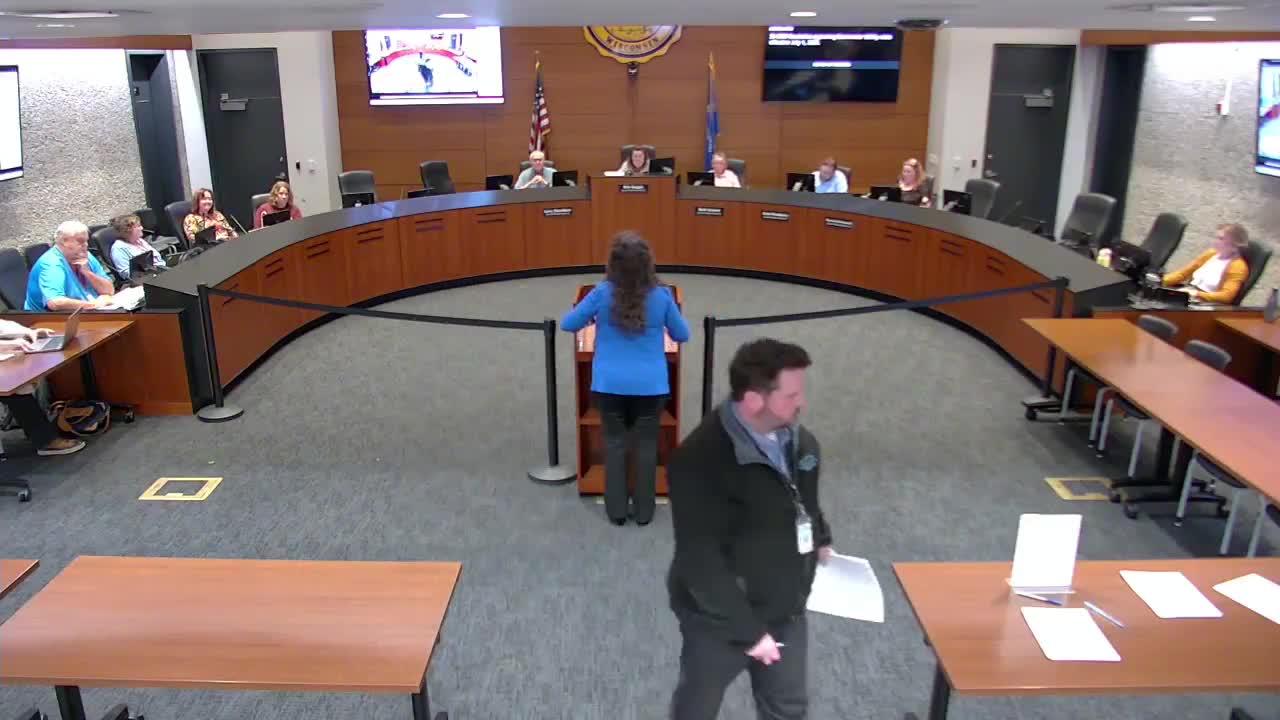
Summary
A proposed two-step stormwater utility rate increase that would have raised the average residential bill by about $7.57 per month failed in the Finance & Personnel Committee after public comment and debate about timing, regulatory obligations and burden on non-taxpaying properties.
The Finance and Personnel Committee on June 5 rejected a resolution that would have raised La Crosse stormwater utility rates in two phases, a move city staff said was needed to restore dwindling reserves and meet state regulatory obligations.
The measure would have increased the stormwater charge to $29.66 per quarter per equivalent runoff unit in 2025 and to $36.18 per quarter in 2026, with 3% annual inflation adjustments after 2026. Tina Erickson, the utilities finance and compliance manager, told the committee the combined two-step increase would add about $7.57 per month to the average residential customer’s bill — $5.40 per month in the first phase and $2.17 per month the following year — and that credits of up to 80% remain available under the city’s stormwater credit policy.
The decision follows a presentation by Christy Dimaster of Trilogy Consulting, who outlined that reserves had been drawn down sharply in recent years (about $4.5 million drawn from roughly $5 million at the end of 2021) and that current user charges, set when the utility was created, no longer cover operating, maintenance and routine capital needs. Dimaster described the recommended two-step increase as intended to allow the utility to cash-fund routine capital, avoid additional borrowing, and rebuild reserves.
Council members pressed staff on details of who would bear the cost. Director Gallagher said a significant share of properties in La Crosse do not pay property taxes (for example, tax-exempt institutions and some government parcels) and stressed that shifting costs from the tax levy to a user charge changes who pays for stormwater services. Gallagher also described operational changes staff made in 2025: coding staff time to stormwater payroll codes and shifting some functions (portion of street sweeping and some storm drain cleaning) that had previously been subsidized by other utilities.
Staff warned that current rates do not fully cover operating expenses for 2025 and that without additional revenue the utility would either draw further on reserves, use general fund support, defer capital projects or borrow — all with trade-offs. Staff also highlighted regulatory drivers: a Municipal Separate Storm Sewer System (MS4) audit finding in 2019 led to hiring a stormwater coordinator, and the city must address requirements tied to public education, illicit discharge elimination, higher inspection frequencies for construction sites, tracking maintenance of stormwater best-management practices (BMPs), and a state target to reduce total suspended solids (TSS) by 20% (the city currently reported 17.6%).
Public comment included opposition from Ron Strasser, who called the cumulative proposed increase “outrageous” and warned it would burden retirees and other households on fixed incomes. Committee members expressed concern about the size and pace of the increase and whether more gradual alternatives or additional public outreach were feasible. Council member Janssen said she supported utility self-sufficiency but had “serious concerns about the amount of the increase and how quickly it happens.”
The committee opened a public hearing, heard testimony, then closed it. The originating motion to adopt the rate increase (moved by Council member Newberry and seconded by Council member Janssen) failed in committee with a 3–1–1 result (three no votes, one yes, one abstention). The committee chair noted that regardless of the committee vote the item would go to full council next week; a unanimous committee approval would have placed it on the consent agenda, but dissent will send it to the full council’s voting agenda.
The discussion left several practical items unresolved: the precise timeline for completing an Xcel Energy interconnection and energy projects tied to the wastewater plant (staff estimated 2026 for some energy-related deliverables), the exact amount by which non-taxpaying parcels will contribute under the new rates (staff gave broad estimates tied to the city’s taxable property share), and whether incremental or alternative funding approaches could reduce the immediate rate shock.
Committee members and staff agreed on one point: stormwater services are extensive and regulatory obligations are increasing, but members differed on pace and fairness of the proposed rate shift.
Looking ahead, the item will be considered by the full common council at its next meeting, where members will have a second opportunity to approve, modify or reject the proposed rate schedule.