
Council approves Haven on Main affordable housing development agreement with 20‑year tax covenant
Get AI-powered insights, summaries, and transcripts
Subscribe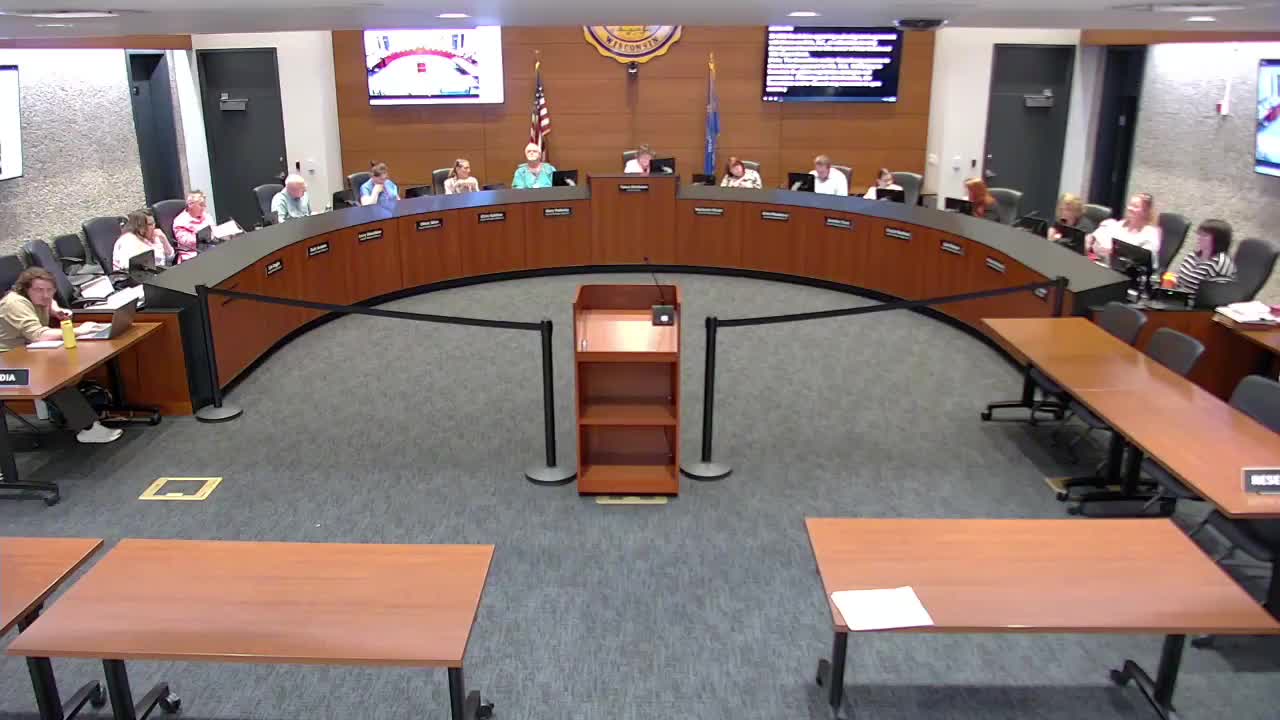
Summary
The Common Council approved a development agreement and tax increment financing for a low-income housing project at Main Street and Tenth Street North after discussion about tax-exempt status and assessment impacts; the vote was 11-1-1.
The La Crosse Common Council approved a development agreement with Haven on Main LLC for an affordable housing project at the corner of Main Street and Tenth Street North, including a restrictive covenant tied to tax treatment, on a vote of 11 yes, 1 no, 1 abstention.
Council Member Weston moved to adopt the development agreement; Council Member Northwood seconded. The item had been removed from the consent agenda for separate discussion. Council Member Calo, whose ward includes the site, said he supports the project but opposed public funding because the development agreement allows the nonprofit owner to seek tax-exempt status after a period, which he said could remove the property from the tax rolls in two decades.
Marta Train (recorded as Director Train), from the city planning/assessment staff, told council members that the 20‑year term in the development agreement is a standard element used as a reasonable, uniform term and that in many cases low-income housing tax credit (LIHTC) projects face longer tax‑exempt restrictions through program rules. She described the tax assessment process for LIHTC projects: assessors examine actual restricted rents when determining value, so projects with subsidized rents generally produce lower assessed values and therefore lower property‑tax revenue than comparable market‑rate buildings.
Train also said the development-agreement language typically ties the covenant to 20 years or the TID length (whichever is longer) and that the developer must show, under state rules and city practice, that "but for" the TIF support the project would not proceed. The planning director confirmed the project also has other subsidy layers, including Low-Income Housing Tax Credits administered through the Wisconsin Housing and Economic Development Authority, which impose their own time-bound restrictions on use and rent levels.
Council discussion focused on the trade-offs between creating subsidized housing, the length of public assistance and tax-roll impacts. Members asked staff about assessment methodology and whether any portion of a building could be deemed tax-exempt while other portions remain taxable; staff said those determinations occur at the time of a tax-exemption application and are decided under statutory criteria.
The council adopted the agreement with 11 yeses, 1 no and 1 abstention. Council members who voted against or abstained cited concerns about long-term tax revenue impacts or wanted more time to review legal specifics.
Ending: Staff will proceed under the development agreement and TIF terms; the planning and assessment offices will process any later tax-exemption requests according to state statute and local practice.