
La Crosse council approves stormwater utility rate increase to shore up permit compliance and capital needs
Get AI-powered insights, summaries, and transcripts
Subscribe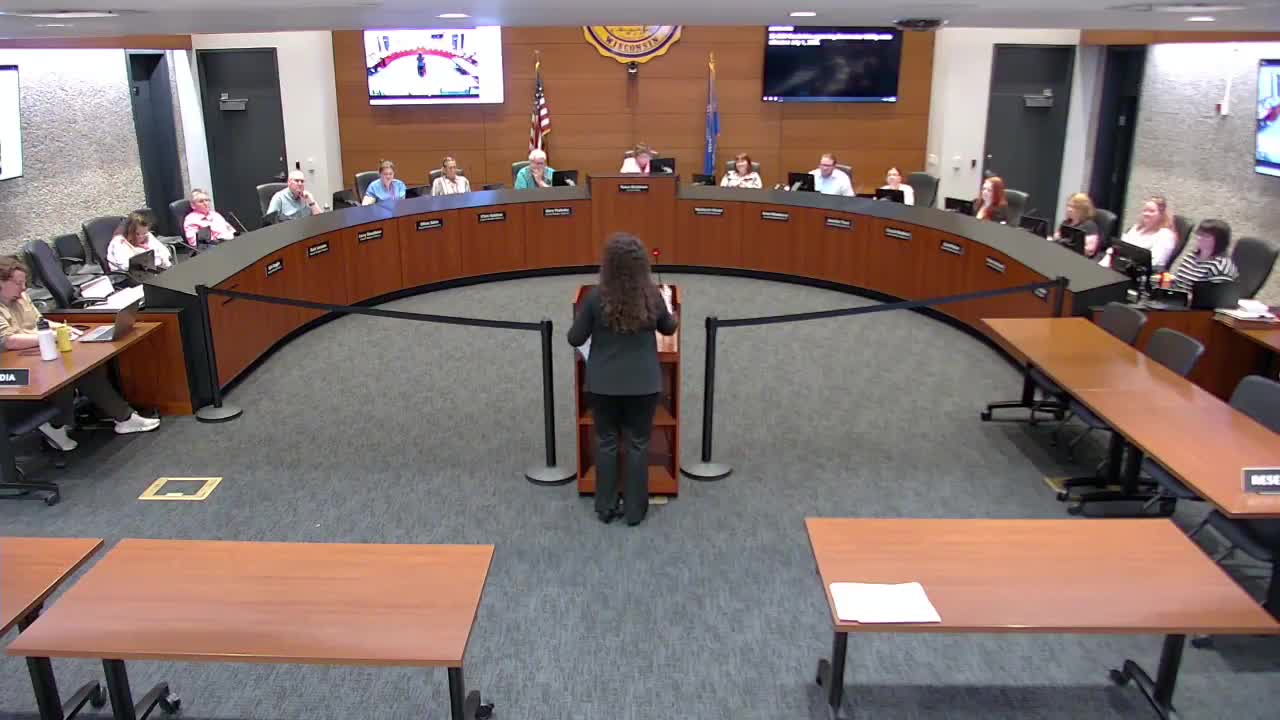
Summary
After a multi-hour discussion, the Common Council approved a two-step rate increase for the stormwater utility to address declining reserves, meet MS4 permit requirements enforced by the Wisconsin DNR and fund ongoing operations and capital work.
The La Crosse Common Council on Monday approved a multi-stage increase to the city’s stormwater utility rates to replenish depleted reserves, fully fund operations and help meet state and federal stormwater permit requirements.
The council adopted the rate package on a 9-4 vote after hearing a presentation from Tina Erickson, Finance and Compliance Manager for La Crosse Utilities, and a rate study prepared by Trilogy Consulting. Council Member Trost moved to adopt the recommendation; Council Member Mindell seconded.
Council members and staff said the utility’s existing rates—set years ago—do not cover the ongoing operation, maintenance and capital needs required by the municipal separate storm sewer system (MS4) permit enforced by the Wisconsin Department of Natural Resources. Erickson told the council the utility’s unrestricted cash had fallen to under $300,000 at the end of 2024 and that, at current rates, the utility is not financially sustainable.
Erickson said the Trilogy recommendation would be implemented in two phases: a quarterly charge per equivalent runoff unit (ERU) of $29.66 beginning July 1, 2025, and a quarterly charge of $36.18 beginning Jan. 1, 2026, with inflationary adjustments thereafter. She estimated the average residential customer would see about a $5.40-per-month increase in 2025 and an additional $2.17 in 2026. "The storm water utility is a vital asset to our community and it's a fulfillment of the ordinance enacted by the common council," Erickson said, adding that the utility's work supports regulatory compliance and flood mitigation.
Council members pressed staff on the history of the utility, earlier policy choices and alternatives. Erickson traced key changes to 2018, when an ordinance amendment removed the city's prior 50% share of capital costs, and to 2022, when a sunset clause was removed. Asked about enforcement risk for failing to meet MS4 obligations, Council Member Weston cited fines and legal referrals, saying permit violations can lead to fines (noted in discussion as up to $10,000 per day) and potential state or federal enforcement actions.
Several amendment and process motions were offered and defeated before the main motion passed. Council Member Padeschi moved a slower, five-year phase-in (25% July 1; 10% Jan. 1, 2026; then 5% annually through 2029); Council Member Calo seconded the amendment; it failed 4-9. Council Member Janssen moved to refer the item for 30 days; Council Member Pudetzky seconded; the referral failed on a 5-8 vote. Council members who opposed the immediate schedule argued the increase could be a hardship for residents and businesses; supporters stressed long-term financial stability and compliance obligations.
Erickson and Trilogy staff told the council the plan is intended to allow the utility to cash-fund capital projects (avoiding debt and interest expense) and to restore a target level of reserves over time. Staff also noted options for customers to reduce charges through stormwater credits by installing on-site best-management practices or removing impervious surface.
The council adopted the motion to implement the rate increases; the final roll-call tally was 9 yes, 4 no, 0 abstain. Council discussion and staff answers placed a number of clarifying details on the record, including the proposed ERU charges, the projected residential bill impacts, the prior adopted quarterly rate of $13.48 and the consultant’s recommendation to revisit rates with a full study in 2029.
Council members and staff noted practical tradeoffs if the city delayed or slowed the increase: projects would likely be delayed, the city could need to borrow (increasing long-term costs), and the utility could risk failing to meet MS4 deadlines from the DNR. Erickson said some compliance items identified during a November 2024 audit are due by March 2026 and that those deadlines were part of the urgency communicated to the council.
Looking ahead, Erickson said the utility will provide credit-policy information on the city website and that the staff recommends inflationary adjustments for three years after 2026 and a full rate study in 2029 to reassess sustainability.
Ending: The council’s decision takes effect in two phases that will be prorated on customer bills; most customers will not see the full impact until April 2026, staff said. Council members who opposed the schedule said they will continue to press staff for further public education and to identify mitigation for low‑income residents.