Get Full Government Meeting Transcripts, Videos, & Alerts Forever!
Get email alerts on the Public Safety Budget topic
No spam. Unsubscribe anytime.
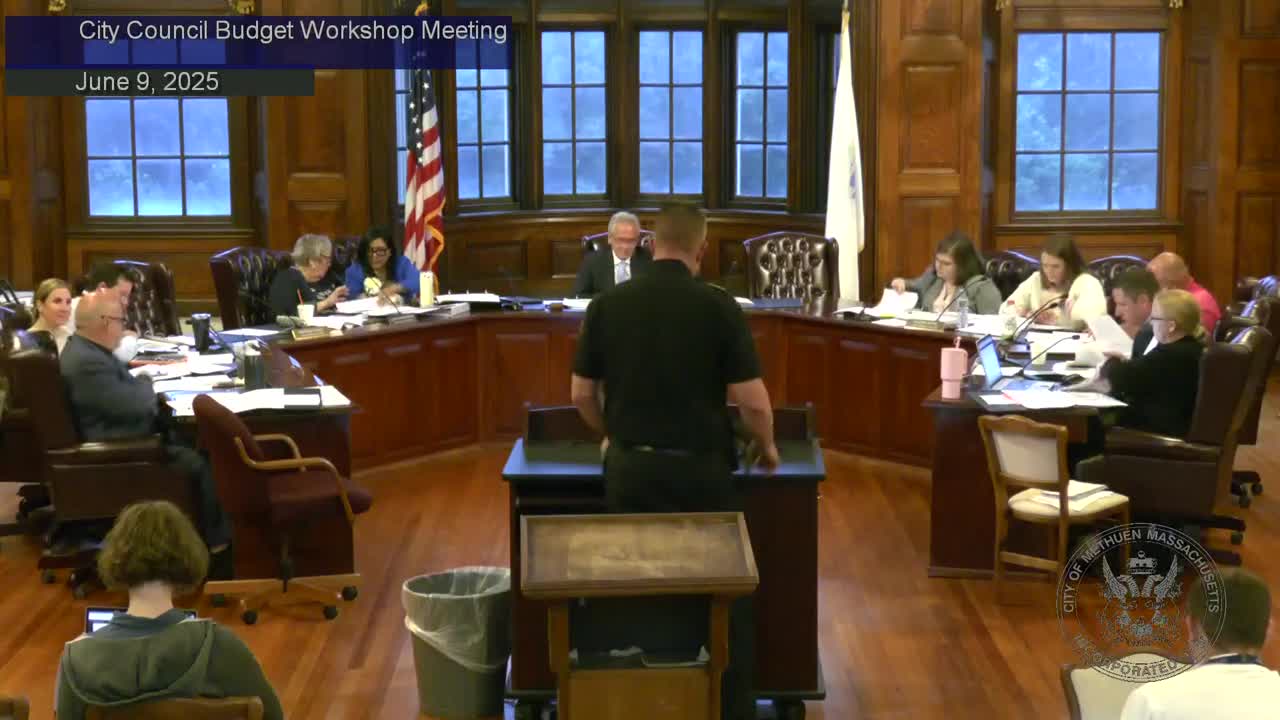
Police and fire chiefs outline staffing, overtime and health‑screening requests in 2026 budget pitch
Summary
Police and fire leaders described level‑funded operating budgets with added costs from collective bargaining, overtime pressure from long‑term leaves and deployments, recruitment challenges, and new voluntary medical screenings for first responders.
Police and fire chiefs outlined budgetary pressures for fiscal 2026 at the Methuen budget workshop, highlighting overtime driven by long‑term medical leaves and military activations, recruitment and retention challenges, and new health and professionalization priorities.
The police chief presented a level‑funded budget that nevertheless reflects higher personnel costs from recently settled collective bargaining agreements. He described requests that were not funded in the mayor's proposal, including an additional lieutenant, two patrol positions, a Police Cadet program and expanded in‑house training. He said the department remains committed to maintaining the current headcount (budgeted at 102 sworn officers) and stressed recruitment and reserve‑to‑full officer processes the department is using. The chief also recommended voluntary cardiometabolic screening for officers, describing it as a preventative program to detect early cardiovascular disease; he said he would continue to seek grant funding and other revenue sources if the council did not fund the request.
The fire chief described similar overtime pressure and said several members are out for extended periods, plus two recent military activations; those absences increase overtime and can strain station staffing. He asked councilors to preserve existing staffing levels and described a $64,000 proposal for a voluntary cancer screening (non‑invasive blood testing) for firefighters, noting national concerns about elevated cancer risk in the profession. The chief also noted that ambulance billing revenue is a significant general‑fund revenue source and that removing ambulances from service would reduce both response capacity and revenue.
Councilors expressed support for maintaining front‑line staffing and pressed both chiefs on alternative funding sources, including revolving fund balances and federal or state grants. No final budget votes were taken; chiefs said they will continue to pursue grant options and internal transfers as needed.