Get Full Government Meeting Transcripts, Videos, & Alerts Forever!
Get email alerts on the Public Health Lead Poisoning topic
No spam. Unsubscribe anytime.
Rock County health department reports progress on childhood lead prevention, urges universal screening
Summary
Katrina Harwood of the Rock County Health Department described the county’s childhood lead poisoning prevention work, reported 25 home visits in 2024, and noted Wisconsin DHS now recommends universal lead screening at ages 1 and 2.
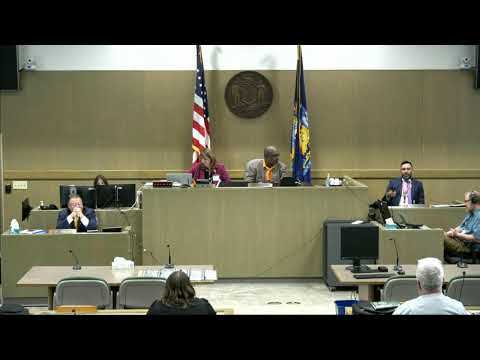
Katrina Harwood, Rock County health officer and health department director, gave the board an update on the county’s childhood lead poisoning prevention program and told supervisors the department has combined nursing and environmental work to reduce lead exposure in children. “Lead is a naturally occurring metal that is toxic to humans,” Harwood said, adding that lead is especially harmful to children and pregnant people and that there is no level of lead in the body that is considered safe. Harwood said Wisconsin’s Department of Health Services (DHS) lowered the blood lead reference threshold from 5 micrograms per deciliter to 3.5 micrograms per deciliter and in January 2025 recommended universal screening for all children at ages 1 and 2. The department reported that in 2024 it completed 25 home visits and offered services to 27 additional families where children had elevated blood lead levels; Harwood said all children who received a home visit had lower lead levels on retesting. Environmental health specialist Diana Grenewold described on-site testing and remediation procedures. She said staff use XRF equipment for precise measurements and that properties requiring remediation must use certified lead contractors; “Any work is completed by a certified lead contractor,” she said. For blood-lead levels of 10 micrograms per deciliter or above, Grenewold said the department issues remediation orders for the property, and the orders remain with the property until cleared. Harwood described the program’s funding as a mix of state general purpose revenue grants, Medicaid reimbursement for eligible children, and a smaller local tax-levy portion. She said the department will continue outreach to improve screening rates in higher-risk areas and may return to the board with recommended resolutions or support requests. Supervisors asked whether municipalities handle replacement of lead service lines; Harwood said municipalities are responsible for replacing lead laterals and mains and the health department does not directly perform that work. No board action was taken during the presentation; the item was informational with Q&A.