
Board adopts stricter student cell‑phone policy after weeks of debate; principals given discretion on enforcement
Get AI-powered insights, summaries, and transcripts
Subscribe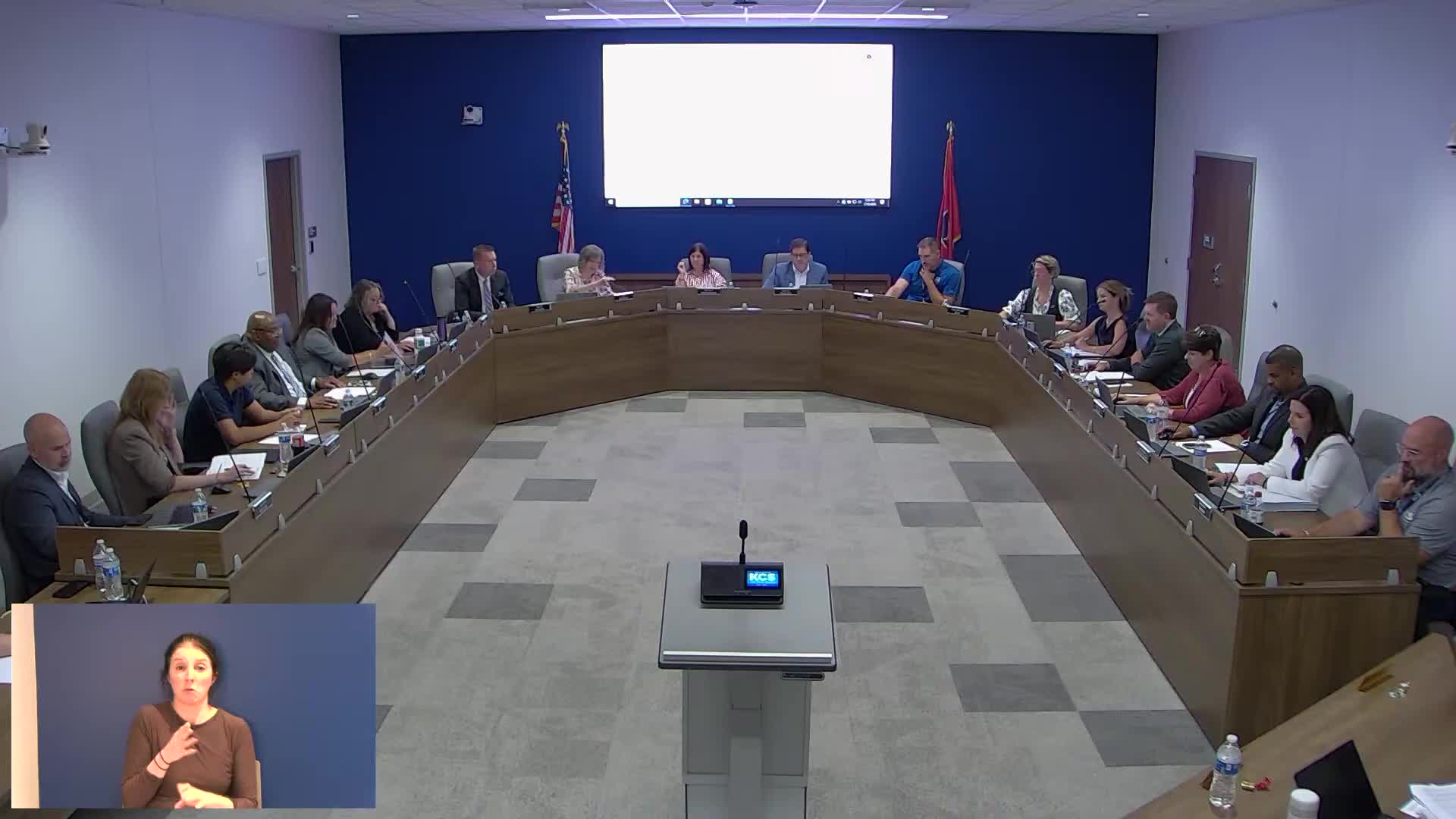
Summary
After extended debate and multiple proposed versions, the Knox County Board of Education approved a districtwide 'bell‑to‑bell' policy (version 2) limiting student use of messaging‑capable devices during instructional time; principals retain discretion over certain privileges.
The Knox County Board of Education voted June 5 to adopt a restrictive district policy that restricts student use of messaging‑capable wireless devices during the school day. The board approved “version 2” of the proposed revisions to the Student Communication Devices policy (J240), after more than an hour of discussion that focused on enforcement, watches, lunch access and class transitions. The approved policy limits use of phones and other messaging‑capable devices during instructional time; principals may set specific allowances outside instructional time, and the policy clarifies disciplinary options for confiscated devices. The board approved the measure on first reading with a roll‑call resulting in six yes, two no and one pass. Board members and staff cited a recent change in state law that requires messaging‑capable devices to be stored out of sight during instructional time as a starting point for district policy. General counsel and staff advised the board that the law’s language is not highly prescriptive and the district must determine how the rule looks in operating practice. Trustees debated three published policy versions and a later substitute motion. Supporters of the more restrictive version said a clearer, uniform bell‑to‑bell approach reduces classroom distractions and protects mental health; opponents, including some student speakers, urged more flexibility for older students who leave campus for college classes, jobs or extracurricular travel. Several board members and administrators suggested designated areas for lunch use if principals choose to allow it. Legal counsel summarized the threshold for in‑school use: “Any device that has communication capabilities, text, email, voice, etc., any communication capabilities, is not to be used…during instructional time.” Board counsel also fielded questions about smartwatches and devices that can be placed in airplane mode; counsel said devices with messaging capability fall within the restriction during instruction. The policy as adopted allows principals to set school‑level rules about lunchtime access and other non‑instructional periods and includes discipline language governing confiscation and return of devices. Several trustees requested that staff prepare implementation guidance and communication materials for principals and families, and district staff said they would produce clear guidance and work with schools on enforcement practices. The board’s action makes the policy effective for the coming school year; members said they expect schools to decide locally how to implement lunch‑time privileges, designated areas and enforcement procedures. No changes to criminal‑background screening or curriculum were made; the vote was limited to student personal device policy language.