
Citizens push for clarity as Panama City debates transportation impact fee goals and exemptions
Get AI-powered insights, summaries, and transcripts
Subscribe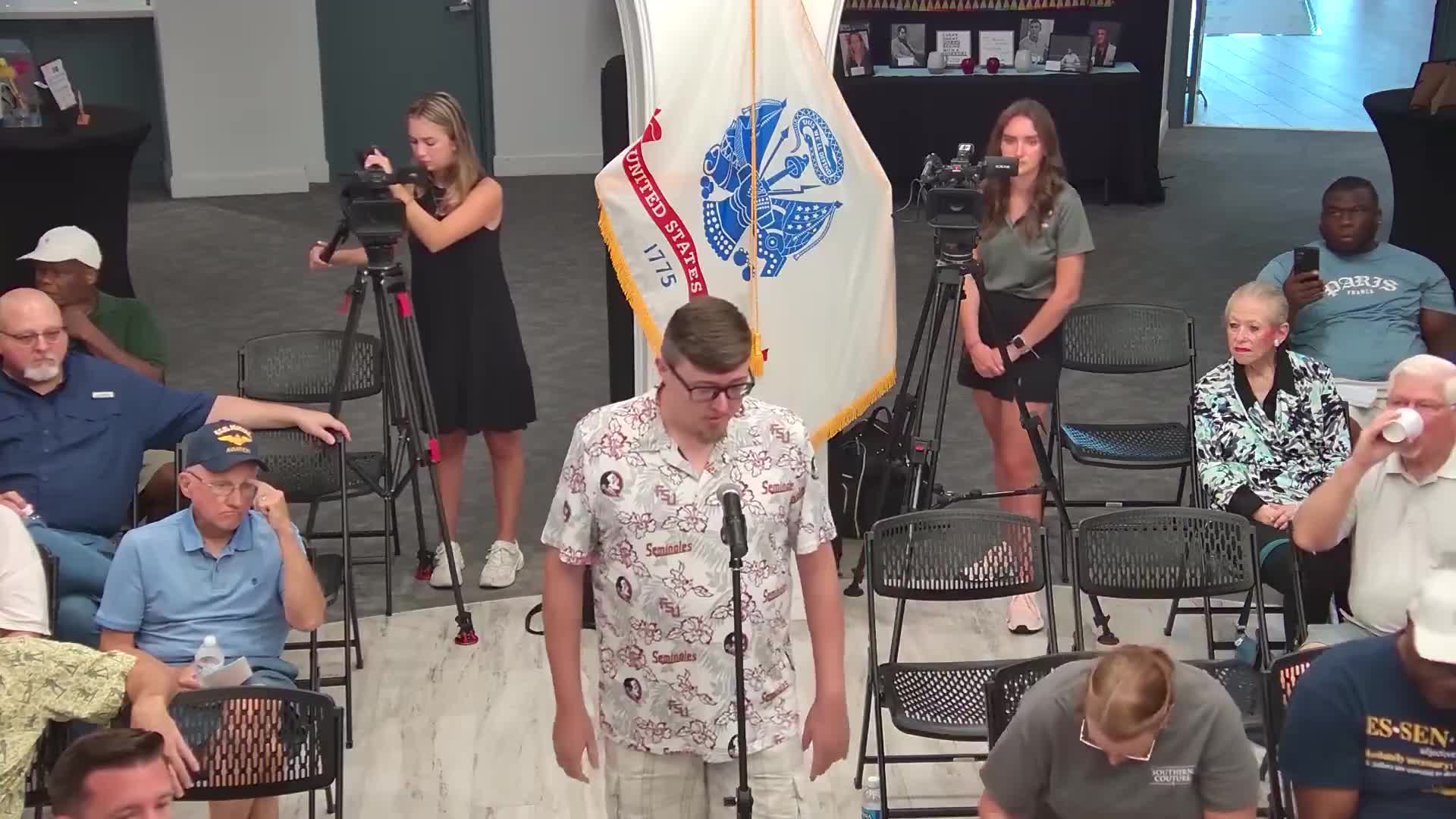
Summary
At a town hall discussion of a proposed transportation impact fee, residents urged the commission to define the target revenue, clarify exceptions, and publish a long-term repaving plan so that fee exemptions do not undermine funding for roads.
Residents at a Panama City town hall urged the City Commission on Saturday to set a clear objective for the proposed transportation impact fee and to quantify how much money the city expects to raise before adopting exemptions.
“Do we want $10,000,000 in this fund? What do we want?” asked Brian Garman, a resident who followed recent meetings on the fee. Garman and others warned that broad or numerous exemptions could erode the fee’s purpose and shift costs to taxpayers. “It seems like it’s going where it's like exception, exception, exception,” he said, arguing that exceptions risk making the fee ineffective.
Speakers presented two competing considerations: the need to raise dedicated funds for new and expanded roads as Panama City grows, versus sensitivity that additional fees could raise immediate housing costs or discourage desired development. One speaker said the city should decide whether the policy objective is primarily to raise revenue for roads or to influence the mix of economic development.
Commissioners and other speakers suggested practical next steps. Several called for a 10-year paving or repaving work program tied to a revenue target so the city can test the fiscal impacts of proposed exemptions. “You the the principle of what you tax you get less of,” a commissioner observed, noting a potential economic incentive effect of fees. Staff and commissioners encouraged asking what the fee must raise to meet concrete infrastructure goals, then modeling exemptions against that target.
No ordinance or formal vote was taken at the town hall. The discussion served as public input to ongoing staff work and commission deliberations. Residents asked the city to present transparent cost estimates, the desired scope of projects to be funded, and the effect of exemptions before finalizing rates or categories of development that would be exempt.
Speakers repeatedly framed the choice as one between short-term fees and longer-term tax revenue: “You’re either gonna pay the cost for the long term with taxes or the short term with fees,” Garman said. The commission encouraged continued public comment and said staff will use the feedback to refine the fee proposal before bringing formal recommendations back to the commission.