
Panama City explores boat-ramp fees, short-term marina slips and outside funding amid permit, management questions
Get AI-powered insights, summaries, and transcripts
Subscribe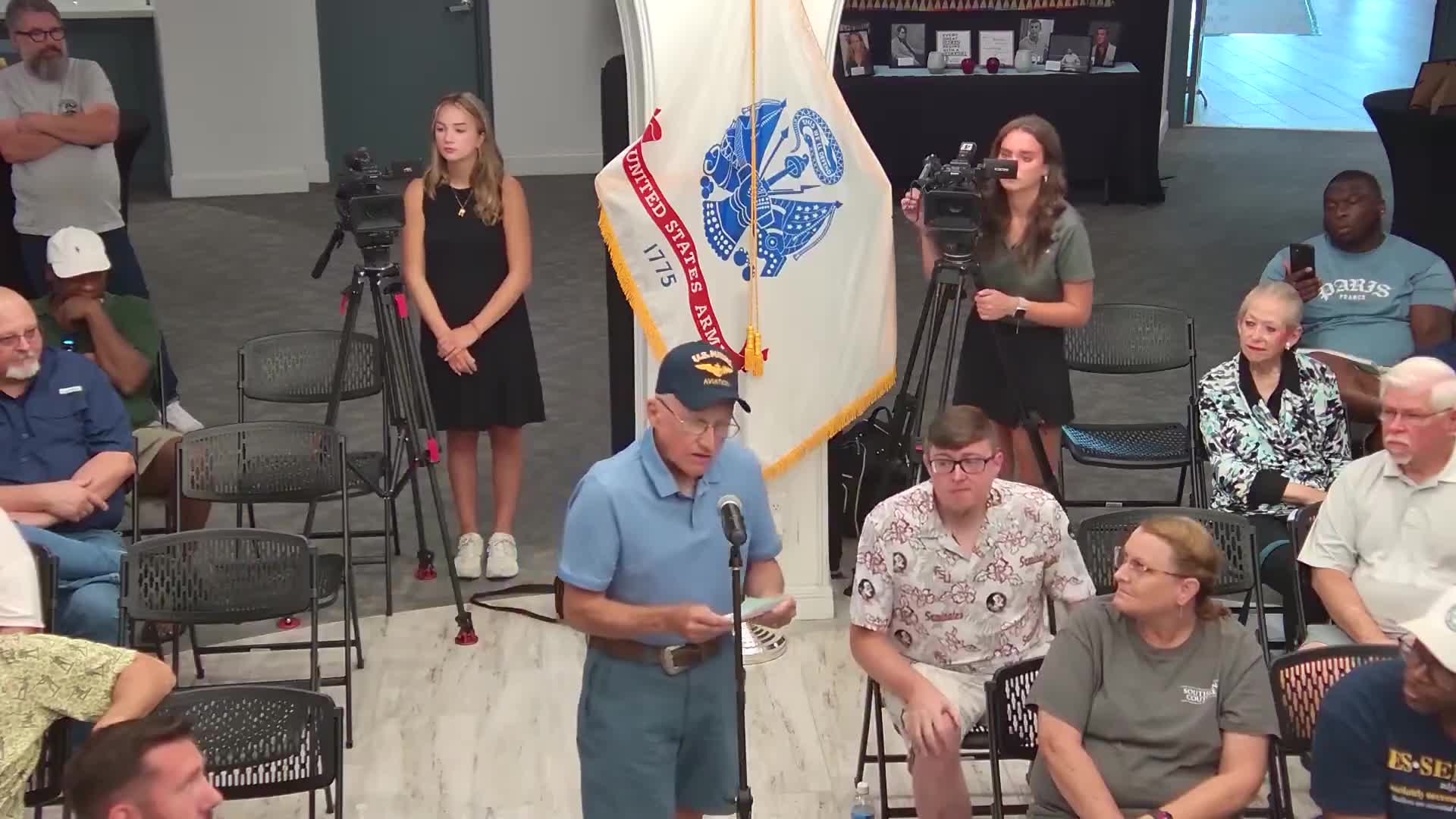
Summary
At a city town hall, residents and commissioners debated charging user fees for boat ramps, options to fund and build wet slips at downtown marina, and whether private partners such as St. Joe or CMP should finance initial slips while management questions are resolved.
Panama City leaders and residents on Saturday discussed proposals to charge user fees at city boat ramps and to accelerate construction of wet slips at the downtown marina, while debating who should finance and operate new facilities. The conversation produced a staff request to research resident-pass options and a commitment to bring findings back at a virtual meeting by the end of summer.
The debate centered on two related aims: generate a stable revenue stream for boat-ramp maintenance and expand marina capacity quickly enough to meet demand from local and visiting boaters. Residents including Kenny Bostick argued for a user fee and resident sticker, saying, “We should charge $20 just like Saint Joe, Mexico Beach. If you’re not a Bay County resident, you would have to pay it.” He and others suggested fees be held in a restricted fund dedicated to boat-ramp improvements, dredging and maintenance.
City staff and commissioners described options for advancing the idea. Commissioner Jonathan (City Manager) indicated staff can research a sticker/annual-pass program like parking permit systems and report back; a motion was supported to have staff “research this and bring it to a virtual meeting to discuss the findings by the end of the summer.” Staff noted prior grants and appropriations that funded some marina projects — for example Snug Harbor was funded by a grant previously and the city received legislative appropriations — and stressed that any fee program should be structured so revenue remains constrained to boat-ramp or marina needs.
Speakers also pressed the city about speeding delivery of wet slips at the downtown marina. Commissioners and attendees discussed using outside partners to fund construction. One participant urged asking The St. Joe Company (referred to in the discussion as “Saint Joe”) whether it would fund the first 50 slips, the number for which the city currently holds a permit. Staff said such outside funding or private activity bonds are options previously used in the city: “That’s how we built the promenade and the floating dock,” a commissioner said, noting precedent for partner-funded upland or waterfront improvements.
City staff and bond counsel explained tradeoffs. Private activity bonds or partner financing can reduce upfront city debt but require clear revenue pledges or a lessee/operator with capacity to cover debt service. Staff recalled earlier numbers and estimates, including an informal “bonding capacity” estimate that had been discussed previously in staff conversations; they also noted the city has existing debt/cash-flow commitments for ongoing infrastructure projects. Commissioners asked staff to solicit responses from potential partners including Saint Joe and CMP and to present options at a formal commission meeting so all parties can respond publicly.
Speakers raised questions about management: whether the city should operate marinas long term or transfer operations to a private operator once slips are in place. Commissioners expressed a consistent preference for the city to own assets but not necessarily manage marina operations indefinitely. Staff pointed out existing lease terms and interim agreements with private operators (CMP was discussed) that affect timelines and obligations for upland and wet-slip delivery.
The town hall did not produce a vote or final contract. Instead, the commission directed staff to research user-fee models (including resident discounts or preloaded resident credits), to prepare a memo on financing and permit status, and to solicit firm responses from potential private partners about funding and terms. Those deliverables will be discussed in future virtual or commission meetings.
A range of residents supported targeted user fees so that those who use boat ramps pay for maintenance rather than shifting costs to general taxpayers; others urged careful definition of any restricted fund or bond structure so user revenue cannot be diverted to unrelated city expenses. The commission and staff repeatedly emphasized they would return with written analyses and options — including estimated revenues and management scenarios — before asking the commission to approve ordinances or contracts.