Committee presses ZoneCo for tighter Warrensville Center mixed‑use rules after project example
Summary
A city development subcommittee asked its zoning consultant for clearer rules on height, parking, buffers, stormwater and ground‑floor uses for the proposed Warrensville Center mixed‑use district after a recent proposal exceeded several draft standards.
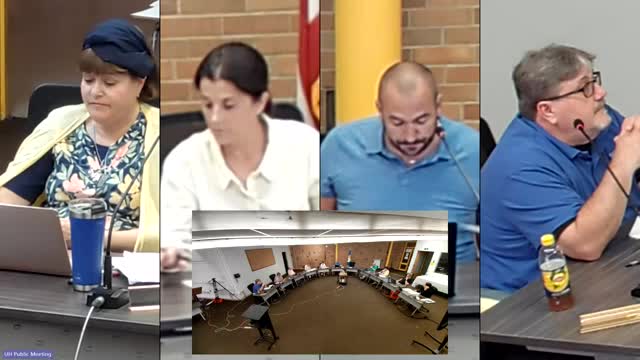
The Development Committee met July 8 to give direction to ZoneCo on the draft Warrensville Center Road zoning rules after members and residents raised concerns about building height, parking, stormwater and buffers.
Committee members and residents said a project shown to the Planning Commission — 36 apartments with roughly 1,800 square feet of retail — illustrated how the current draft could allow larger, more intrusive development than the committee intends. “I think they were using the mixed use component for the building height, which would allow for 4 stories. I think for me, that's a no go,” said a committee member. Several residents echoed that four stories would be too tall where housing sits directly behind the corridor.
The committee emphasized several technical changes it wants ZoneCo to clarify before a second draft: whether to allow flat roofs and roof decks (the committee agreed to remove a 5:12 roof‑pitch requirement and allow flat roofs); how to count and place parking so rear lots are not dominated by large parking fields; how to treat impervious coverage (the draft lists 75 percent maximum for residential portions, and ZoneCo’s mixed‑use standard uses higher percentages); and how required rear setbacks apply to principal structures versus accessory garages. Committee members noted the draft currently sets a 35‑foot rear setback from the rear property line to the principal structure, with accessory structures subject to separate setbacks.
On stormwater, staff and an attendee described site solutions used elsewhere — underground storage tanks and on‑site retention systems — and said those systems can allow more impervious surface while meeting runoff controls. “If you want density, the density offsets the cost you're putting in the underground storm system,” a planning official said. The group asked ZoneCo to propose alternative impervious limits or separate limits for projects that provide on‑site storage and water‑quality treatment.
The committee also discussed the proposed requirement that residential uses in the mixed buildings include nonresidential ground‑floor uses. Several members and residents asked ZoneCo to consider narrower lists of permitted ground‑floor uses (for example: neighborhood‑serving retail or offices rather than general retail) to reduce the chance that high‑traffic uses land in the corridor.
Public commenters urged several design changes: cap multifamily height at three stories, require stronger landscape buffers between new developments and existing backyards, prefer on‑street parking to large rear surface lots, use pervious paving where practical, and pursue roadway redesigns that calm traffic and improve crosswalks on Warrensville Center Road. One commenter noted a traffic study from about a decade ago and advised the city to confirm current volumes before fixing lane widths.
No new ordinance or code was adopted at the meeting. The committee directed staff to bundle the committee’s feedback and ask ZoneCo to produce a second draft incorporating those clarifications and alternatives; the committee said it will vet that draft before holding community hearings. The meeting ended with a motion to adjourn.