
Simsbury committee weighs Sustainable CT match funds and Solar MAP+ to expand school solar and energy plan
Get AI-powered insights, summaries, and transcripts
Subscribe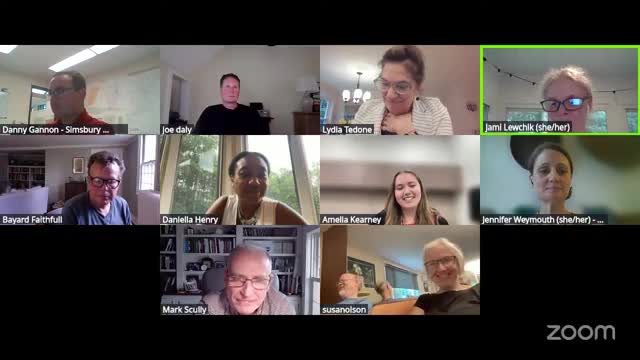
Summary
The committee welcomed a Sustainable CT fellow, discussed re‑certification documentation and a match‑fund program, and reviewed Solar MAP+ and Green Bank technical assistance as a pathway to solar photovoltaic projects and PPAs for schools; members identified roof readiness at Latimer and communication to the Board of Finance as priorities.
The Simsbury Sustainability Committee heard from Amelia, the region’s Sustainable CT summer fellow, about certification, match funding and municipal documentation needs and then discussed pursuing solar for municipal and school buildings using state technical assistance and incentive programs.
Amelia, introduced as the Sustainable CT fellow for the region and working with the Capitol Region Council of Governments, explained Sustainable CT’s certification levels and the match‑fund program that offers dollar‑for‑dollar support up to $6,000 for community‑centered projects once a town is registered. Committee members noted existing local projects — community gardens, library fairs and other events — could be documented toward certification and that volunteers could help assemble submission materials.
The committee then reviewed energy charts comparing Simsbury’s installed solar capacity and school solar to peer towns. Members said Simsbury currently has about 15 kilowatts of solar installed on school property, well below comparable towns. The group discussed Solar MAP+, Green Bank technical assistance and a commercial incentive pool that state actors recently expanded to support school solar and carport canopy projects with higher incentives than prior programs.
Committee members emphasized staff capacity constraints for preparing RFPs and administering projects. The Green Bank and Solar MAP+ offer no‑cost assessments and hands‑on support, including help through procurement and PPA (power purchase agreement) steps; committee members characterized that outside technical assistance as critical because district and municipal staff have limited bandwidth. Participants identified the Latimer school roof as “solar ready,” making it a near‑term candidate for assessment.
Jamie, committee chair, said the group had been asked to present its top initiatives to the Board of Finance and suggested highlighting the annual library fair, school waste mitigation work and the energy plan as possible showcase items. Members agreed that conveying potential dollar savings from school solar to the Board of Finance would help frame the work as a financial as well as environmental priority.
The meeting concluded with procedural actions: a motion to adjourn, a second and a unanimous voice vote in favor.