
Planning commission hears options to loosen parking minimums, staff to return with targeted proposals
Get AI-powered insights, summaries, and transcripts
Subscribe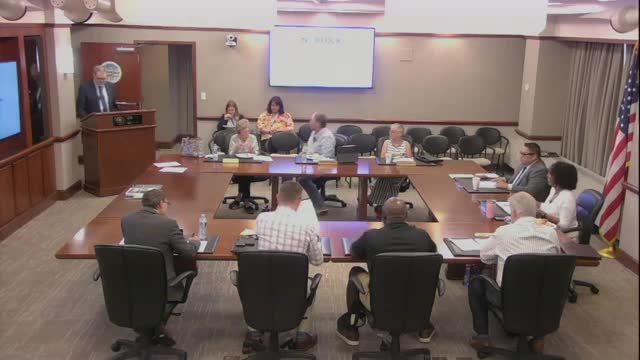
Summary
Planning staff reviewed local and peer-city approaches to reducing or eliminating off-street parking minimums and asked commissioners whether to pursue citywide elimination, targeted reductions for residential uses, or expanded exemptions; staff will return with more detailed proposals and outreach plans.
Norfolk Planning Commission members on Thursday revisited the city's parking ordinance and asked staff to return with draft proposals after a months-long study of peer cities. The commission heard that a range of reforms ' from deleting minimum parking requirements citywide to expanding the city's existing exemptions and alternative options ' are possible and that each path carries trade-offs for housing affordability, climate resilience and enforcement. Planning staff member Jeremy summarized the policy landscape and peer examples, telling the commission: "Parking reform is typically just remove the minimum parking requirements for everything," and then described four peer cities with recent changes: Buffalo (Green Code, Feb. 2017), Roanoke (2021), Richmond (2023) and Newport News (recently). He said Buffalo reported removing about 500 surface parking spaces in the first two years after changing its code and that Buffalo couples the change with site-plan review and transportation demand measures for larger projects. Commissioners and staff discussed several options: eliminate parking minimums citywide; remove minimums for specific zoning/character districts (for example, the city's more auto-oriented suburban and coastal districts versus downtown); or expand the exemptions and alternative compliance paths Norfolk already uses'including reductions for preexisting structures, off-lot/shared parking, and site-specific parking studies. Why it matters: Parking requirements can materially affect the cost and feasibility of housing development, downtown redevelopment and the amount of impervious cover citywide. Commissioners noted the connection to the city's upcoming comprehensive plan and the housing production goals the plan is meant to support. Key details and trade-offs discussed - Current ordinance: Norfolk's parking chapter contains dimensional standards, bicycle parking, loading, and a table of minimums that vary by use and character district; it also offers a sizeable menu of exemptions and alternatives (e.g., reductions near transit, adaptive reuse reductions, shared/off-site parking, deferred parking and site-specific studies). - Downtown: staff reminded commissioners that "our downtown already requires 0" minimum parking for many uses, so changes would affect non-downtown districts. - Peer lessons: Buffalo eliminated minimums citywide in a comprehensive rewrite (the presenter noted it paired the removal with review triggers for larger projects); Roanoke and Richmond eliminated or reduced minimums but kept maximums and paired changes with other policy actions (Richmond paired it with a broader package to improve pedestrian, metering and enforcement infrastructure); Newport News removed minimums and moved many design standards to a city design manual. - Maximums: several commissioners raised the question of how to retain a meaningful cap on parking if minimums are removed; staff said Norfolk's current maximums are expressed as a percentage of the minimum (for example, 125% or 110% of the minimum in different areas), and that removing minimums would require rewriting maximum rules so they are stand-alone. - Implementation, outreach and sequencing: staff emphasized that significant community outreach would be needed for any citywide change and suggested incremental or targeted changes (for example, focusing on residential/missing-middle housing or certain character districts) could be easier to implement. Staff also noted that the draft comprehensive plan already includes language to "explore reducing or eliminating minimum off-street parking requirements" for housing and greenhouse-gas reductions. What the commission directed (discussion vs. decision) - Discussion: Commissioners debated the merits of citywide elimination versus targeted approaches, noted local examples (the Railroad District) where reduced requirements helped adaptive reuse, and raised concerns about spillover parking into neighborhoods and the need for enforcement and maximums. - Direction to staff: Commissioners asked staff to return with concrete, incremental proposals and outreach plans rather than a single citywide 'delete-all' package. Staff indicated they would bring options that could include (a) targeted elimination for residential uses in specified character districts, (b) expanded exemptions/alternative compliance paths, and (c) revisions to maximums so they work without minimums. - Formal decision: none. The commission did not adopt an ordinance or vote on a code change at the meeting; staff will prepare proposals and outreach for a future meeting. Quotations from the meeting - Jeremy (Planning staff): "Parking reform is typically just remove the minimum parking requirements for everything." - Jeremy (on peer results): "Their numbers do say that they've ' they have removed 500 parking spaces from the city in in the first 2 years of it." Context and next steps Staff said the next steps are to return with more narrowly scoped proposals and community outreach plans. Commissioners suggested starting with residential parking as a focused work stream and to evaluate whether exempting commercial uses in particular districts would be appropriate. Any ordinance changes would be tied to the comprehensive-plan process and require additional public engagement.