
Consultants present $41 million phase of Flagler Beach stormwater master plan; city urged to pursue grants and annual updates
Get AI-powered insights, summaries, and transcripts
Subscribe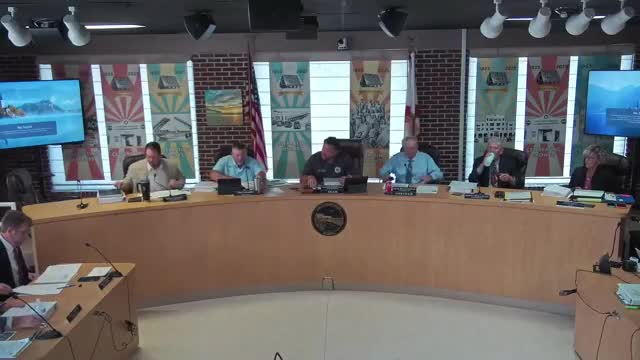
Summary
McKim & Creed presented Phase 2 of a citywide stormwater master plan that identifies 75 conceptual projects, prioritizes 23 as recommendations totaling about $41 million, and recommends a 20-year implementation strategy emphasizing grant-seeking, annual reprioritization and combining projects for cost efficiency.
McKim & Creed consultants presented Phase 2 of the City of Flagler Beach stormwater master plan to the City Commission, summarizing a citywide evaluation that produced 75 conceptual projects and recommended 23 priority projects that together total about $41 million.
The consultants said the plan is a “roadmap” the city can update annually and use to pursue external funding. “This whole master planning effort was intended to be a starting point to give you all a roadmap to move forward,” the presenter said, adding the plan should be reviewed as part of the city’s annual budgeting cycle.
Why it matters: the plan frames capital and programmatic options for a community where roughly half of properties fall in a flood zone and where the city’s existing stormwater revenue streams are limited. The consultants recommended blending “low-hanging-fruit” administrative actions from Phase 1 with capital investments targeted by their scoring framework to make projects more competitive for grants.
Most important facts - Inventory and scoring: consultants inventoried city rights-of-way and easements, defined a weighted scoring framework prioritizing structural flood reduction and cost, and incorporated public input to score projects. - Project counts and costs: the study identified 99 drainage basins, conceived 75 conceptual projects and prioritized 23 for recommendation. Those 23 projects were estimated conservatively at roughly $41,000,000 in total, with individual planning estimates ranging from about $250,000 to $7,000,000 and a planning-level average near $2,000,000 per project. - Implementation approach: the consultants proposed a 20-year horizon that averages roughly one to two projects per year, recommends clustering geographically related projects for economies of scale, and urges annual reprioritization tied to the city’s budgeting calendar. - Funding strategy: consultants urged the city to pursue state and federal grants and to use limited local funds as match where required. They flagged the Clean Water State Revolving Fund (SRF) and recent hurricane-related appropriations as potential sources and recommended developing grant-writing capacity—either assigning staff responsibility or hiring consultants—to proactively pursue and manage grants.
Supporting details and staff follow-up The consultants said cost and structural flood-reduction benefit were the two most heavily weighted criteria in their prioritization. They also included feasibility, environmental and water-quality co-benefits, and grant competitiveness as secondary criteria. The planning-level cost methodology used a standardized roadway section for comparability across projects.
Commissioners pressed for clarification about whether the plan requires new outfalls, how curb-and-gutter designs tie to treatment and outfalls, and whether projects could be phased or scaled to capture “early wins.” The consultant explained that where there was no existing outfall the plan proposes new outfalls sized by hydraulic analysis and that projects include water-quality treatment—either wet detention ponds or inline water-quality units—before discharge.
Several commissioners asked for a public update on progress implementing the Phase 1 “low-hanging fruit” recommendations; Commissioners asked staff to prepare a short, public-facing status update listing those Phase 1 items and whether they have been completed, are in progress, or remain unstarted.
Public comment and scope Members of the public asked whether monthly stormwater fees should already have produced maintenance results and whether the program aims to prevent major storm surges. City staff and the consultant clarified the plan’s focus: to reduce routine and “sunny day” flooding, drainage failures and local nuisance flooding, not to provide comprehensive protection from extreme storm surge or major hurricane-driven coastal flooding.
Next steps The consultants asked the Commission for feedback and suggested the city formally adopt the plan as a living document and budget for annual review. Staff accepted requests to post a clear Phase 1 status update to the city portal and to pursue the grant-following recommendations with defined staff or consultant roles.
Sources and attribution Quotes and on-the-record attributions in this article come from: Mr. Haley (McKim & Creed, presenter), Alexis Ward (McKim & Creed, engineer referenced by the presenter), the City Manager and Commissioners present at the meeting. Public commenters included RJ Santore and Steve Dally.
Ending note The plan gives Flagler Beach an organized, scored project list and a multidecade implementation pathway. The work required to fund and build the projects — from matching funds to grant-writing capacity — was identified by the consultants as the most actionable short-term need for the city.