
Commission reviews sewer utility budget, flags grinder-pump costs and debt service
Get AI-powered insights, summaries, and transcripts
Subscribe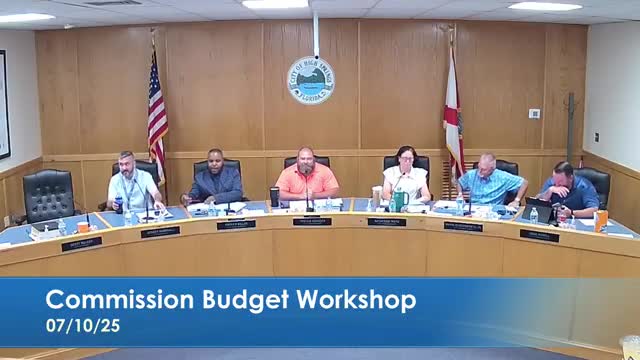
Summary
City staff briefed the commission on the sewer utility budget, noting nearly $500,000 in ongoing debt service, rising sludge-hauling costs tied to wetlands work, a $50,000 grinder-pump budget line and policy options including shifting grinder-pump responsibility to homeowners.
City staff presented an overview of the sewer utility budget at the commission meeting and told elected officials the utility continues to carry legacy debt and rising operating costs while staff weigh options to shift some grinder-pump costs to homeowners.
The presentation covered revenue sources and expenses for the sewer system, including service fees, grinder-pump replacement fees, connection fees, impact-fee transfers and grant reimbursements. A staff member said the utility still carries “almost a half million dollars in debt service” tied to a treatment plant constructed more than 20 years ago, and noted the department received impact-fee transfers of about $400,000 to help balance the current budget.
Why this matters: the sewer fund is enterprise-funded (not from the general fund), so shortfalls or major capital needs can influence rates or require policy changes that affect sewer customers.
City staff described several operating pressures. They told the commission that sludge-hauling costs were higher this year because delays in wetlands work and plant renovation altered disposal schedules. The staff presentation listed recurring operating items — personnel, licensed operator services, lab testing, single audits related to grant activity, sludge hauling, utilities for lift stations and the treatment plant, parts and repair for grinder pumps, and debt service for prior USDA borrowing.
Commission discussion focused on grinder pumps and long-term costs. A commissioner said, “Debt's killing us,” when the debt-service burden was raised. Staff noted the system has roughly 1,800 sewer customers and “over a thousand grinder pumps,” and that grinder pumps were originally intended to be a homeowner responsibility. The presenting staff member said the city currently rebuilds and replaces pumps as an operational practice but is “working with the attorney to see if there's a mechanism” to transfer responsibility to homeowners for new pumps installed by the city.
Staff also described internal budget discipline efforts: reallocated staffing for accuracy in charging personnel to the correct fund, and more granular repair/parts accounting to improve pricing decisions. The presenter said the sewer budget currently includes a $50,000 line for grinder pumps but noted actual posted costs across several pump-related line items differed and that staff will refine those categories in the next budget cycle.
Other details in the presentation included a $63,000-per-year lease-to-own payment for a piece of mowing/vegetation equipment (referred to as the MowerMax, with about two years remaining on the lease), and that a portion of AMI (automated meter infrastructure) debt service is allocated to sewer because water meters feed sewer bill volumes. Staff said some capital work was paid with ARPA funds and that the project also received DEP grant reimbursements related to wetlands and the wastewater treatment upgrades.
No formal policy change or motion was taken at the meeting. Staff said they will meet internally with Jason and Jeremy to refine staffing allocations and budget line details and will return to the commission with further information next week.
Ending: Commissioners asked staff to provide additional cost breakdowns and legal options on grinder-pump responsibility before the next budget discussion; no vote or ordinance was taken at this session.