Get Full Government Meeting Transcripts, Videos, & Alerts Forever!
Get email alerts on the Group Homes Zoning Fire Safety topic
No spam. Unsubscribe anytime.
Committee reviews definitions and fire-safety rules for group homes, shelters and assisted-living uses
Summary
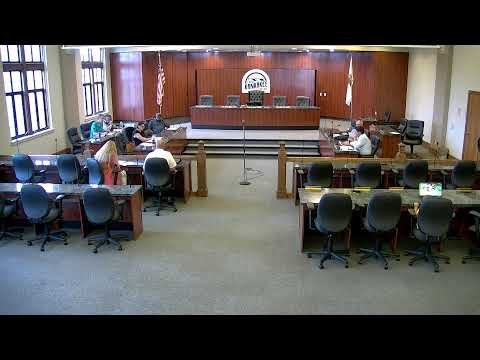
The Kankakee License and Franchise Committee on July 10 heard city attorney and fire-department briefing on municipal definitions and fire-safety rules for community residences, group homes, rooming houses, halfway houses and shelter-care facilities.
On July 10 the Kankakee License and Franchise Committee received an extended briefing from the city attorney (Attorney Landry) and Fire Chief LaRoche on the city’s definitions and rules for community residences, group homes, rooming and boarding houses, shelter-care facilities and assisted-living uses.
Attorney Landry walked the committee through the municipal definitions that determine where each type of residence is permitted, whether a conditional-use permit is required and what conditions apply. He described a community residence as “a single dwelling occupied on a relatively permanent basis in a family-like atmosphere by a group of unrelated persons with disabilities,” and said such uses must comply with the city’s community residence (group-home) ordinance. He urged aldermen to identify what is actually happening at a particular property—how many occupants, whether paid staff live on site, and whether the use fits one of the ordinance definitions—because those facts determine which zoning and inspection rules apply.
Chief LaRoche explained the fire-safety requirements the department enforces. He told the committee that sprinkler and fire-alarm requirements vary by type and size of facility: for certain group-home categories and shelter uses, sprinkler and alarm systems are required for new construction and for major renovations; the department noted specific occupant thresholds tied to requirements during the discussion. The chief also noted the city’s inspection and enforcement tools, including fire-safety inspections and administrative warrants when necessary.
Aldermen raised concerns that some properties in residential neighborhoods appear to operate as residential-care or recovery homes without clear permitting or adequate disclosure to neighbors. Committee members asked for clearer ordinance language and for research into whether shelter-care facilities or similar uses should remain a permitted use in certain industrial zones or be moved to a conditional-use status. Several aldermen requested the ordinance committee review the zoning chart and the permitted/conditional-use designations and asked staff to clarify the historical basis for current allowances.
Ending: Staff and counsel will bring additional clarification to the ordinance committee on how shelter-care and related uses are zoned and on fire-safety requirements tied to occupant thresholds, new construction and major renovations. The fire department also highlighted remediation options when unpermitted uses present public-safety risks.