Get Full Government Meeting Transcripts, Videos, & Alerts Forever!
Get email alerts on the Behavioral Health Funding topic
No spam. Unsubscribe anytime.
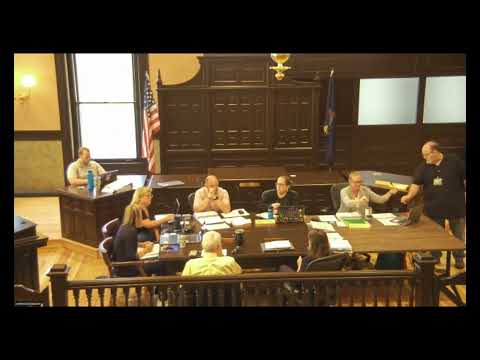
Commissioners review behavioral-health sales-tax requests; staff says $1.6M ongoing gap remains
Summary
Douglas County staff presented a consolidated list of projects eligible for the county behavioral-health sales tax on July 11. Commissioners were told ongoing eligible requests total roughly $2.9 million while undedicated ongoing capacity is about $1.6 million; commissioners asked staff for clarifications and for handling of retroactive requests.
Douglas County commissioners reviewed behavioral-health sales-tax requests during July 11 budget deliberations and heard staff explain fund capacity, eligible projects, and several retroactive or gap-funding requests. No funding decisions were made; staff committed to clarifying the eligible amounts, splitting one-time vs. ongoing requests and reporting back to the commission.
What staff presented Jake and Sarah presented a condensed worksheet showing items eligible for the behavioral-health sales tax. Sarah summarized: the ongoing amount eligible on the worksheet totaled roughly $2,900,000, while the 1‑time eligible requests totaled roughly $3.3 million. She said the county’s undedicated ongoing capacity in the behavioral-health fund is about $1,600,000 (funding already committed to ongoing programs reduces the available ongoing capacity); she contrasted that with a capital capacity number the staff cited near $12,000,000.
Why it matters Commissioners said clarity is needed because partners and the public have sometimes misread the behavioral-health fund balance as fully available for recurring operations. Staff warned that capital-restricted funds cannot be used for ongoing personnel costs and that moving operating obligations into a capital fund would create statutory and policy limitations. Sarah said an exemption from the county’s fund-balance policy would be required to treat those dollars differently.
Retroactive requests and contractual questions Commissioners asked about several retroactive requests, including invoices or previously allocated 2023/2024 funds now being sought for payment. County staff (Bob and Sarah) told the commission there is an outstanding 2023 invoice from Headquarters that staff estimate at roughly $84,000 and that the county previously entered a 2023 contract related to some crisis-line work; staff paused payment while questions about contract performance and audit findings were investigated. Sarah said: “they invoiced us on time. We just had questions and it, was very fair, I think, to wait for answers on those.”
Staff also distinguished between two categories of retroactive requests: - Funds that were previously contracted but unspent (staff said Mirror Inc and similar items fall into that bucket and can be treated as contractual commitments). - Requests that represent retrospective gap funding for services not covered by an existing contract (staff said those should be treated differently and raised governance concerns).
Other specifics discussed - Headquarters and the local crisis phone line: staff said the local number used historically by Headquarters is not county-owned and that 988 will route callers; staff recommended a fresh, start‑from‑scratch agreement if commissioners want to fund crisis-line operations going forward. - Permanent supportive housing: staff identified an ongoing funding need of about $390,292 (itemized in the worksheet) and a one-time gap amount for 2025 (staff said they would split that line into two, color-code it and provide updated worksheets). - Bert Nash: staff told commissioners they expect additional, specific requests tied to Bert Nash’s transition and recommended that any ongoing support be based on a new agreement and clearer financials; staff said outside consultants (SS&C) have been engaged for Bert Nash’s financial work and that additional one-time transition requests may arrive.
Next steps Commissioners asked staff to: split worksheet lines where necessary and color-code one‑time vs. ongoing amounts; provide precise totals and fund-balance calculations; and identify which past amounts are contractual obligations versus discretionary supplemental requests. Staff also suggested the county consider an exemption from the fund‑balance policy if the commission chooses a different treatment for behavioral-health funds.
Ending No commitment was made to specific supplemental funding on July 11. Commissioners asked staff to return updated worksheets and supporting documentation in advance of Monday’s deliberations and to flag items that at least two commissioners want to prioritize for discussion.