
Supporters urge credentialing for digital navigators as health and benefits rely increasingly on online systems
Get AI-powered insights, summaries, and transcripts
Subscribe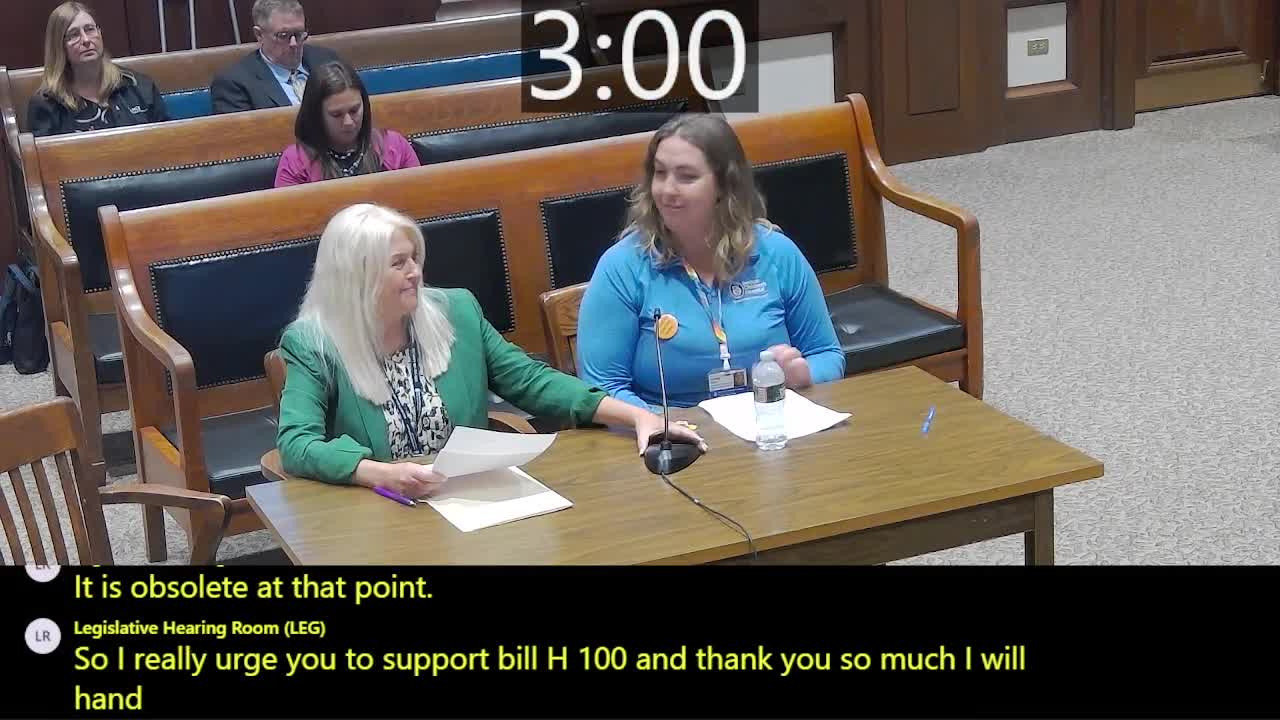
Summary
At the hearing lawmakers heard calls to create a statewide credentialing commission for digital navigators (H100). Health‑care providers, community groups and navigators said standardized training and recognition are needed to sustain services that help residents access telehealth, benefits and online services.
Health‑care providers, United Way and a coalition of community organizations urged lawmakers to approve House Bill 100 to establish a commission to study a statewide credential for digital navigators.
Christine Fallon, director of Connected Care Patient Experience at Boston Children's Hospital, described the hospital's digital‑navigator program and its role in helping patients set up patient portals, join virtual visits and use remote monitoring devices. "Digital navigators meet patients and families where they are," Fallon said, describing how navigators provide in‑person, language‑accessible help in lobbies, clinics and inpatient rooms. Katrina Cook, a digital‑health professional at Boston Children's, added that technology can be life‑saving only if people can use it: "Without this access, we are currently falling short."
Front‑line navigators gave concrete examples. Rich Vaden of the United Way of Franklin and Hampshire said he spent multiple hours helping a resident enroll in Social Security and complete ID verification that would otherwise have blocked access to benefits. LaShari Weems, a Baystate‑based coordinator, described helping a neighbor enroll in digital literacy courses that led to re‑employment prospects. Justin Stewart and other navigators working with people with disabilities and in mental‑health settings described one‑on‑one sessions that led to measurable improvements in access and health outcomes.
Witnesses argued the role requires standardized training and professional recognition because the work touches confidential data, health information and benefits systems. Rob Green of Vinfen, which runs TechConnect for people with disabilities, said a statewide credential would create a baseline of skills and a supportive network for practitioners. "A statewide credentialing would provide something similar for digital navigators, a baseline of knowledge and a network of resources to support them," he said.
Advocates emphasized that funding and workforce stability are unresolved: many navigator positions are grant‑funded and not permanent. Representative Lori Ehrlich (panel questioner) and sponsor Representative Hannah Sabadosa noted the commission is designed to study practical implementation, training standards and potential funding approaches. Witnesses said the commission could identify apprenticeship pathways, partnerships with community colleges and federal funding opportunities.
The committee received broad support for the concept across health, nonprofit and municipal witnesses; several offered to participate in the proposed commission. No formal vote occurred at the hearing; advocates asked the committee to report H100 favorably so stateside credentialing and sustainable funding strategies can be developed.