
Yavapai County supervisors direct staff to pursue Growing Water Smart grant and explore countywide water committee
Get AI-powered insights, summaries, and transcripts
Subscribe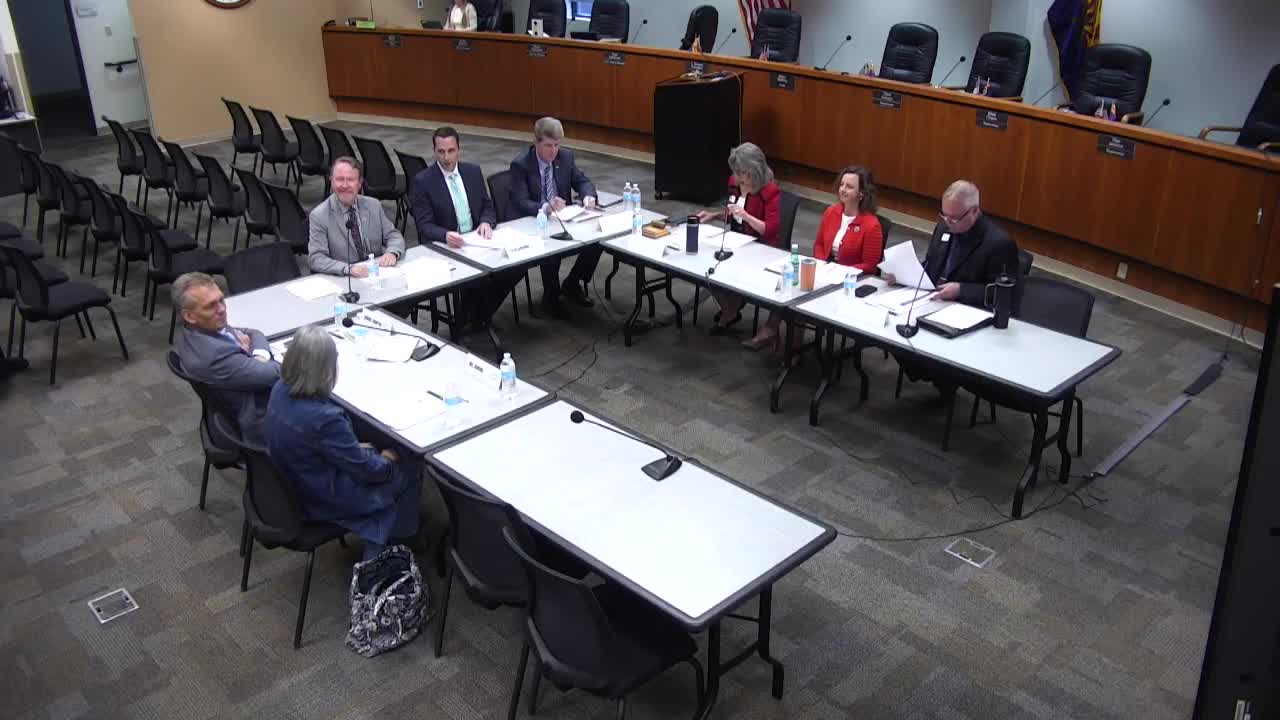
Summary
At a July 2 study session, Yavapai County supervisors agreed to pursue a Growing Water Smart technical assistance grant and begin forming a county-led water resources group that would convene municipalities, tribes, SIMPO and technical advisors to address groundwater, open space and zoning interactions.
YAVAPAI COUNTY — At a July 2 study session, the Yavapai County Board of Supervisors gave staff direction to pursue a Growing Water Smart technical assistance grant of up to $25,000 and to begin work toward forming a county-led forum for water resources and open-space planning.
The discussion centered on a proposed committee that would bring municipal leaders, representatives of unincorporated communities, regional planning (SIMPO), tribal partners and a technical advisory group together to explore data sharing, open-space priorities and zoning updates. County staff and supervisors said the effort could feed into the county’s pending zoning ordinance update and other intergovernmental agreements.
Why it matters: Supervisors framed the plan as a convening and facilitation role rather than a change in statutory authority over groundwater. Board members said disagreements over available data and the disparate positions of municipalities and stakeholders hamper regional planning. Several supervisors noted recent analysis by the Arizona Department of Water Resources (ADWR) and said a neutral, county-led process could help align data and next steps.
Board members identified immediate project parameters discussed on July 2: the Growing Water Smart technical assistance grant is due July 18, 2025; projects funded by the grant must be completed by Sept. 1, 2026; and the grant can be used to contract a facilitator or technical assistance, not to fund a permanent county staff position. Supervisors discussed inviting municipalities including Chino Valley and Prescott Valley, SIMPO, tribes such as the Yavapai Apache Nation, flood-control and watershed staff, and outside facilitators and technical experts to the first sessions.
Participants and scope: Supervisors and staff proposed combining elements of the historical Water Advisory Committee (WACC) and a Technical Advisory Committee (TAC) into an initial, unified forum, with the option to create subgroups by subregion or technical focus as needed. County staff said possible outcomes include agreed open-space priorities, shared data tools and recommendations for zoning-ordinance changes related to landscaping, development patterns and infrastructure that affect recharge and water use.
Discussion points included local examples of seasonal use spikes on small systems and landscaping maintenance costs tied to nonnative plantings; one supervisor cited Granite Oaks and described higher summer demand compared with winter months as a reason to pursue better data and local solutions. Supervisors reiterated that the county’s role would be convening and facilitating rather than taking regulatory control of groundwater.
Next steps: Supervisors signaled support for the county submitting the Growing Water Smart grant application and for staff to return with a proposed structure for the committee, potential participants and a draft timeline. No formal ordinance, contract or intergovernmental agreement was adopted at the study session; the board later approved a motion to adjourn.
Ending: County staff will proceed with the grant application and planning work if supported administratively; staff were asked to return with more detailed proposals and an outline of how grant-funded facilitation would transition into a sustainable structure when grant dollars are exhausted.