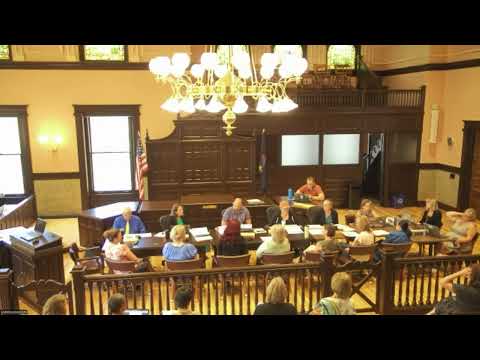
County staff warn HUD permanent-supportive-housing grant will be reduced; commissioners weigh supplemental funding
Loading...
Summary
Douglas County staff told commissioners that a HUD Continuum of Care renewal will arrive smaller than expected and that the county may need to use local funds to sustain 12 households in permanent supportive housing.
Douglas County staff told commissioners on July 10 that the county’s permanent supportive housing (PSH) grant through the HUD Continuum of Care (CoC) has been approved at a lower amount than anticipated and the award paperwork has not yet been finalized, creating short-term and potential long-term funding gaps for the county’s PSH program.
County housing staff said the 2024–25 renewal was approved but that the grant agreement has not been received. They reported the award will be roughly $187,600 less than the $321,032 the county had counted on for 2025 and that federal proposals for 2026 would shift funding away from permanent supportive housing toward transitional programs. Assistant County Administrator Jill Jaliker said the county’s CoC-funded program has housed 12 households under a “housing first” model and that some participants are paying up to 30% of income in rent.
The funding gap has prompted staff to include a supplemental request in the county budget to keep the program operating. Jill Jaliker told commissioners the county is seeking ongoing support to sustain the program if federal funds are not restored. She described the program as serving chronically homeless persons with significant needs and noted it had success with housing stability and some clients moving to pay rent.
Commissioners and staff discussed the timing of federal contract processing, the confirmed reduction for 2025, and the uncertainty for 2026. Staff said the 2024 award term ran from Jan. 1, 2024, through March 31, 2025 (a 15-month initial year because of timing); the follow-on grant had not been executed by HUD at the time of the meeting. Jill Jaliker said she and housing staff expected to provide an updated supplemental number after clarifying the HUD award and timing.
County staff also noted that if the CoC funding disappears for 2026 as proposed at the federal level, the county would need to use local funds to maintain PSH capacity. Commissioners were told staff would follow up with more precise figures and that the behavioral-health sales-tax fund could be used for eligible functions but has limited residual capacity for new ongoing commitments.
The discussion centered on sustaining the existing PSH program rather than expanding it. No formal motion or vote was taken during the hearing; commissioners asked staff to return with clarified contract amounts and options for bridging the shortfall in the current and next fiscal years.
Staff follow-up planned: provide updated amounts from HUD, an explanation of the supplemental request for the remainder of 2025 and for 2026, and an analysis of behavioral-health sales-tax fund capacity to cover ongoing PSH needs.
Ending: Commissioners scheduled additional budget deliberations and asked staff to provide the HUD contract details and an updated cost estimate before formal deliberations and any decision on supplemental county funding.