Get Full Government Meeting Transcripts, Videos, & Alerts Forever!
Get email alerts on the Molst Training Website topic
No spam. Unsubscribe anytime.
MOLST advisory council finalizes training materials, plans website redesign and FAQs
Summary
The state's MOLST advisory council reported near-complete training slide decks and quizzes for providers and EMS, set DPH internal review and recording timelines, and formed a website design subgroup to update public-facing FAQs and resources; approval of prior meeting minutes was postponed for lack of quorum.
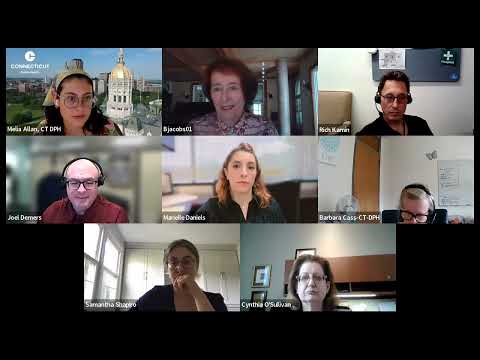
The MOLST (Medical Orders for Life-Sustaining Treatment) Advisory Council on its monthly call said it has completed most training materials for clinicians and EMS, will submit materials for Department of Public Health review this week, and formed a website design subgroup to revise public FAQs and resources.
The training subcommittee reported that the provider slide deck and associated test questions are finished and that a prehospital EMS slide deck will be ready for subcommittee review; Barbara Cass, the senior adviser to the commissioner for long term care, said the group is "hoping to get that started on DPH internal review by the end of this week." The council also discussed consumer-facing materials and how to present FAQs for different audiences.
The update matters because the slide decks and accompanying quizzes are the primary tools the council plans to use to educate hospitals, EMS services and other clinicians about MOLST. Dr. Rich Kamen, who described plans for deployment, said his approach is to make the training available by a combination of CT Train and live sessions and added, "my plan is to make sure that every single EMS clinician that I oversee, has gone through, the PowerPoint and has taken, the quiz that goes along with it." The training subcommittee reported two separate question sets: 11 finalized questions associated with provider training and a 10-question quiz developed for EMS clinicians.
Council members clarified the intended use and limits of the materials. Dr. Kamen said the slide deck "will not be mandated. It will be an option," and described the plan to publicize the tool through the state EMS advisory board and medical advisory board so sponsor hospital medical directors can integrate it into their oversight and education. Cindy (co-chair, training subcommittee) noted that existing state regulations do not currently require EMS to be trained on MOLST and that individual EMS services or sponsor hospitals may determine whether the training is expected or mandatory within their organizations: "it wouldn't be our responsibility to dictate about prehospital, training requirements."
The council also debated consumer-facing outreach and FAQ design. Members favored a single, general introductory MOLST overview usable by multiple audiences plus segmented resources (for EMS, eligible providers, consumers) reachable by jump links, accordions or separate sections so users can quickly find content relevant to their role. The subcommittee recommended adding case-study style content or short videos for consumers; Tracy (advisory council member) and others suggested including a dementia case to illustrate MOLST application in common clinical scenarios.
Website modernization and governance were discussed in parallel. Melia (DPH web staff) told the council that the Department of Public Health is converting to a new website platform in October and that DPH staff can make content changes in the existing site now but will need to rebuild them on the new platform later. The group agreed to charge a website design subgroup with tightening narrative content, reviewing linked resources (for dead links or outdated items) and deciding which reference materials should appear on the public site. Existing resource links cited by the training subcommittee include VitalTalk, Ariadne Labs and The Conversation Project.
Policy and procedure work was noted as mostly complete but not yet formally approved: Barbara Cass said the policies and procedures have been revised to align with statutory language and now include a detailed process for revocation or changing a MOLST order. The council did not take formal votes during the call: the scheduled approval of the May 6 and June 3 meeting minutes was postponed because the group lacked an appointed quorum, and members agreed to address minutes at the next meeting.
The council asked volunteers to serve on the website subgroup and named several initial volunteers (Doctor Shapiro, Barbara Cass, Melia, Kathy Lundgren, Dr. Rich Kamen, Jenny Levkowski). Next steps the group identified include completing DPH internal review and recording of the slide decks, finalizing consumer materials and FAQs, and rebuilding the updated content onto DPH's new website platform when it launches in October.