
Smith County hears funding appeals from nine public-service agencies as state, federal support lags
Get AI-powered insights, summaries, and transcripts
Subscribe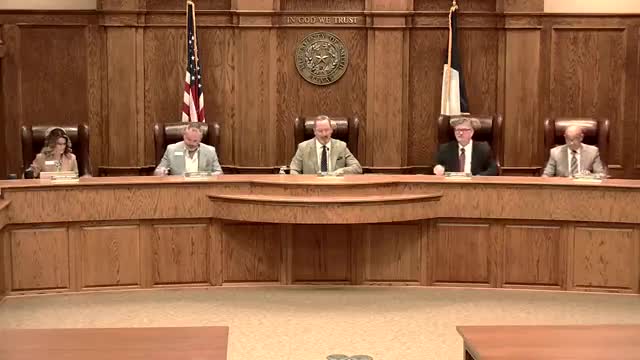
Summary
At a Commissioners Court meeting, nine local nonprofits and public agencies outlined growing demand for services and flat or reduced outside funding, and requested county support ranging from targeted grants to ongoing local-match dollars.
Smith County Commissioners Court on Wednesday received presentations from nine public-service agencies that described rising local demand, flat or shrinking state and federal funding, and specific local funding requests.
The agencies — including United Way of Smith County, the Andrews Center (local mental health authority), Northeast Texas Public Health District (Net Health), Alzheimer's Alliance, Meals on Wheels, NAMI Tyler, Family Circle of Care, the Children's Advocacy Center of Smith County and the Smith County Historical Society — told the court that county funding helps them meet program match requirements, replace one-time COVID-era funds and sustain core services.
Why this matters: Commissioners must balance limited county dollars across many public-safety, health and human-service needs. Several presenters described program cuts or one-time federal funds ending — scenarios that could shift costs or demand onto county services if not replaced.
John Gaston, chief executive officer of United Way of Smith County, asked the court to consider a $10,000 contribution to 2-1-1 East Texas, the region’s referral line. "I am in a budget deficit of about $40,000," Gaston said, adding that state funding for 2-1-1 has been essentially flat for about a decade and that 34 percent of local calls to the East Texas 2-1-1 come from Smith County. He told the court 2-1-1 assisted about 35,000 Smith County residents over the last three years.
Becky Manger, who identified herself as chief executive officer of the Andrews Center, described the center’s expanded crisis and jail-linked programs and the center’s reliance on local match funding that enables state contracts. "We provided over 80,000 core services to more than 4,400 individuals just in Smith County," Manger said, and she told the court the center faces the loss of roughly $350,000 in ARPA-funded children’s case management and expects about $900,000 to $1 million less than last year in certain charity-care pools.
George Roberts, chief executive officer of Northeast Texas Public Health District, asked the court to increase support after more than a decade without a county funding increase. "An increase in NET Health's annual funding support from Smith County has not occurred in over 10 years," Roberts said, and he said the district recently learned of a roughly 28 percent cut to its public health emergency preparedness award (about $540,000 annually, a reduction Roberts estimated at roughly $150,000).
Other presenters described targeted program needs and small, specific asks. Bonnie Barner, executive director of the Alzheimer's Alliance, outlined Project Lifesaver — a radio-frequency bracelet program she said costs about $320 per unit and has helped recover people who wander: "If everyone in this county that had Alzheimer's or dementia would wear this bracelet, we would be golden," Barner said. She said the Alliance serves roughly 2,000 people a year and estimated about 4,500 Smith County residents may be living with an Alzheimer’s or dementia-related diagnosis.
Tiffany Damskop of Meals on Wheels said the program delivers about 42,000 meals monthly and that roughly half those meals go to Smith County residents. She warned the program has a growing wait list; food costs are rising (she said an additional 4 percent increase is expected this October) and the agency recently had to lay off about one-third of its staff.
Kathy (surname not specified), president of the NAMI Tyler board, urged continued funding for peer, family and youth education and support groups that NAMI offers free to residents; she cited public-health statistics and said Smith County’s suicide rate was 15.1 per 100,000 as of May 2024, higher than the state and national rates she cited.
Yolanda Lewis, director of quality improvement for Family Circle of Care, described the center’s new optometry clinic and asked the court for $50,000 to fund a clinic manager and an optometry technician to expand vision services for low-income and uninsured residents.
Terry Smith, chief executive officer of the Children's Advocacy Center of Smith County, described forensic interviews, SANE-capable exam staff and trauma-informed therapy for children who have been abused. She told the court the center provided first-time services to 1,044 children in February 2024 and asked the court to continue funding the center’s mental-health wing and trauma-informed programs.
Andy Birkfeld, board president of the Smith County Historical Society, delivered a condition report on Camp Ford (a county-owned historic site the society manages) and requested small repairs and maintenance funding: signage ($2,300), cleanup ($9,000) and fence repair ($1,250).
Discussion, directions and next steps: Commissioners praised the nonprofit sector and said they would consider the requests when building the county budget. One commissioner urged the Andrews Center to provide monthly progress reports; another said she would discuss Camp Ford options with the historical society. Presenters did not receive formal votes during the presentation item; the court took no immediate funding action at the end of the presentations.
The court’s budget hearings and formal appropriation process will determine whether and how much county funding is allocated to the agencies. Commissioners closed the presentation period by thanking the organizations for their services to the community.