
Guadalupe County weighs sales-tax county assistance district to fund roads, fire and law enforcement
Get AI-powered insights, summaries, and transcripts
Subscribe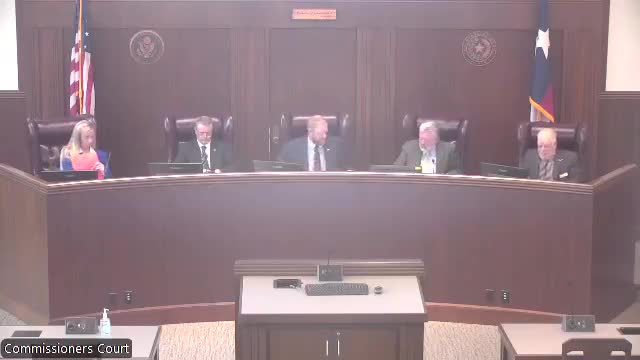
Summary
Commissioners discussed creating a county assistance district that would add up to 1.5 cents in sales tax in unincorporated areas, an option county staff estimate could generate roughly $1.5 million–$1.8 million a year and would require voter approval to take effect.
Guadalupe County commissioners on July 1 opened a multi-hour discussion about forming a county assistance district — a sales-tax mechanism the county could use to raise revenue for roads, fire protection and law enforcement in unincorporated areas.
Commissioner Carpenter, who requested the item, said the district would be “sales tax based, so it is a consumption tax rather than a property tax,” and would apply only in unincorporated parts of the county where the overall sales-tax rate is lower. Carpenter said the county could add about 1.5 cents to bring unincorporated areas in line with the countywide maximum of 8.25 percent. The comptroller’s office and county staff estimated revenue from that increase at roughly $1.5 million to $1.8 million annually, based on 2024 sales figures.
The discussion focused on how the dollars could be used and how the district would be formed. Commissioners repeatedly said the main eligible uses they expect to prioritize are construction and maintenance of roads, law enforcement facilities and detention services, and firefighting and fire-prevention services. Carpenter told colleagues the district would require a public election; he said the earliest practical appearance on a ballot would be the November election and that the deadline to place a measure on the ballot is Aug. 18.
Commissioner Ott and others said the district is a user-based revenue tool that would collect some funds from nonresidents and transient visitors who shop in unincorporated areas. Commissioner Engleke urged caution about raising the sales-tax rate and stressed the need for broad public engagement. Several commissioners said a ballot measure is preferable because it would allow voters in the proposed district to decide directly.
On administrative questions, staff explained the comptroller would collect and remit the tax and that the district would be a separate legal entity with its own board. Under state law the commissioners’ court may serve as that board or appoint an independent board; commissioners discussed options and indicated they preferred a structure that kept final budgetary responsibility close to the court. County staff and the auditor outlined early accounting considerations, advising caution during the first year because sales-tax collections can fluctuate and initial budgeting should be conservative.
No formal vote was taken. Commissioners directed staff to gather additional information and asked the county attorney to review legal limits on what county officials may say publicly and how the court may engage with voters prior to any election. Several members suggested holding informational outreach — carefully framed to comply with election law — if the court decides to place a measure before voters.
The court did not set a formal timeline for the next step, but commissioners indicated they could consider calling for an election at a future meeting if the research and legal review support moving forward.