
Galveston County adopts uniform 8 a.m.–5 p.m. work-hour policy after two-week review promise
Get AI-powered insights, summaries, and transcripts
Subscribe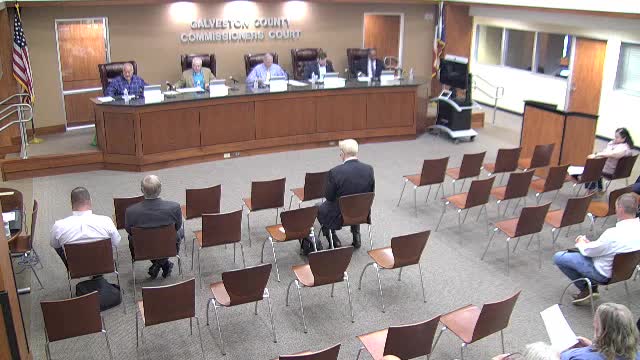
Summary
Galveston County Commissioners Court approved a uniform work-hours policy aligning county operations with Senate Bill 65, adding language to preserve departmental flexibility and setting the beginning of the pay period as the effective start; the measure passed 3-2 after extended debate and an amendment.
Galveston County Commissioners Court voted 3-2 on July 7 to adopt a uniform work-hours policy aligning county offices with Senate Bill 65, setting minimum public-facing hours of 8 a.m. to 5 p.m. Monday through Friday and specifying a July 31 pay-period start for implementation.
The action matters because it standardizes when residents can expect county offices to be open while the court added explicit language intended to preserve departments' ability to offer services outside those hours. The court also agreed to revisit the policy at the next session if changes are needed.
Discussion at the meeting centered on balancing consistent public access with the operational realities of elected officials and multi-location offices. Commissioner Giusti said the court “need[s] to do something,” and proposed making the policy effective Aug. 1 to give departments time to adjust; commissioners ultimately adjusted the start to coincide with the July 31 pay period. Several commissioners urged outreach to other elected officials before implementation; one said, “I don't know that we're doing it right having not spoken to the tax assessor, the district clerk, the county clerk, the JP's.”
An amendment offered from the dais added a sentence under the policy's flexible-hours provision: “This policy does not restrict a department from operating outside of the uniform work hours of 8AM to 5PM, Monday through Friday.” The same amendment clarified that justices of the peace with multiple locations must ensure one site is open to the public during the minimum hours.
Supporters said the policy improves public service consistency. Commissioner Attell said ensuring someone is present during common hours is a “higher value” for serving the public. Opponents urged more time for consultation. One commissioner said many elected officials had “not even had time” to review the agenda language before the meeting and asked for a workshop; others argued a short “shot clock” would prompt departments to notify staff and the public.
Court members agreed the policy could be adjusted after implementation and that additional outreach or a workshop could be scheduled. The motion adopting the policy with the amendment passed 3 to 2.
The court did not attach additional funding or personnel directives to the policy at the July 7 meeting; commissioners noted that staffing shortages in some offices affect availability and said departments may request resources separately.