Get Full Government Meeting Transcripts, Videos, & Alerts Forever!
Get email alerts on the Commercial Solar Ordinance topic
No spam. Unsubscribe anytime.
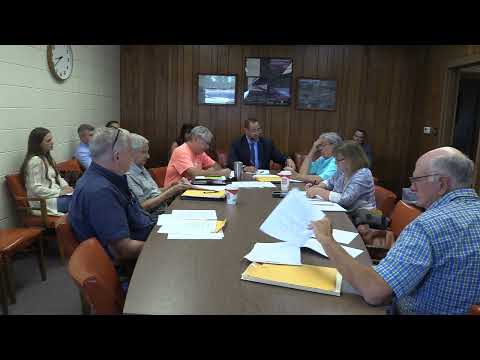
Edgar County Holds Public Hearing on Draft Commercial Solar Ordinance; No Vote Taken
Summary
Edgar County held a public hearing on a proposed ordinance to regulate commercial solar energy facilities, with county legal counsel explaining how the draft implements the states 2023 siting statute and attendees from developer firms, farmers and residents delivering technical and policy comments.
Edgar County held a public hearing on a proposed ordinance to regulate commercial solar energy facilities, with county legal counsel explaining how the draft implements the states 2023 siting statute and attendees from developer firms, farmers and residents delivering technical and policy comments.
The hearing matters because the state law sets mandatory minimums for setbacks, noise and other requirements but allows unzoned counties such as Edgar County to adopt an ordinance that governs how projects proceed locally. The draft on the floor would establish special use permitting, building permit review, developer financial assurances and required road‑use and decommissioning agreements.
County Attorney (staff) summarized the ordinance and state requirements, saying the state law "essentially mandates counties to adopt certain rules" and that the countys draft "pairs up an ordinance" to permit counties to regulate solar in unzoned jurisdictions. He told the board the statute prescribes setbacks the county must follow: 150 feet from the foundation of nonparticipating residences and 50 feet from property lines and public rights of way. He noted two documents that must be in place before a building permit is issued: a road‑use agreement and a decommissioning agreement, and said those agreements "would come back to the county board for approval." He also summarized fee proposals in the draft: a $20,000 special‑use application fee covering the first 4 megawatts for community‑scale projects (5 MW and under), $5,000 per megawatt above that, and a building‑permit fee of $5,000 per megawatt with a proposed cap of $100,000; the special‑use fee in the draft is refundable and capped at $250,000.
Developers and their counsel spoke at length about procedure and timing. Seth Aloff, a representative of Apisolar, asked the board to shift some documentary and technical requirements from the special‑use stage to the building‑permit stage so developers would not be forced to finalize engineering details before the countys review. "If you made it tied to when the SUP hearing was gonna occur, it might make it a little more, in time for the people in the area," Aloff said about a required pre‑application open house and suggested shortening a 60‑day requirement or tying it to the hearing date. He also asked the board to consider reducing the drafts radius of mailed notice from 1.5 miles to one half mile, arguing visual impact fades with distance and cross‑border notices to Indiana residents would increase the number of mailings.
Residents and board members pushed back on some developer recommendations. A resident noted that much of Edgar County is sparsely populated and that shortening the notice ring could leave only one or two households notified in certain places; she urged leaving the 1.5‑mile notice and keeping hearing factors that allow the county to weigh community health, safety and welfare. Several speakers also pressed the county to be more specific about decommissioning financial assurance — who pays if a project is abandoned — and about how and where end‑of‑life panels will be handled; attendees and counsel discussed recycling availability and trucking costs to distant facilities.
Board discussion touched on the role of LaSalle/Sinclair hearing factors (a discretionary balancing test used in land‑use hearings). County Attorney advised the board that keeping those factors preserves a discretionary review of whether a project is detrimental to public health, safety and welfare; counsel also reported recent litigation in Grundy County where a circuit court judge ordered permits issued when applicants met the ordinances checklist, a decision that is expected to be appealed.
No final ordinance vote was taken at the hearing. The County Attorney and developers agreed to provide a short written summary of the public comments and suggested revisions; the board indicated it would consider that summary and potential changes at a future study session or at its next regular meeting. The public hearing then closed.
Readers should expect follow‑up actions: any formal changes to the draft or a vote to adopt the ordinance will be posted to the county board agenda and published in the countys public records.